
China’s Geopolitical Positioning in Europe Amid the Russia Factor: Strategic Navigation in the Ukraine Era

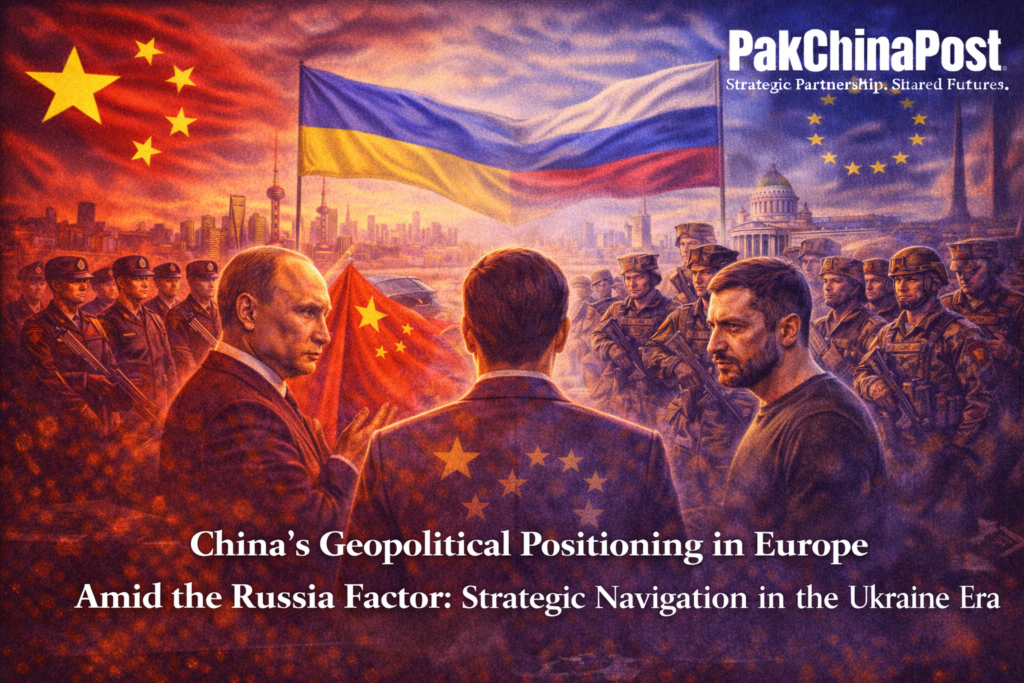
The ongoing conflict in Ukraine has recalibrated the strategic architecture of Europe, reshaping both security perceptions and economic priorities among European Union member states. In this complex landscape, the People’s Republic of China faces an intricate challenge: balancing its strategic partnership with the Russian Federation while safeguarding economic, diplomatic, and technological interests within the EU. Beijing’s approach to this confluence of regional security concerns, transatlantic commitments, and global economic interdependence reflects a sophisticated interplay of perception management, strategic signaling, and multilateral engagement. The EU’s heightened awareness of China-Russia ties, particularly in energy, trade, and technology sectors, underscores the delicate calculus China must perform to maintain influence, mitigate reputational risk, and position itself as a credible global actor capable of navigating geopolitical fault lines without being construed as a belligerent or complicit actor in regional conflict.
China’s strategic partnership with Russia is multifaceted, encompassing energy supply agreements, joint technological development, trade cooperation, and coordinated diplomatic posturing in international fora. This partnership, while longstanding, has assumed heightened visibility in the context of the Ukraine conflict, as Moscow seeks to mitigate Western sanctions and secure alternative sources of capital, technology, and energy infrastructure. Beijing’s engagement in these domains—particularly in critical sectors such as oil, gas, and rare earth materials—has raised European concerns regarding indirect support for Russian military objectives, even when China maintains a formal stance of neutrality or non-alignment in the conflict. For Brussels, the challenge lies in distinguishing between legitimate commercial transactions and actions that might contribute, intentionally or inadvertently, to the prolongation of hostilities. The strategic ambiguity inherent in China-Russia cooperation thus becomes a central factor in EU risk assessment and policy formulation.
At the same time, China’s economic integration with Europe remains substantial and strategically significant. The EU is both a major trading partner and a critical market for Chinese high-value exports, including advanced manufacturing, telecommunications infrastructure, and digital technology. Beijing’s interest in preserving access to these markets necessitates careful calibration of its Russia policy: overt alignment with Moscow risks punitive measures, restrictions on technology transfer, and reputational damage that could undermine decades of economic engagement. Consequently, China’s diplomatic approach must reconcile the imperatives of bilateral strategic partnership with Russia with the operational requirements of maintaining credibility and trust in Europe. This balance is complicated further by the European Union’s growing sensitivity to energy security, supply chain resilience, and geopolitical leverage, all of which are amplified by the ongoing conflict.
The perception of indirect support for Moscow is particularly salient in energy and technology sectors. European policymakers scrutinize transactions that might inadvertently prolong Russian military capabilities, including joint ventures in energy exploration, technology transfer agreements, and financial facilitation of sanctioned enterprises. China’s response must therefore emphasize transparency, compliance with international norms, and rigorous internal governance to mitigate the perception of enabling conflict. Operationally, this requires detailed monitoring of transactions, clear delineation of civilian versus military applications, and proactive communication with European stakeholders to contextualize engagement within commercial and non-military parameters. By demonstrating responsible engagement, China can reduce the reputational and strategic costs associated with its partnership with Russia while preserving its core bilateral interests.
The EU’s policy framework reflects both structural caution and strategic opportunism. While member states are committed to upholding transatlantic security objectives, there is recognition of the economic imperatives underpinning engagement with China. The intersection of these drivers creates both constraints and openings for Chinese diplomacy. On one hand, perceived proximity to Moscow can trigger regulatory scrutiny, sanctions, or political censure. On the other, Europe’s need for technological collaboration, infrastructure investment, and green energy solutions provides a platform for Beijing to assert its credibility as a responsible partner. The ability to navigate this duality—avoiding the pitfalls of over-alignment while leveraging economic interdependence—defines China’s strategic posture in Europe amidst the Ukraine crisis.
In crafting its geostrategic approach, Beijing relies on several core principles. First, it maintains formal neutrality in the Ukraine conflict, refraining from explicit military support to either side while emphasizing the primacy of diplomatic resolution and adherence to international law. Second, it ensures that economic engagement with Russia is framed within commercial, non-military parameters, with operational safeguards designed to prevent diversion of resources to sanctioned or militarized applications. Third, China engages Europe through consistent diplomatic channels, emphasizing transparency, mutual benefit, and the constructive role of Sino-European cooperation in mitigating regional instability. This tripartite approach allows Beijing to preserve strategic flexibility, manage perception risk, and maintain access to both Russian and European markets without triggering a zero-sum dynamic.
Energy cooperation exemplifies the complexity of this balancing act. China’s long-term agreements with Russia, particularly in natural gas and oil procurement, serve both strategic and economic objectives: securing stable energy supplies for domestic needs while consolidating Russia as a reliable partner in Eurasian affairs. However, European scrutiny of these arrangements—particularly given sanctions and wartime dynamics—necessitates sophisticated messaging. Beijing emphasizes that transactions are commercial in nature, compliant with international trade regulations, and structured to avoid enabling military applications. Additionally, China’s parallel engagement with European energy and technology initiatives reinforces its credibility as a neutral actor capable of contributing to stability, sustainability, and energy diversification across multiple regions. The simultaneous pursuit of these dual objectives requires institutionalized mechanisms, high-level coordination, and robust internal compliance frameworks to maintain credibility in both geostrategic theatres.
Technology represents a similarly nuanced domain. European concerns regarding China’s dual-use technologies are heightened in the context of its Russia relationship. Even absent direct transfer to Moscow, the possibility of indirect application raises both regulatory and reputational risks. Beijing mitigates this through stringent internal governance, tiered export licensing, and transparent certification processes that differentiate civilian applications from potential military or dual-use deployment. Furthermore, China actively engages in joint research initiatives with European institutions, creating embedded verification mechanisms that provide reassurance regarding the non-militarized nature of technological outputs. This dual-track approach—managing internal compliance while externally signaling reliability reinforces China’s image as a responsible, economically engaged, yet strategically astute actor in European security calculus.
Diplomatic signaling plays an equally important role. China has cultivated a narrative emphasizing peaceful resolution, respect for sovereignty, and adherence to multilateral principles. In communications with the EU, Beijing underscores that engagement with Russia does not equate to support for military escalation or violation of international norms. By articulating this position consistently across bilateral dialogues, multilateral forums, and public diplomacy channels, China creates a framework within which Europe can contextualize its bilateral and multilateral transactions. Strategic messaging, complemented by operational transparency, mitigates misperceptions and reduces the likelihood of punitive measures that could compromise China’s broader geopolitical and economic objectives.
From a long-term perspective, the implications for China’s positioning in Europe are multifaceted. Successfully navigating the Ukraine conflict while maintaining credible neutrality vis-à-vis Moscow enhances Beijing’s strategic leverage, reinforcing its capacity to serve as an intermediary and facilitator in regional security architecture. Conversely, misalignment or perception of complicity risks accelerating European decoupling in high-value sectors, hardening transatlantic cohesion against China, and constraining its role in continental policy discourse. Thus, China’s strategic objective is to operationalize a policy that maximizes influence, preserves access to markets, and safeguards reputational capital, while minimizing exposure to conflict-related contingencies. This requires both careful calibration of bilateral interactions and proactive engagement in multilateral frameworks.
Multilateral engagement is instrumental in this strategy. Participation in platforms such as the United Nations, the Shanghai Cooperation Organization, and the G20 allows Beijing to reinforce its commitment to international norms and conflict mitigation, while demonstrating constructive influence in global governance. Coordination with European partners in domains such as climate action, trade facilitation, and energy security further strengthens credibility, highlighting China’s willingness to contribute positively to European and global stability. By positioning itself as a reliable multilateral actor, China can offset concerns arising from its bilateral partnership with Russia, framing its engagement as part of a coherent, globally responsible strategy rather than a narrowly transactional alliance.
Economic interdependence serves as a stabilizing vector in this complex environment. China’s substantial trade with the EU, coupled with investment in infrastructure, digital technologies, and green energy projects, creates mutual incentives for sustained cooperation. By ensuring that economic engagement is insulated from conflict-driven perception risks, Beijing can foster a sense of shared interest that transcends immediate geopolitical pressures. This dual-track approach—maintaining robust economic ties with Europe while managing strategic partnerships with Russia requires meticulous risk assessment, scenario planning, and institutionalized mechanisms for compliance, monitoring, and communication.
Perception management, however, remains a persistent challenge. Europe’s assessment of China-Russia ties is informed not only by transactional metrics but also by symbolic and reputational considerations. Visible partnerships, such as energy agreements or technological cooperation, are interpreted within the broader prism of wartime dynamics. Therefore, China’s strategy must emphasize transparency, selective engagement, and proactive communication, ensuring that European stakeholders can differentiate between commercial cooperation and actions that could be construed as indirect support for conflict escalation. Diplomatic nuance, reinforced by institutional credibility, enables Beijing to navigate these perceptions while preserving operational flexibility.
China’s broader geopolitical strategy in Europe also leverages comparative advantage. Its capacity to provide technological solutions, infrastructure investment, and economic support positions Beijing as a partner that can complement European strategic priorities without directly challenging transatlantic security commitments. By framing its engagement as mutually reinforcing, rather than adversarial, China reduces the risk of structural disengagement or policy backlash. Strategic patience, combined with targeted investments and calibrated diplomatic engagement, enables Beijing to solidify its role as a credible actor in European affairs while maintaining alignment with its Eurasian partnerships.
In conclusion, China’s strategic positioning in Europe amid the Russia factor is characterized by a sophisticated balancing act. The imperatives of maintaining a credible partnership with Moscow, preserving access to European markets, and mitigating security-related perceptions necessitate a multidimensional approach encompassing operational transparency, diplomatic signaling, economic integration, and multilateral engagement. By successfully navigating this terrain, Beijing reinforces its image as a responsible global actor capable of strategic foresight, operational discipline, and nuanced engagement. The management of perception, combined with tangible operational safeguards and proactive collaboration with European partners, constitutes the core of China’s long-term strategy in Europe, ensuring that it maintains influence, credibility, and strategic flexibility in an era defined by complex geopolitical interdependencies and the enduring consequences of the Ukraine conflict.
A Public Service Message