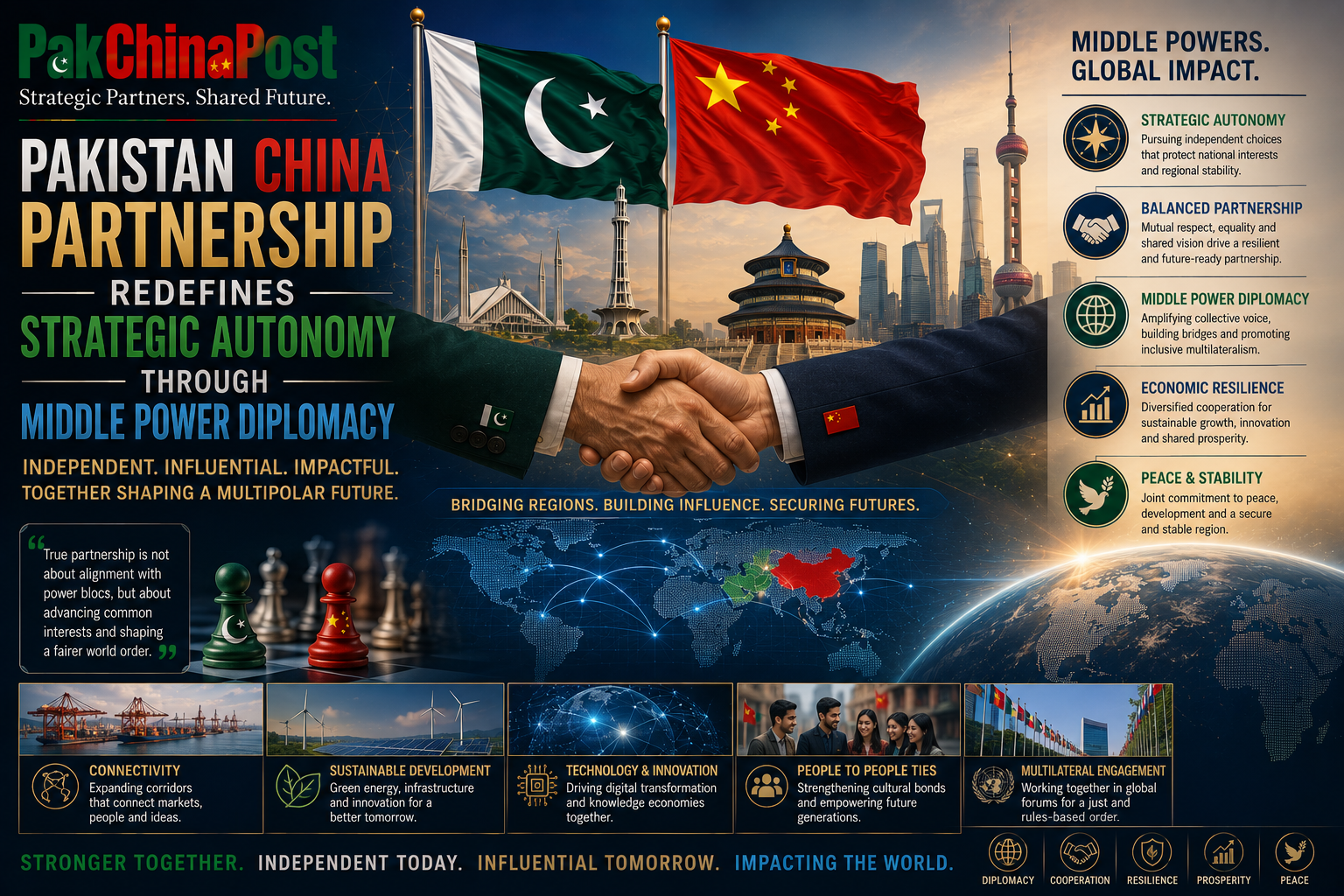
Pakistan China Partnership Redefines Strategic Autonomy Through Middle Power Diplomacy

By Shafqat Ali Qureshi Pakistan and China increasingly find themselves operating within an international environment where strategic influence is no longer determined solely by military capability or ideological alignment, but by the capacity to manage competing relationships without sacrificing sovereign decision making. The

Pakistan China Partnership Navigates Evolving Global Sanctions Architecture

Pakistan China economic cooperation is entering a strategic phase where the defining constraints are no longer confined to conventional security competition or traditional trade barriers. The principal variables increasingly originate from an expanding international sanctions architecture that now combines financial regulation, export controls,
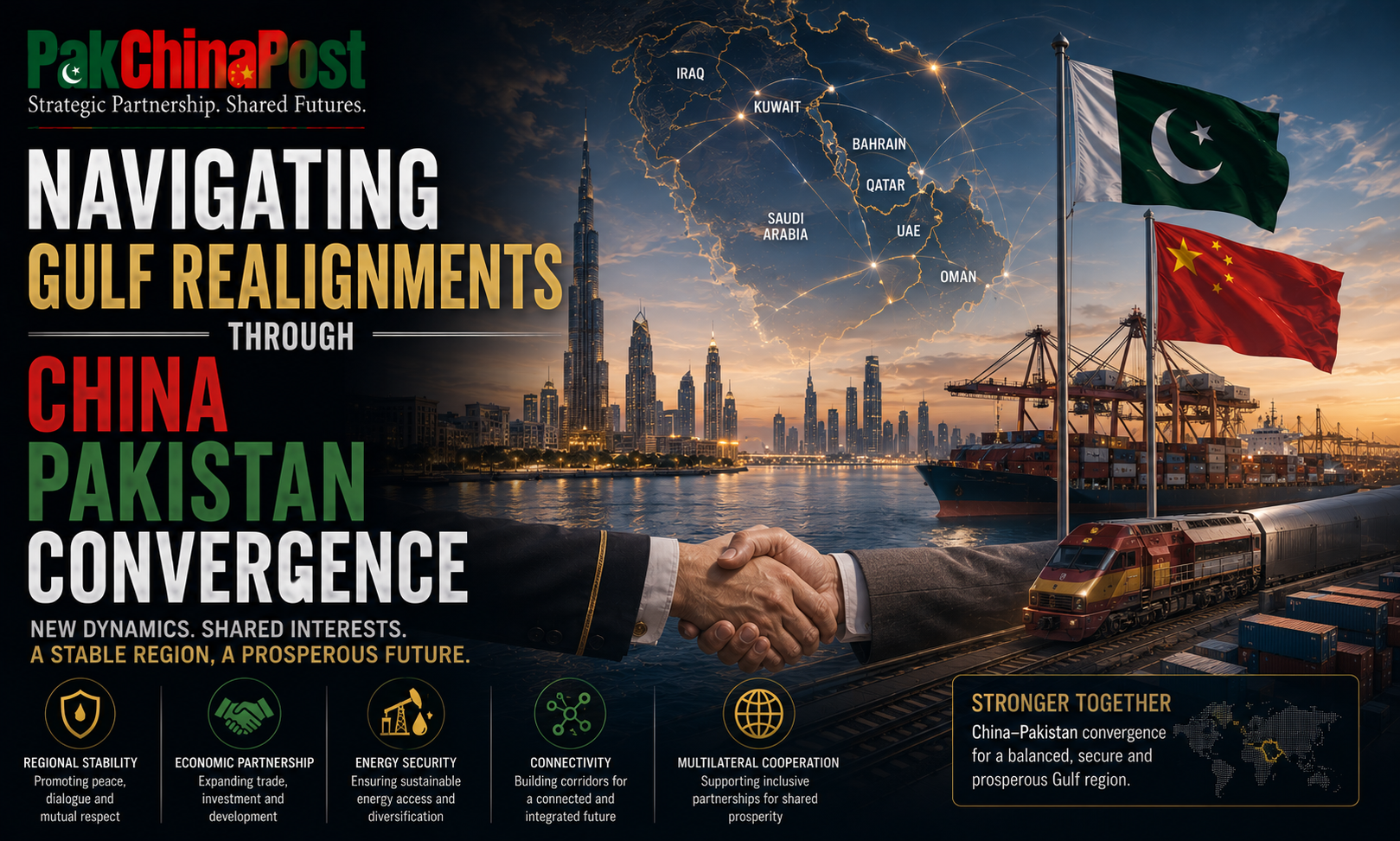
Navigating Gulf Realignments Through China Pakistan Convergence

The intensification of diplomatic, financial, and infrastructural engagement between China and the Middle East has introduced a more intricate layer to Eurasian connectivity politics, where energy security, sovereign wealth deployment, mediation diplomacy, and non traditional security coordination are increasingly interwoven. Within this evolving

Northern Ice Routes and Pakistan China Alignment
BY SHAFQAT ALI QURESHI The accelerating transformation of the Arctic from a peripheral frozen expanse into a functional theatre of maritime mobility, resource extraction, and scientific presence has introduced a new layer of strategic calculation for mid-tier states seeking relevance beyond their immediate
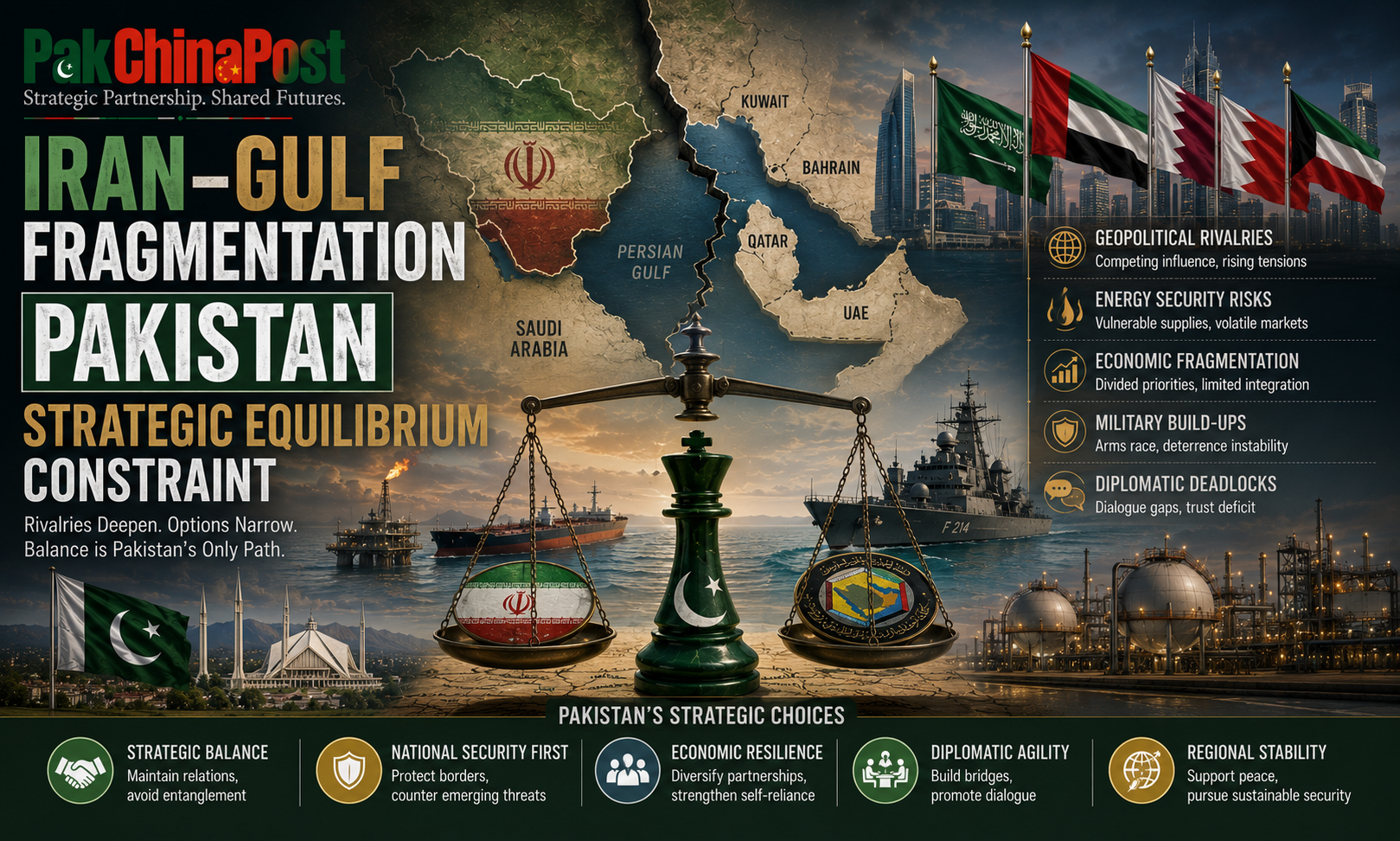
Iran Gulf Fragmentation Pakistan Strategic Equilibrium Constraint

The contemporary Middle Eastern security architecture is increasingly defined not by linear rivalries but by layered fragmentation, where state competition, proxy contestation, maritime insecurity and energy geopolitics converge into an unstable equilibrium. Within this shifting landscape, the Iran Gulf rivalry persists as a

Afghanistan After Withdrawal Pakistan Security Equation Without Closure Instability Enduring

BY SHAFAQAT ALI QURESHI The withdrawal of United States and NATO forces from Afghanistan did not conclude a conflict so much as transform its geometry, redistributing instability into a more diffuse, less legible and structurally persistent form. What was once a concentrated theatre

Pakistan Between Washington Beijing Cold Peace Strategic Compression
The contemporary international system is no longer adequately described by Cold War binaries, nor by the euphemistic language of post bipolar interdependence. It has instead settled into a more ambiguous and structurally unstable condition often best described as a cold peace, in which

Technological Rivalry Redefines Trade Wars and Global Political Order
By SHAFQAT ALI QURESHI The resurgence of trade tensions between major powers is no longer a cyclical recurrence of tariff disputes but a structural reconfiguration of the global economic order, driven by the deep entanglement of technology, security, and geopolitical influence. What was
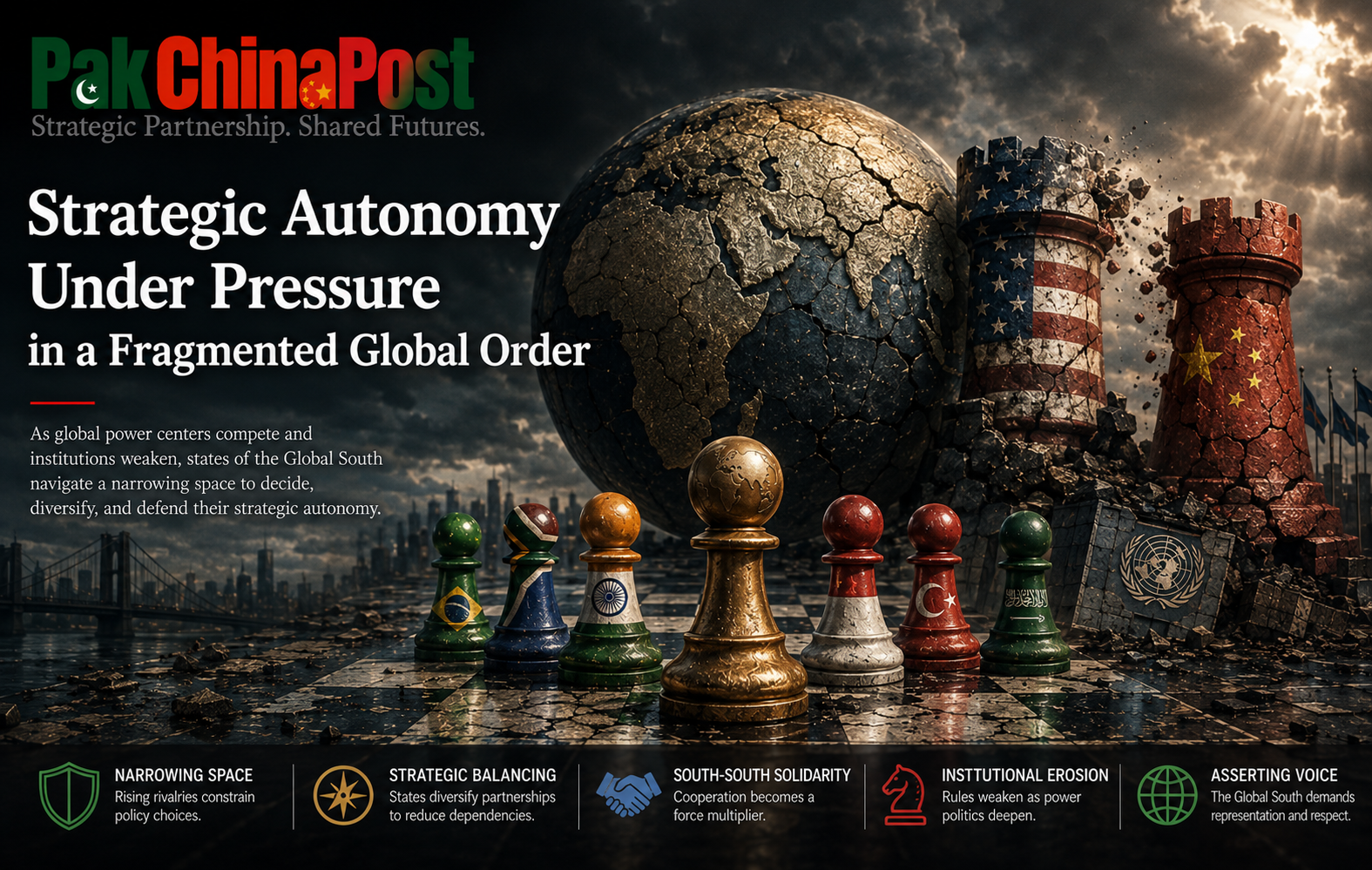
Strategic Autonomy Under Pressure in a Fragmented Global Order

The contemporary international system is increasingly defined by structural polarization, fragmented economic interdependence, and competing technological ecosystems that collectively compress the strategic space available to middle powers. Within this evolving configuration, the concept of strategic autonomy has shifted from a normative aspiration to
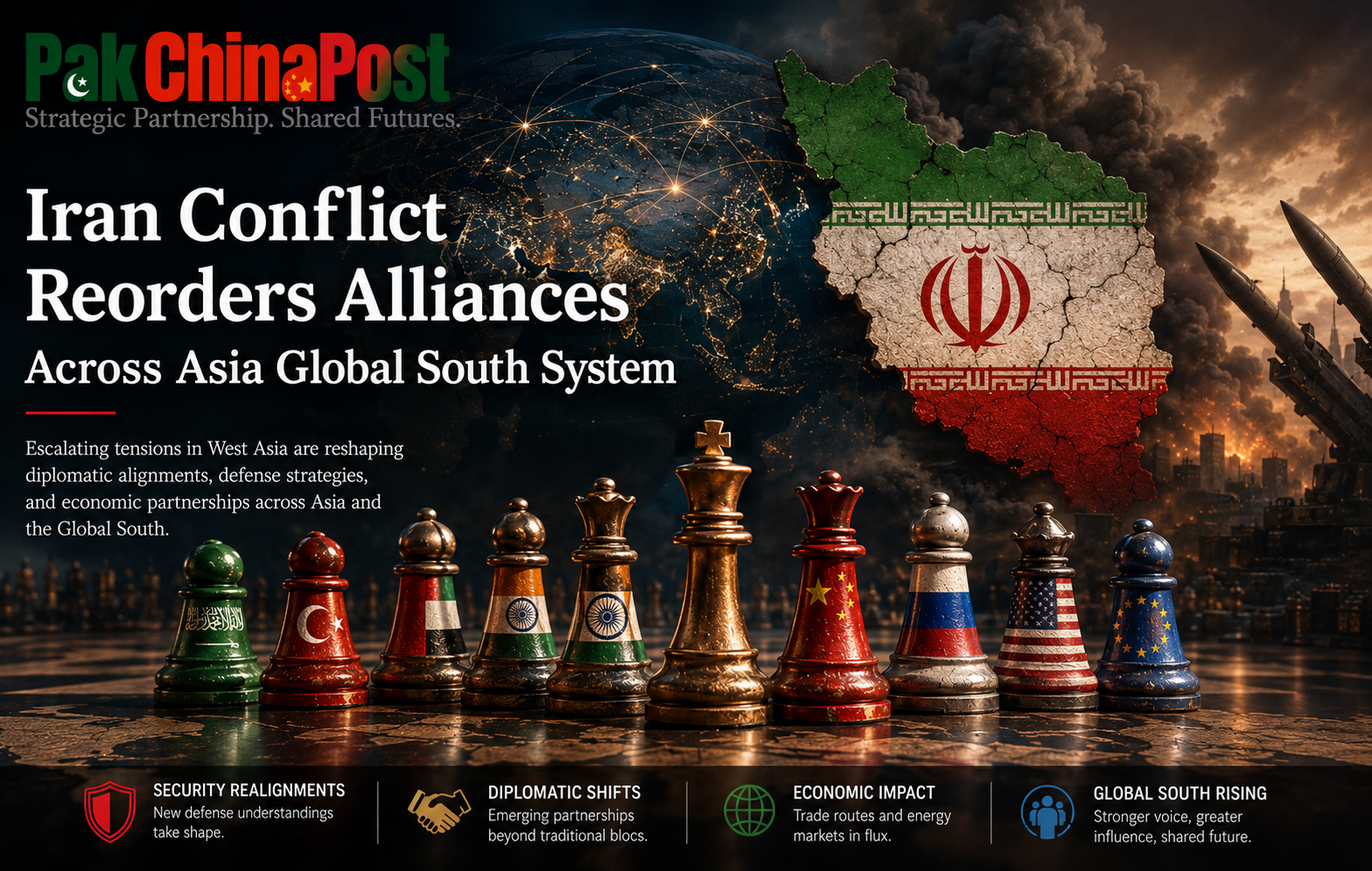
Iran Conflict Reorders Alliances Across Asia Global South System
The contemporary geopolitical landscape is undergoing a quiet but consequential reconfiguration driven by the prolonged instability surrounding Iran and its regional and transregional reverberations. What was once framed primarily as a localized security concern in the Middle East has now evolved into a