
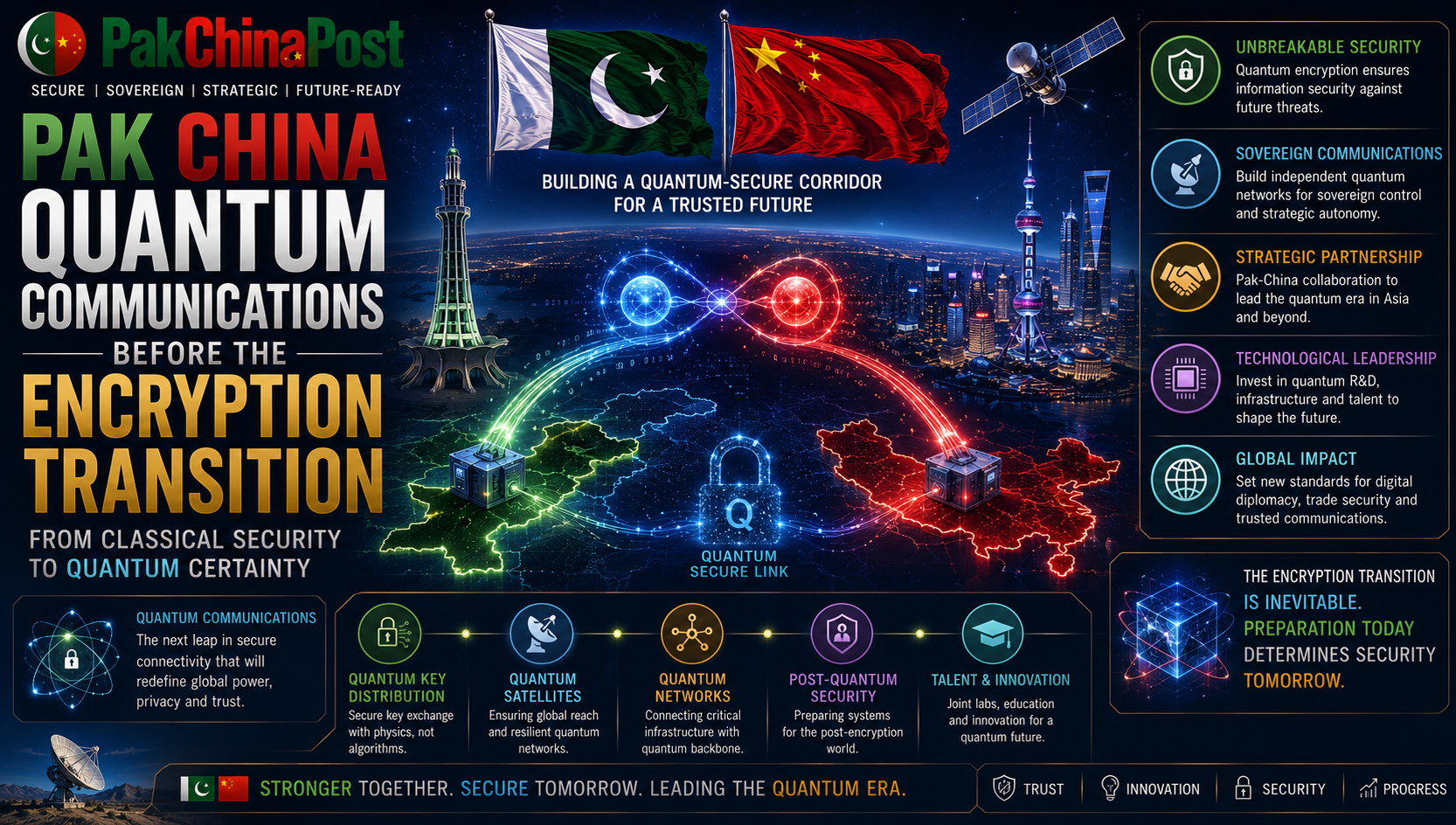
Pak China Quantum Communications Before the Encryption Transition

Pak China strategic planners increasingly recognise that the coming technological competition will not be defined exclusively by artificial intelligence, semiconductor manufacturing or autonomous military systems. A quieter transformation is unfolding beneath the surface of global digital infrastructure, where quantum communications and quantum resistant
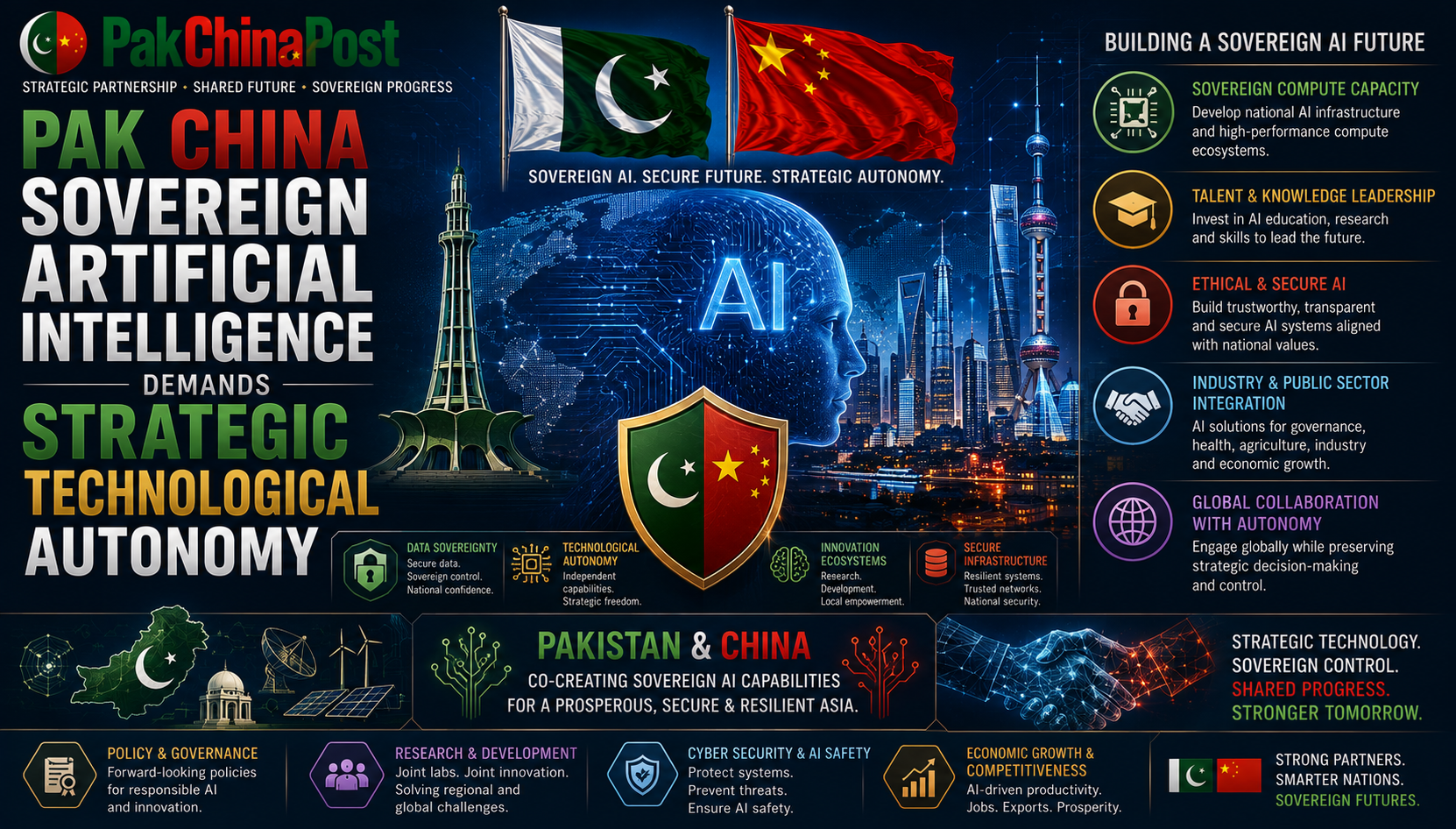
Pak China Sovereign Artificial Intelligence Demands Strategic Technological Autonomy

Pak China cooperation is approaching a decisive technological inflection point where artificial intelligence is no longer merely an instrument of commercial innovation but an essential component of national strategic capability. The debate is progressively shifting beyond software applications towards sovereign computational infrastructure, indigenous
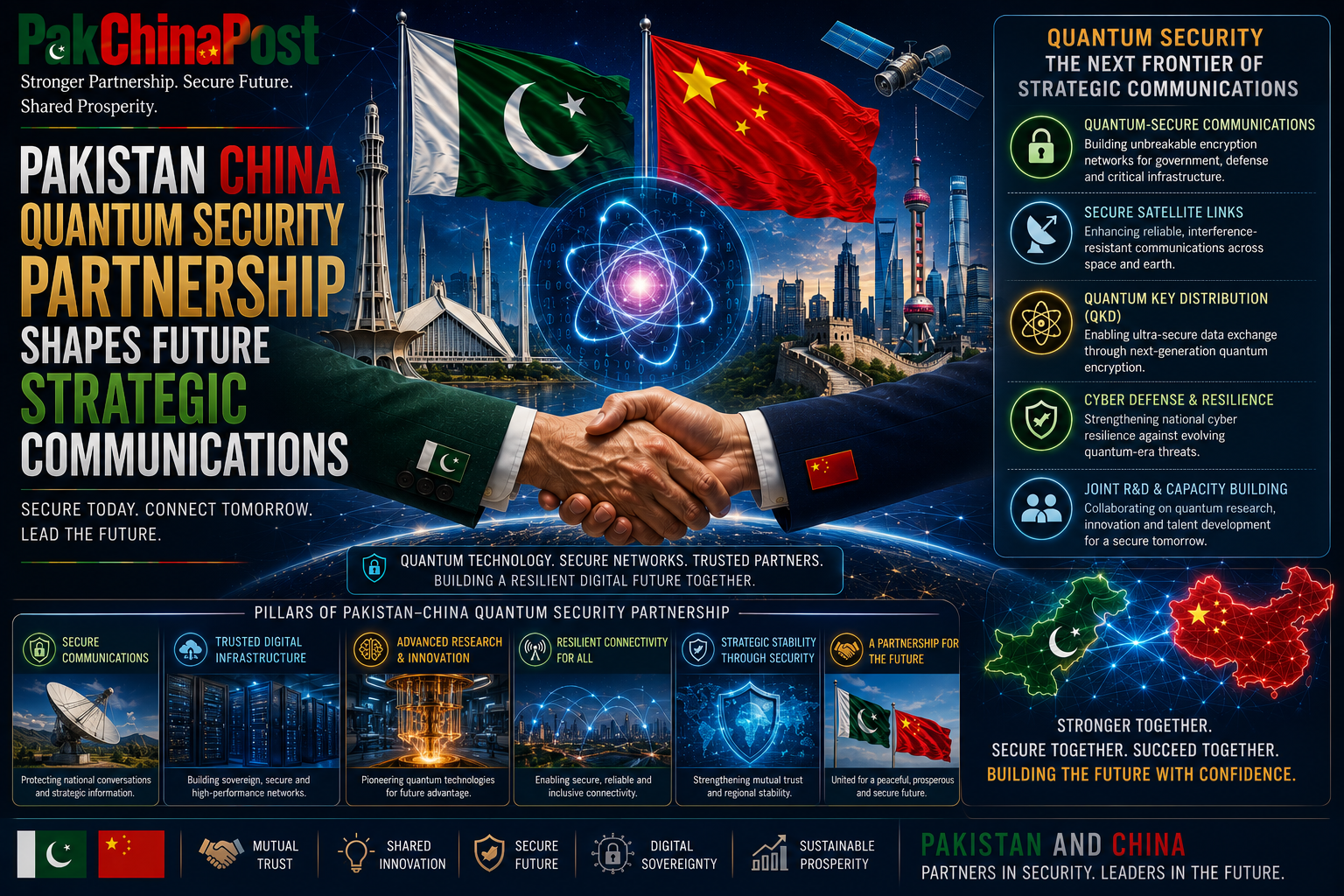
Pakistan China Quantum Security Partnership Shapes Future Strategic Communications
Pakistan and China are entering a technological phase in which digital security is no longer measured solely by computational strength, network redundancy, or conventional cyber defence. The emerging contest over quantum technologies is gradually transforming strategic communications into a domain where information superiority
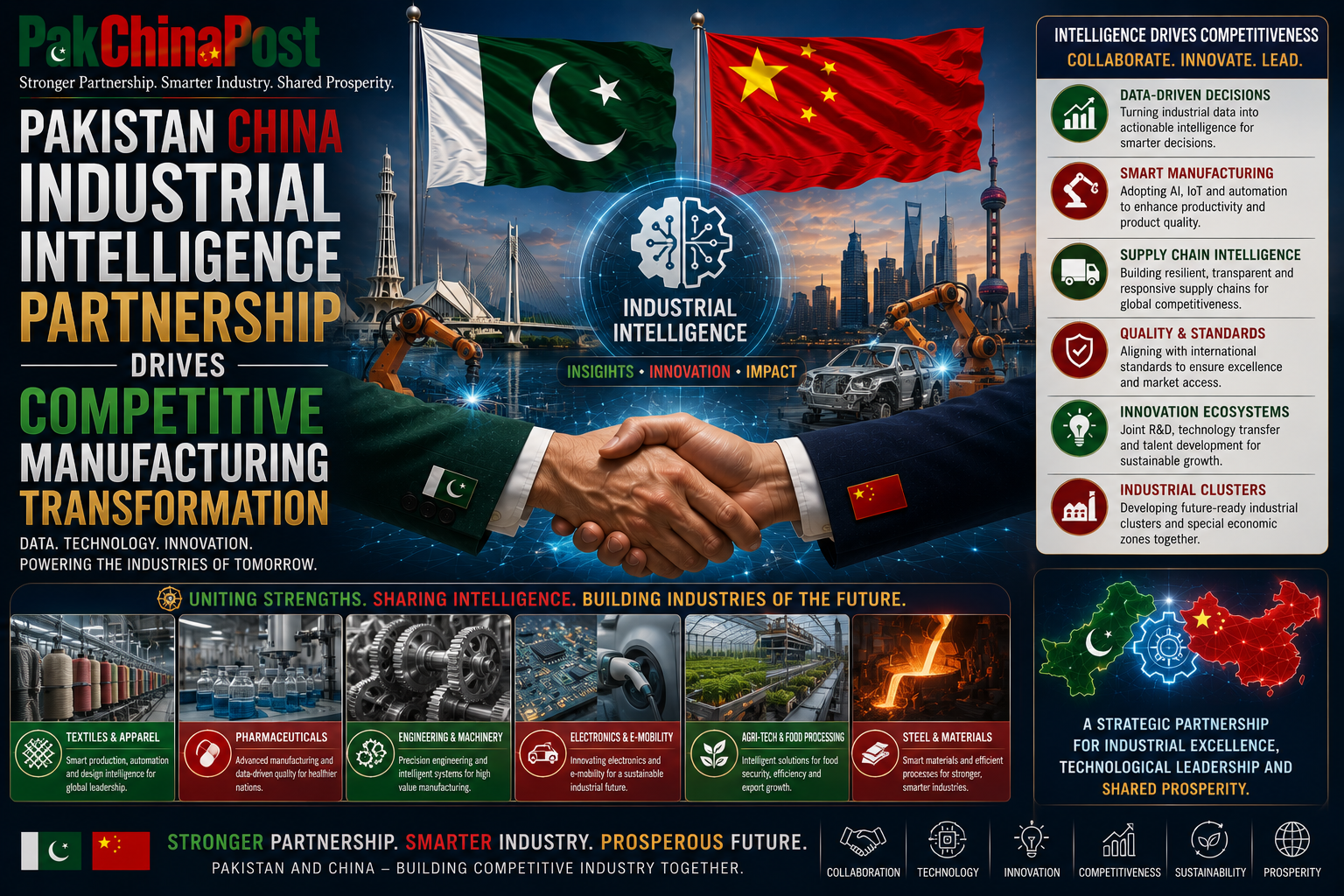
Pakistan China Industrial Intelligence Partnership Drives Competitive Manufacturing Transformation
Pakistan and China are entering a decisive phase of industrial cooperation in which competitive advantage will increasingly be determined not by inexpensive labour, abundant natural resources, or geographical location alone, but by the capacity to integrate artificial intelligence across every stage of manufacturing.
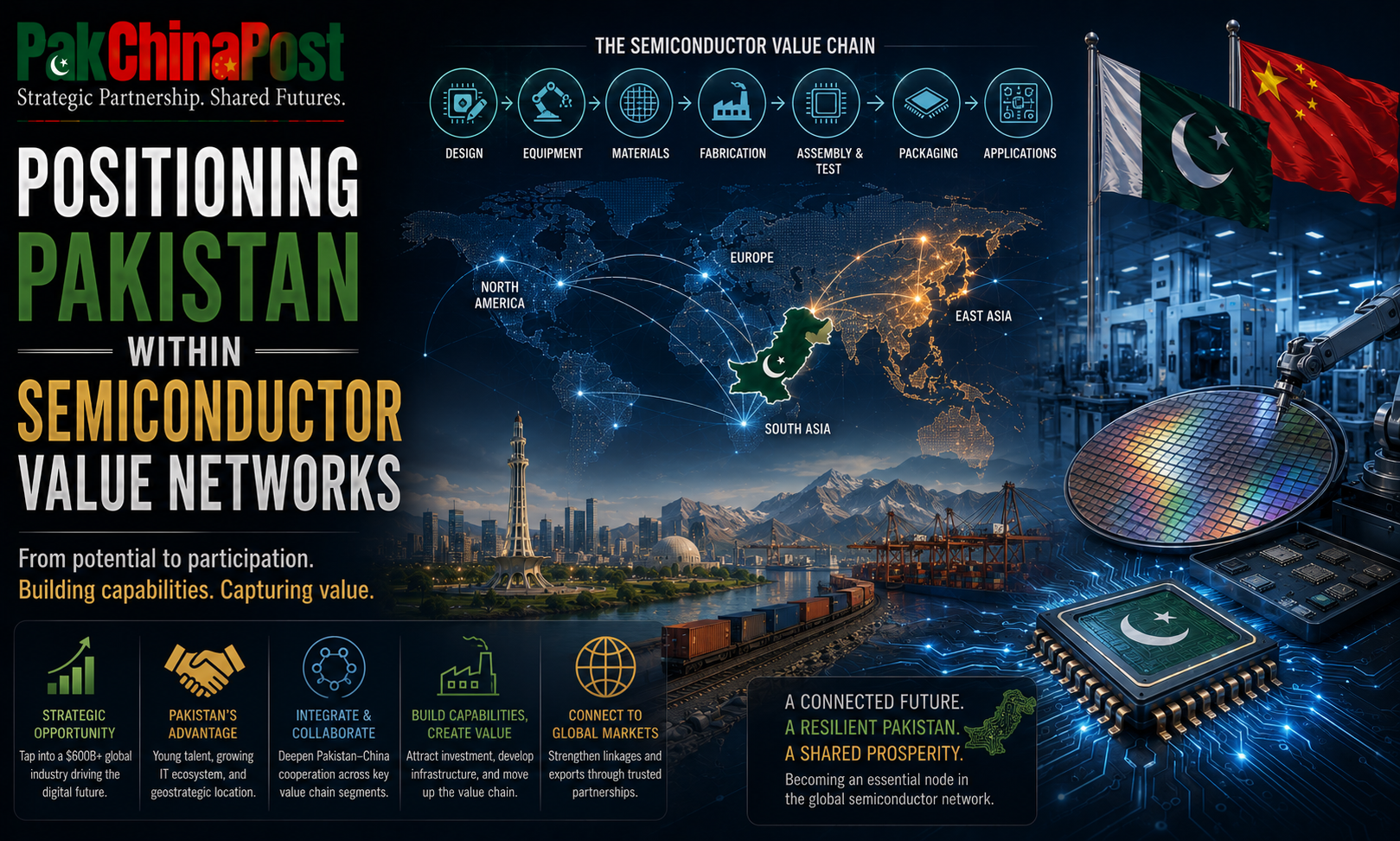
Positioning Pakistan Within Semiconductor Value Networks
The global semiconductor industry has evolved into the most consequential industrial architecture of the twenty first century, defining the parameters of economic competitiveness, military modernization, and digital sovereignty. Unlike previous waves of industrial transformation driven by energy, textiles, or heavy manufacturing, the semiconductor
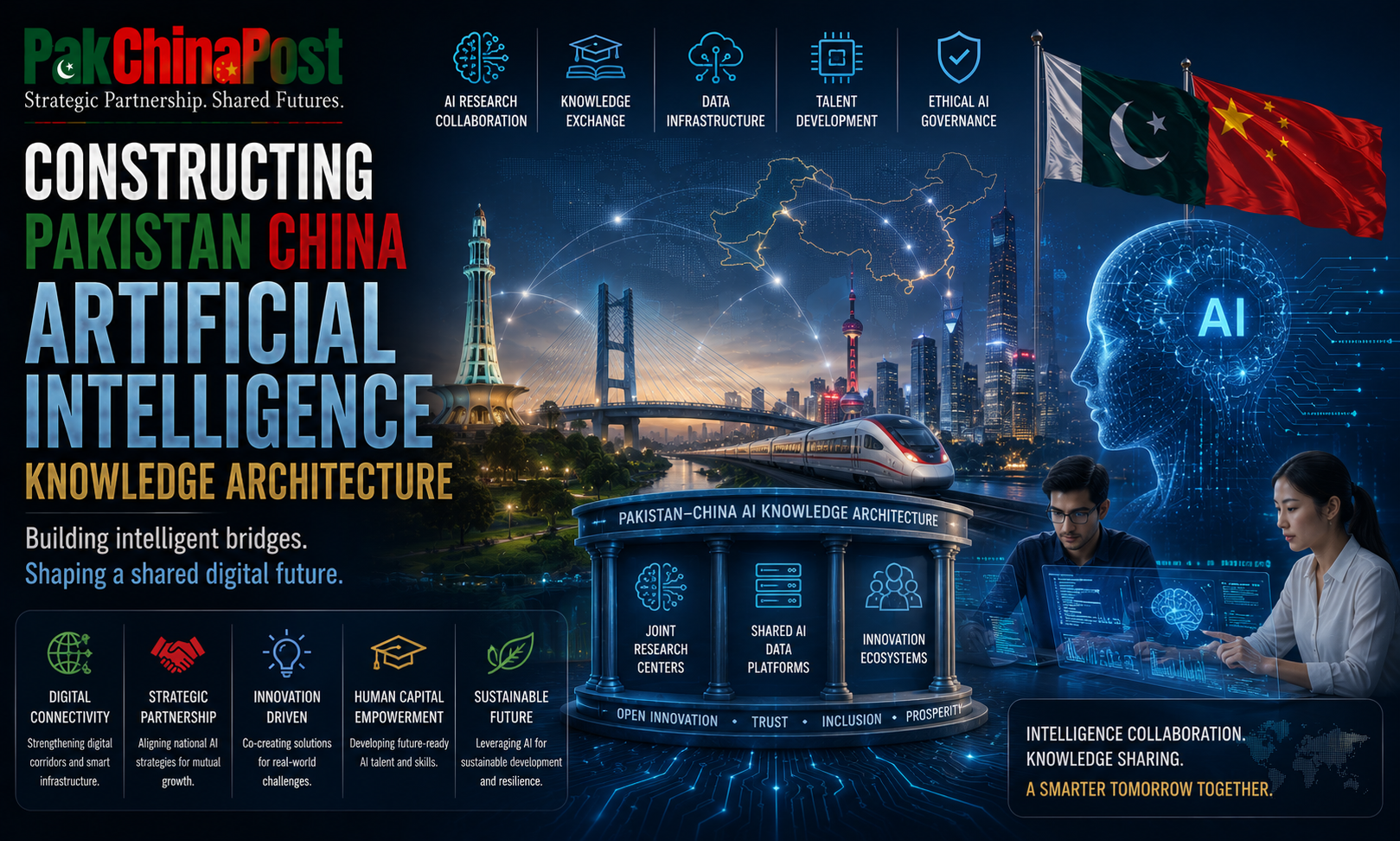
Constructing Pakistan China Artificial Intelligence Knowledge Architecture
The contemporary evolution of artificial intelligence has ceased to be a mere technological progression and has instead assumed the characteristics of a structural force reshaping epistemic authority, industrial competitiveness, and state capacity. Within this emergent configuration, Pakistan’s position remains largely defined by consumption
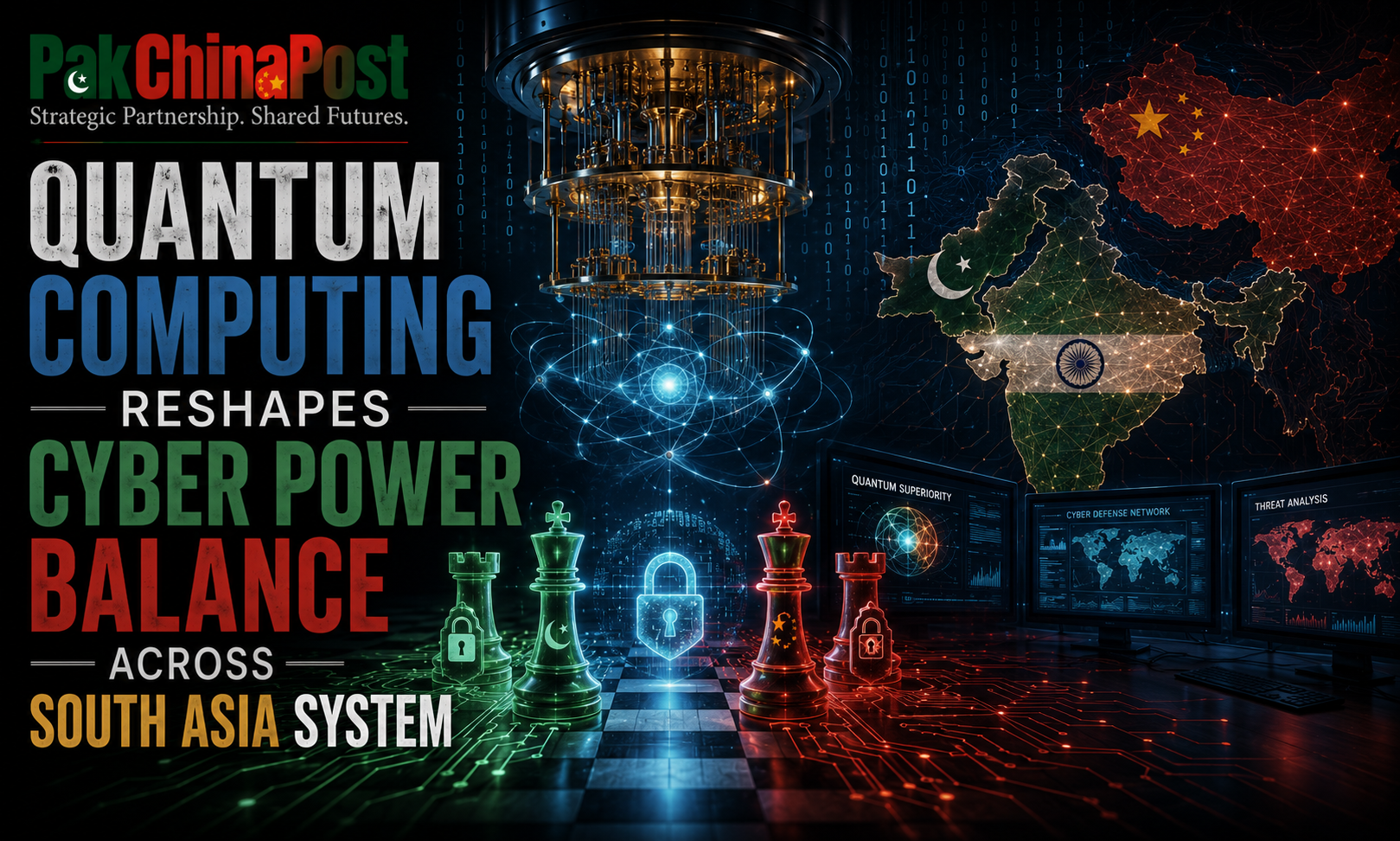
Quantum Computing Reshapes Cyber Power Balance Across South Asia System
Quantum computing, once confined to theoretical physics laboratories and experimental computational research clusters, is increasingly entering the domain of strategic statecraft, where computational supremacy is beginning to intersect with cyber sovereignty, cryptographic resilience, and geopolitical leverage. For Pakistan, situated at the crossroads of

Artificial Intelligence Reshapes Governance and Power in Pakistan Today System
Artificial intelligence is steadily shifting from a peripheral technological novelty into a central architecture of statecraft, governance execution, and administrative cognition across developing political systems, with Pakistan now positioned at a critical inflection point where digital transformation is no longer optional but structurally

Digital Sovereignty Defines Fragmented Tech Order Across Global Powers Today
The architecture of the global digital economy is undergoing a profound fragmentation, increasingly shaped by competing visions of sovereignty, security and technological governance. What was once heralded as an open, borderless internet has gradually transformed into a contested terrain of jurisdictional assertion, where

Artificial Intelligence Reshapes Industrial Power and Global Competition Now Emerging
The global economic order is entering a phase in which artificial intelligence is no longer an auxiliary productivity enhancer but a structural determinant of industrial hierarchy, state capacity and geopolitical leverage. What is unfolding is not a linear technological transition but a systemic