
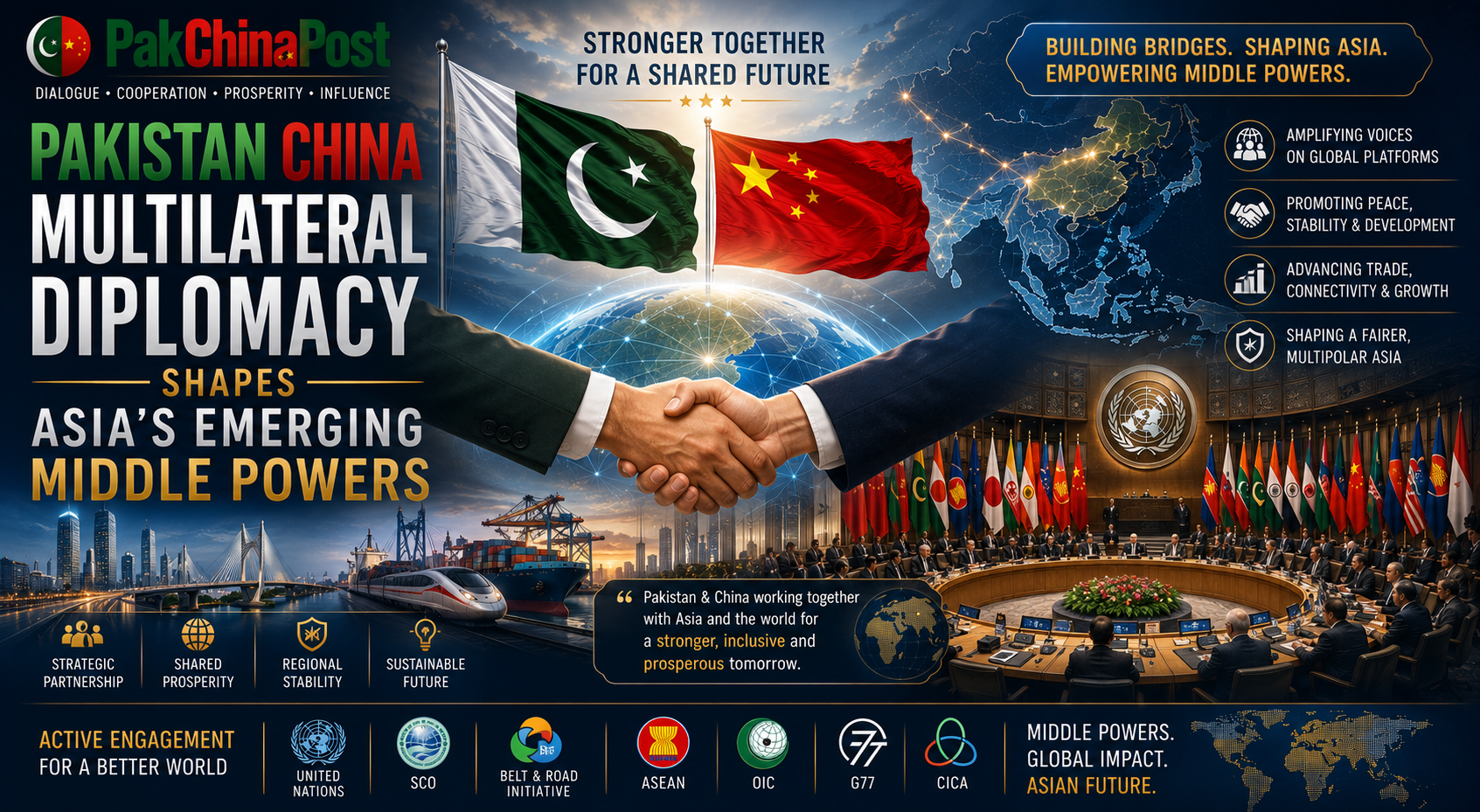
Pakistan China Multilateral Diplomacy Shapes Asia’s Emerging Middle Powers

Pakistan China cooperation is increasingly entering a more sophisticated diplomatic phase in which bilateral engagement is no longer confined to infrastructure investment, commercial connectivity or traditional strategic coordination. Instead, both countries are operating within an increasingly competitive multilateral environment where emerging middle powers

Pak China Industrial Decarbonisation Financing and Export Competitiveness
Pak China industrial cooperation is approaching a decisive inflection point where competitiveness will increasingly be determined not merely by production costs or manufacturing scale but by measurable environmental performance embedded throughout industrial value chains. The international trading environment is rapidly integrating carbon disclosure

Pak China Smart Dry Ports Through Predictive Customs Intelligence
Pak China economic cooperation is steadily entering a phase where digital governance, rather than physical infrastructure alone, will increasingly determine the competitiveness of bilateral commerce. Roads, railways and ports remain indispensable, yet the efficiency of freight movement is now shaped as much by

Pak China Renminbi Liquidity Networks Strengthen Financial Strategic Resilience
Pak China financial cooperation is gradually entering a phase where the discussion is no longer confined to expanding bilateral trade volumes or financing infrastructure. The more consequential policy debate now concerns the architecture through which financial transactions themselves are conducted. Recent shifts across

Pak China mineral partnership can anchor advanced industrial transformation
Pak China economic cooperation is entering a phase where industrial competitiveness will increasingly depend not upon who owns the largest mineral deposits, but upon who controls the sophisticated technologies that transform geological resources into strategic industrial inputs. The international contest surrounding critical minerals
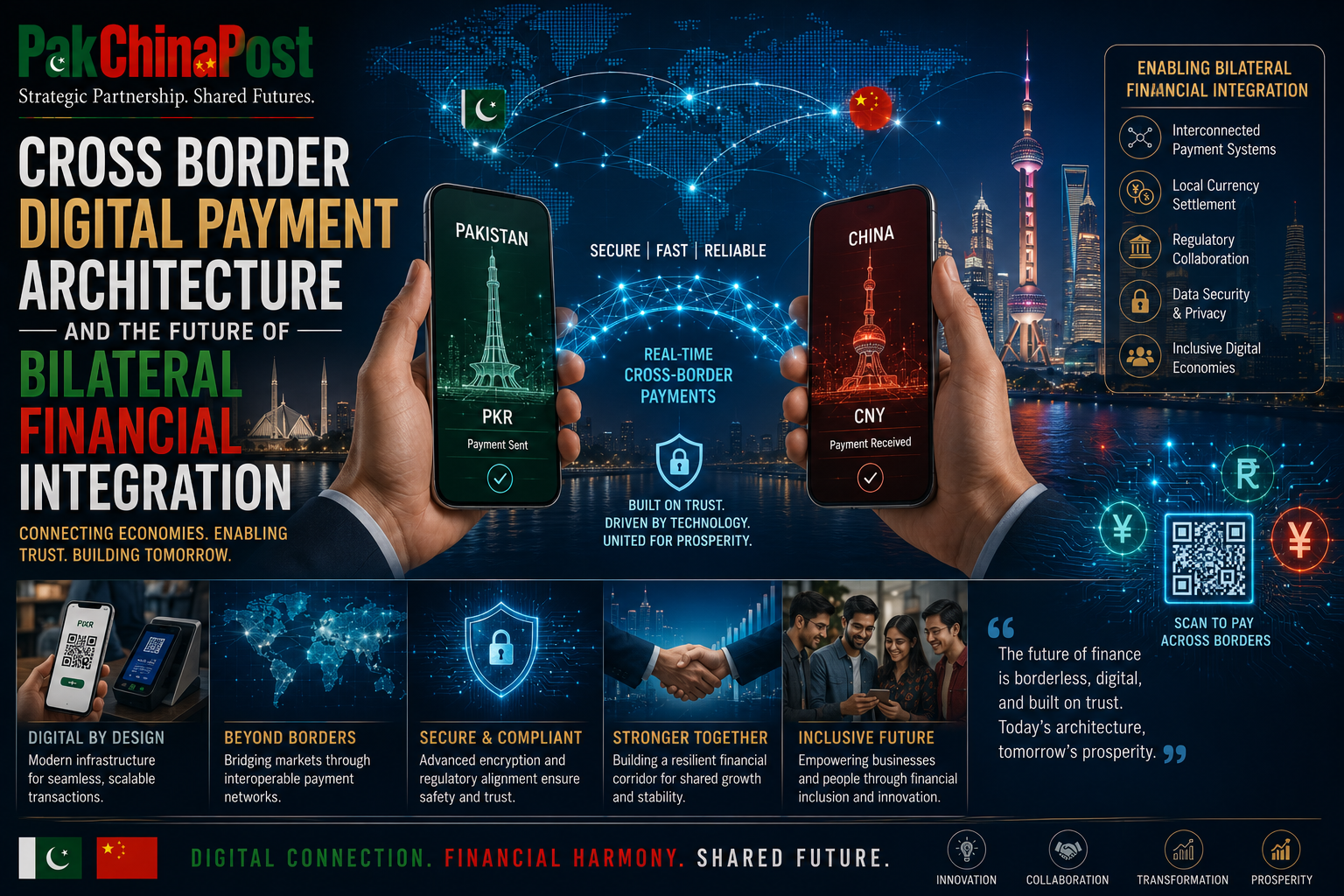
Cross Border Digital Payment Architecture and the Future of Bilateral Financial Integration
The architecture of international finance is entering one of its most profound transformations since the establishment of the modern global monetary system. Digital technologies are redefining the movement of capital, the settlement of international trade, and the governance of financial transactions. Central bank
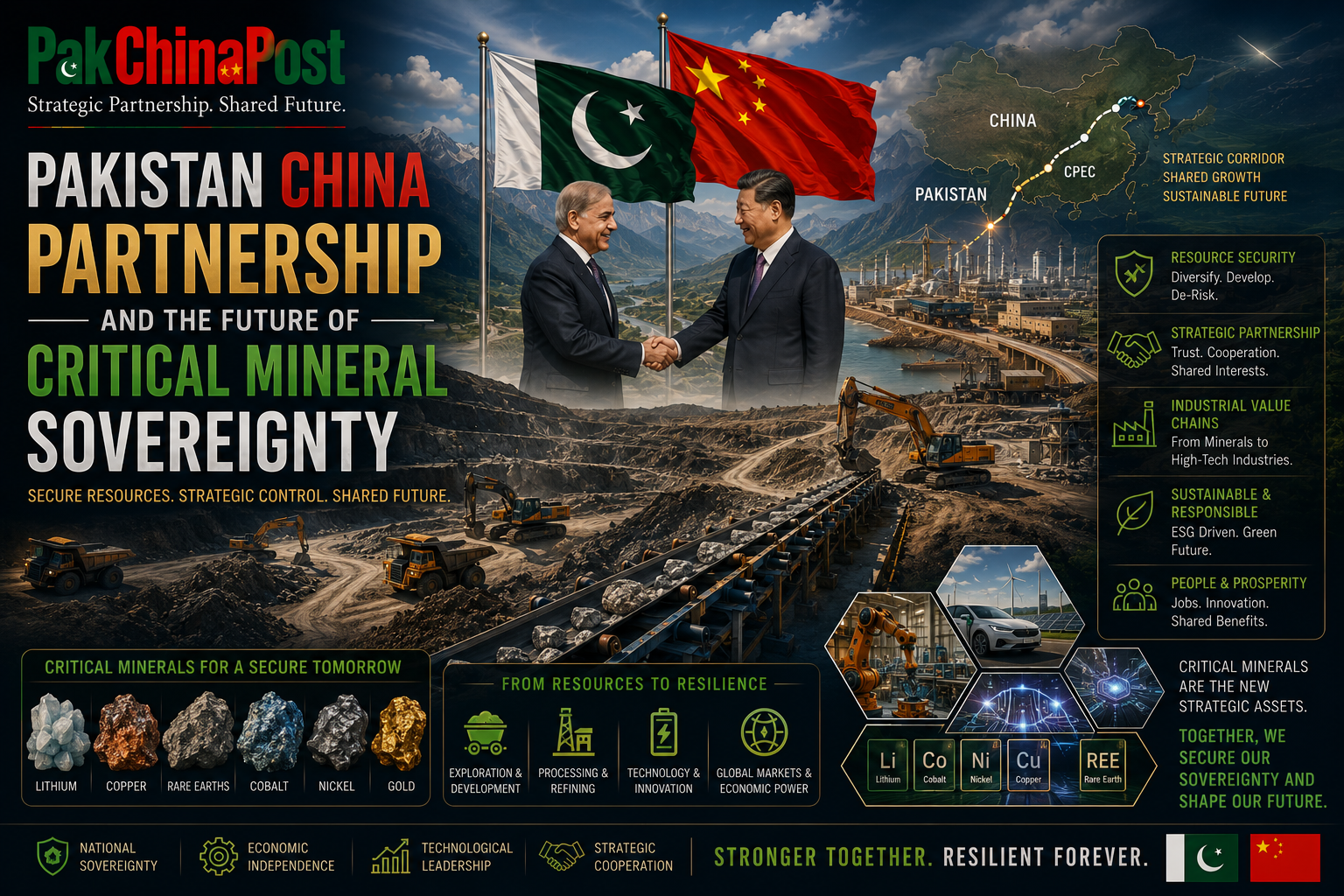
Pakistan China Partnership and the Future of Critical Mineral Sovereignty
Pakistan and China are entering a new phase of economic cooperation in which strategic value will increasingly be measured not only through transport corridors, industrial parks, and energy connectivity, but also through the capacity to secure, process, and commercialise the critical minerals that
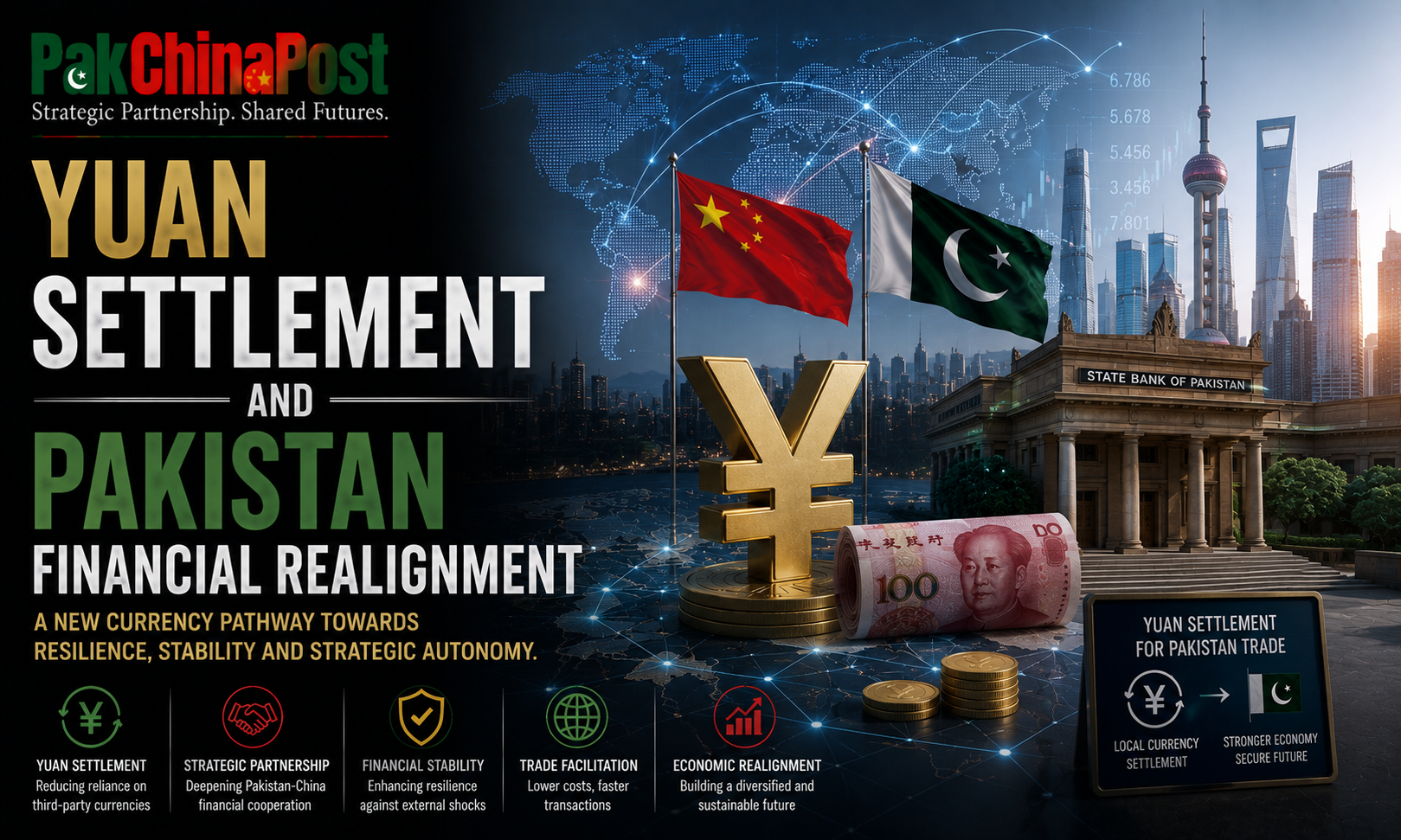
Yuan Settlement and Pakistan Financial Realignment
The gradual reconfiguration of Pakistan’s external payment architecture has placed renewed attention on the feasibility of expanding Chinese yuan denominated trade settlement as an operational alternative to the US dollar. With persistent pressure on foreign exchange reserves, recurring balance of payments constraints, and

Industrial Zones and Pakistan Export Stagnation Puzzle
A decade after Pakistan and China embarked upon an ambitious industrial cooperation framework premised on Special Economic Zones as engines of export diversification, the structural composition of Pakistan’s external trade remains stubbornly anchored in low value-added categories. Textile yarn, basic cotton derivatives, rudimentary
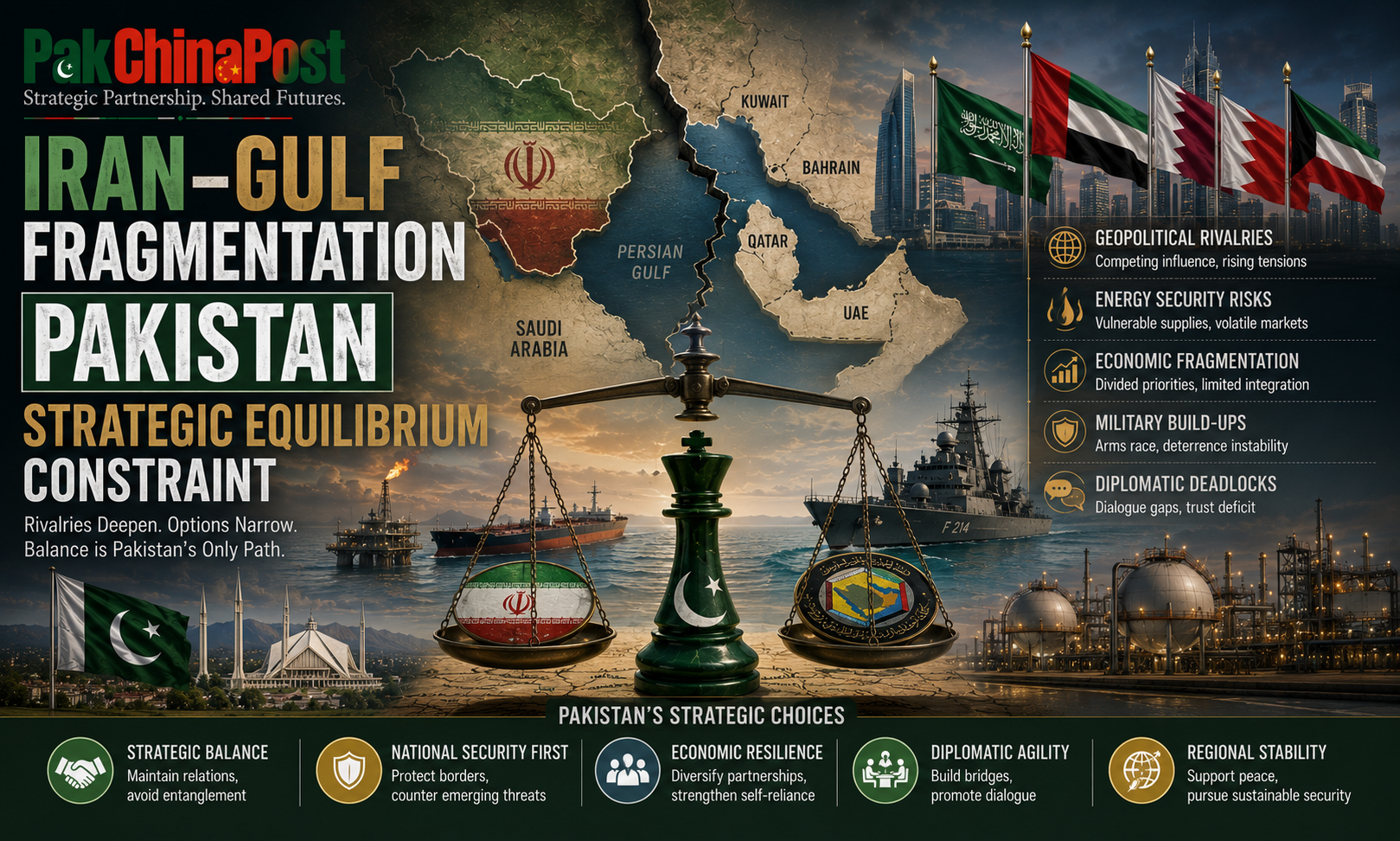
Iran Gulf Fragmentation Pakistan Strategic Equilibrium Constraint
The contemporary Middle Eastern security architecture is increasingly defined not by linear rivalries but by layered fragmentation, where state competition, proxy contestation, maritime insecurity and energy geopolitics converge into an unstable equilibrium. Within this shifting landscape, the Iran Gulf rivalry persists as a