
Smart Ports Gwadar and Digital Trade Control

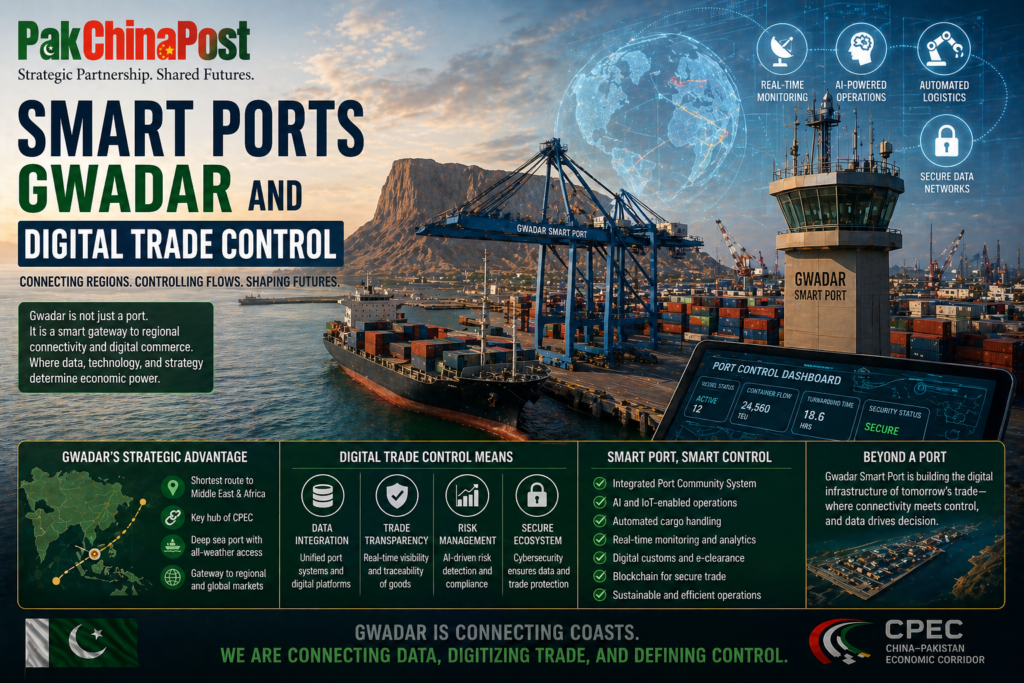
Gwadar is often described in grand strategic language as a future hub of regional connectivity, a maritime gateway linking Central Asia, the Middle East, and Western China through the China Pakistan Economic Corridor. Yet beneath the familiar rhetoric of deep sea ports and trade routes, a more subtle transformation is underway. Gwadar is increasingly being reimagined not only as a physical port, but as a digitally governed logistics node, where trade flows are managed through data systems, algorithmic customs processing, satellite enabled tracking, and integrated surveillance architectures. The question is no longer whether Gwadar will be built as a port, but what kind of port it will become in an age of smart infrastructure.
The emerging concept of smart ports extends far beyond automation of cranes or digitization of shipping manifests. It represents a fundamental shift in how maritime trade is organized, monitored, and optimized. In this model, ports are no longer passive entry and exit points for goods. They become active data environments where every container, vessel, and transaction is tracked in real time, analyzed through predictive systems, and synchronized with global supply chain networks. In the case of Gwadar, this transformation is closely linked to Chinese logistics technologies and digital infrastructure frameworks being introduced under CPEC phase two.
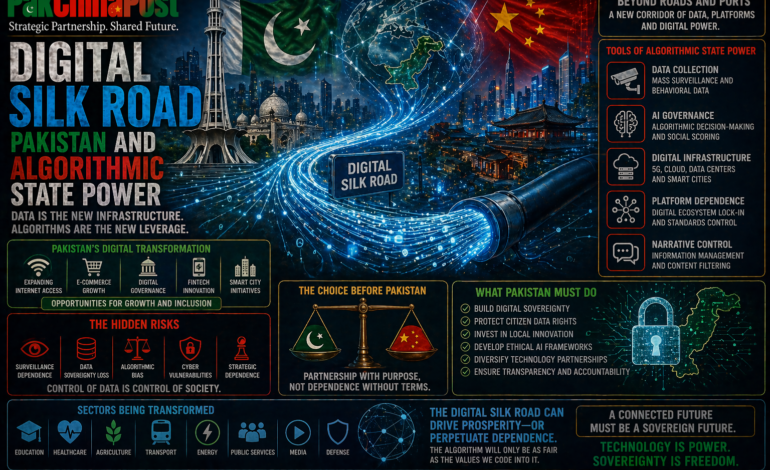
At the center of this shift is the integration of data driven governance into port operations. Customs clearance, traditionally a paper heavy and time consuming process, is increasingly being digitized through integrated platforms that allow for pre arrival risk assessment, automated documentation verification, and real time cargo monitoring. These systems are designed to reduce delays, minimize corruption, and increase efficiency in trade flows. In principle, they promise to transform Gwadar into a competitive node in global maritime logistics.
However, efficiency is only one dimension of this transformation. The deeper implication lies in the reconfiguration of control over trade data. In traditional port systems, information was fragmented across multiple agencies and physical checkpoints. In smart port systems, data becomes centralized, continuously updated, and algorithmically processed. This creates a situation where visibility over trade flows is unprecedented, but also concentrated within the architecture of the digital system itself.
Chinese firms and institutions play a central role in this emerging infrastructure. From port management systems to logistics optimization platforms, a significant portion of the technological backbone is either directly provided or indirectly influenced by Chinese digital ecosystems. This raises important questions about technological dependency and operational sovereignty. While ownership of physical infrastructure may remain formally local or joint, the deeper control often resides in software, data protocols, and system architecture.
The transformation of Gwadar into a smart port must also be understood within the broader context of global maritime competition. Across the world, ports in Singapore, Rotterdam, and Dubai are increasingly adopting advanced digital systems to enhance efficiency and attract trade flows. Gwadar is entering this competitive landscape at a time when logistics is no longer defined solely by geography, but by data integration capacity. In this sense, the port is not just competing with other ports in the region, but with global networks of digitally optimized trade hubs.
One of the most significant innovations associated with smart ports is predictive logistics. By analyzing historical shipping data, weather patterns, geopolitical risk indicators, and supply chain dynamics, these systems can forecast congestion, optimize routing, and anticipate disruptions. Applied to Gwadar, such systems could theoretically enhance its attractiveness as a transshipment hub by reducing uncertainty and improving reliability. Yet predictive systems also introduce new forms of dependency on algorithmic decision making processes that may not be fully transparent to local authorities.
The integration of satellite based monitoring systems further extends the reach of smart port governance. Vessels approaching port zones can be tracked from open sea, cargo movements can be synchronized with inland transport systems, and security protocols can be enforced through real time geospatial data. This creates a continuous informational field that extends far beyond the physical boundaries of the port itself. In Gwadar’s case, this could significantly enhance maritime security and reduce smuggling or unauthorized activity. At the same time, it also embeds the port within a wider surveillance architecture that transcends national territorial boundaries.
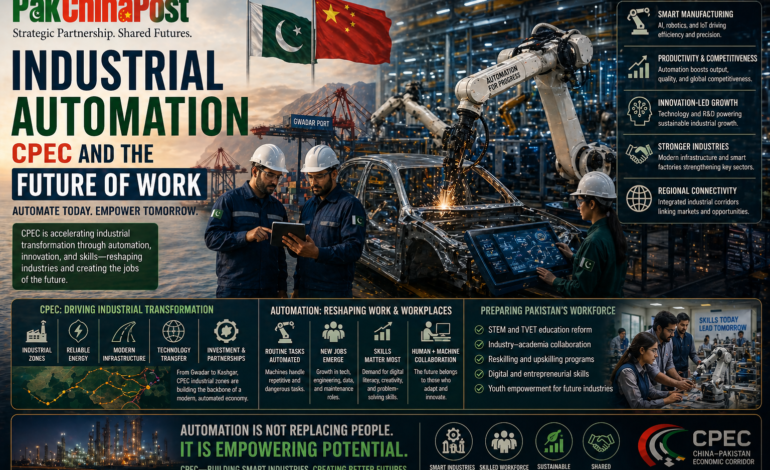
Another critical dimension is the linkage between smart ports and inland logistics corridors. Gwadar is not an isolated infrastructure project. It is designed to function as part of a broader corridor system connecting western China to the Arabian Sea. This requires seamless integration between maritime logistics, road transport, rail connectivity, and warehousing systems. Digital platforms are the glue that binds these components together. Through centralized dashboards and interoperable data systems, cargo can be tracked from origin to destination without interruption.
This level of integration has profound implications for administrative coordination. In theory, it reduces inefficiencies caused by bureaucratic fragmentation and inter agency delays. In practice, it requires a high degree of trust in digital systems and the entities that design and manage them. When multiple layers of infrastructure depend on a unified technological backbone, any disruption or asymmetry in that backbone can have cascading effects across the entire logistics chain.
The question of governance becomes particularly important in this context. Who sets the rules for data access. Who determines the algorithms that prioritize certain shipments over others. Who has the authority to audit system performance or intervene in automated decision making processes. These questions are not merely technical. They are political questions embedded within the architecture of smart infrastructure.
Gwadar’s transformation also raises important economic considerations. Proponents argue that smart port technology will increase trade volumes, attract foreign investment, and position Pakistan as a competitive logistics hub. By reducing transaction costs and improving reliability, digital systems could unlock new economic opportunities. However, these gains are not guaranteed. They depend on complementary factors such as political stability, regulatory clarity, and institutional capacity.
There is also the risk that technological sophistication may outpace local capacity to fully utilize or govern these systems. In such scenarios, the benefits of efficiency may be unevenly distributed, with external actors capturing a disproportionate share of value through control over logistics platforms and data ecosystems. This would reproduce a familiar pattern in global infrastructure development, where ownership of data becomes more important than ownership of physical assets.
From a geopolitical perspective, Gwadar’s smart transformation cannot be separated from broader strategic dynamics in the Indian Ocean region. Maritime infrastructure is increasingly becoming a site of strategic competition, where ports are not only economic assets but also nodes of influence. Digital port systems amplify this dimension by introducing data sovereignty as a new layer of strategic importance. Control over logistics data can translate into influence over trade flows, pricing structures, and supply chain visibility.
The integration of Chinese digital systems into Gwadar must therefore be understood within this wider geopolitical context. It reflects a broader trend in which infrastructure development is inseparable from technological ecosystems. The port is not simply being built; it is being embedded within a specific digital architecture that carries its own standards, protocols, and governance logic.
At the same time, it is important not to reduce Gwadar’s transformation to a binary narrative of control versus dependency. The reality is more complex. Pakistan retains agency in how these systems are implemented, regulated, and adapted. Local institutions play a role in shaping operational frameworks, even if core technologies originate externally. The outcome depends on how effectively domestic governance structures engage with imported technological systems.
There is also a developmental argument in favor of smart port integration. For a country that has historically struggled with inefficiencies in customs administration, port congestion, and trade facilitation, digital systems offer tangible improvements. Reduced clearance times, improved transparency, and enhanced security can contribute to broader economic stability. In this sense, smart port technology is not merely an external imposition but also a response to internal structural challenges.
Yet the long term sustainability of this model depends on capacity building. Without domestic expertise in data analytics, logistics engineering, and system governance, reliance on external technological partners may become entrenched. This raises the importance of knowledge transfer, institutional training, and local innovation ecosystems as essential components of infrastructure development.
Gwadar, therefore, is not just a port in transition. It is a laboratory for experimenting with the future of trade governance in a digitally interconnected world. It embodies both the promise and the complexity of smart infrastructure, where efficiency, sovereignty, dependency, and innovation coexist in a delicate balance.
The deeper question is not whether Gwadar will become a smart port, but what kind of state capacity will emerge from its transformation. Will digital systems strengthen domestic governance autonomy, or will they embed new forms of external reliance within critical infrastructure. The answer will not be determined by technology alone, but by the institutional choices that accompany it.
In the end, Gwadar represents more than a maritime project. It represents a shift in how Pakistan engages with the global economy, moving from physical corridors of trade to digital corridors of control. Whether this shift leads to empowerment or constraint will depend on how the data beneath the ships is governed, interpreted, and ultimately owned.
A Public Service Message