
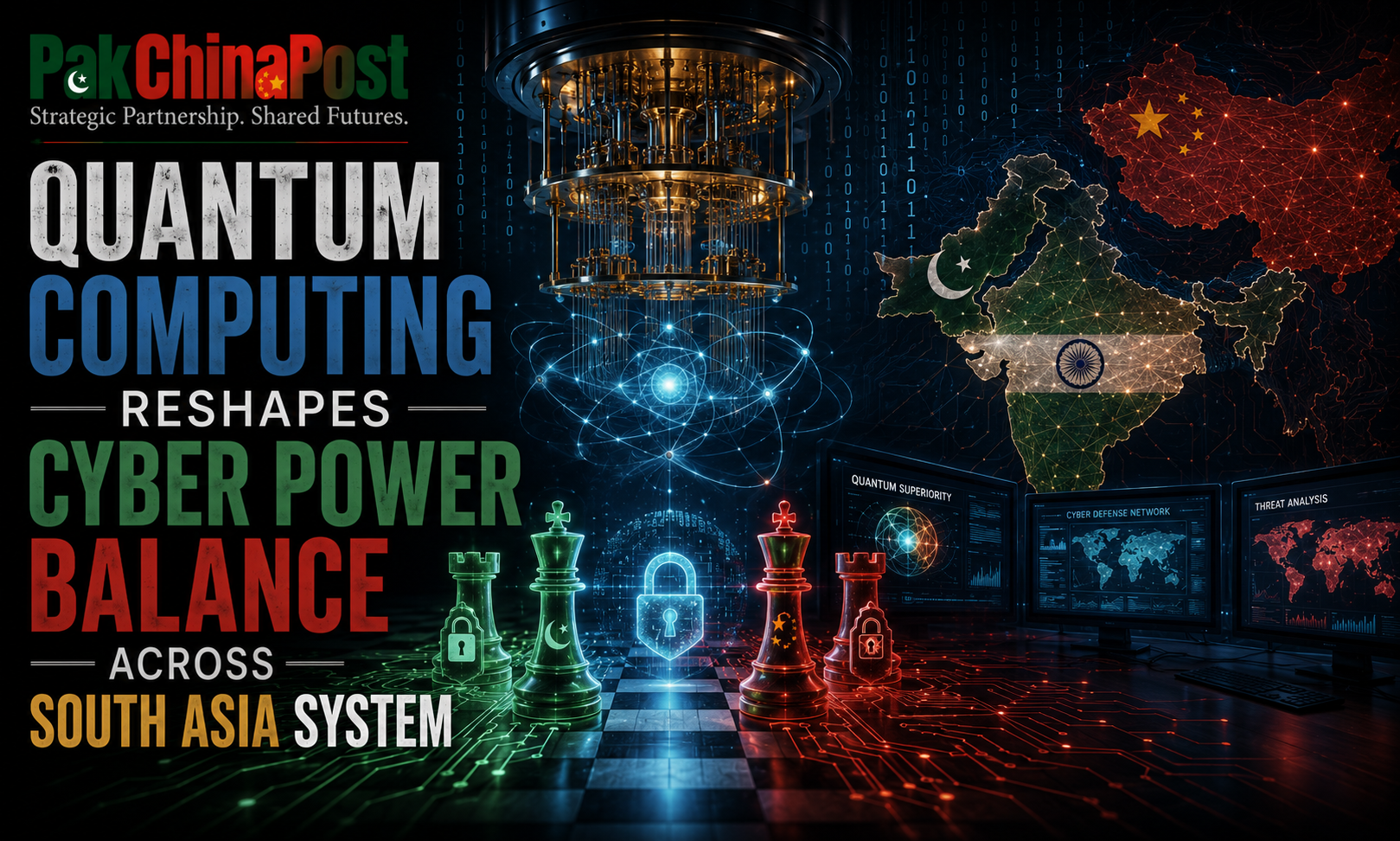
Quantum Computing Reshapes Cyber Power Balance Across South Asia System

Quantum computing, once confined to theoretical physics laboratories and experimental computational research clusters, is increasingly entering the domain of strategic statecraft, where computational supremacy is beginning to intersect with cyber sovereignty, cryptographic resilience, and geopolitical leverage. For Pakistan, situated at the crossroads of

South Asia’s Emerging Triangular Power Balance: Pakistan–China Strategic Convergence

The evolving strategic relationship between Pakistan and China represents a profound reconfiguration of South Asia’s geopolitical architecture, shifting it away from historically entrenched bilateral rivalry patterns toward a more complex triangular system of power balancing. This transformation is not merely a diplomatic or

Pakistan’s Border Diplomacy and Strategic Autonomy in South and Central Asia
Pakistan’s border environment is a complex and enduring factor in its foreign policy calculus and geopolitical positioning. Situated at the confluence of South and Central Asia, Pakistan faces a multifaceted frontier challenge that encompasses Afghanistan to the west, India to the east, and

Pakistan’s Border Dynamics with Afghanistan and India in the Context of China’s Expanding Geopolitical Footprint
The frontier complex that Pakistan confronts along its western and eastern borders encapsulates the most enduring strategic dilemmas of South Asia’s contemporary security landscape. In the west the frontier with Afghanistan frames the challenge of managing insurgency spillovers, governing asymmetrical threats, and navigating