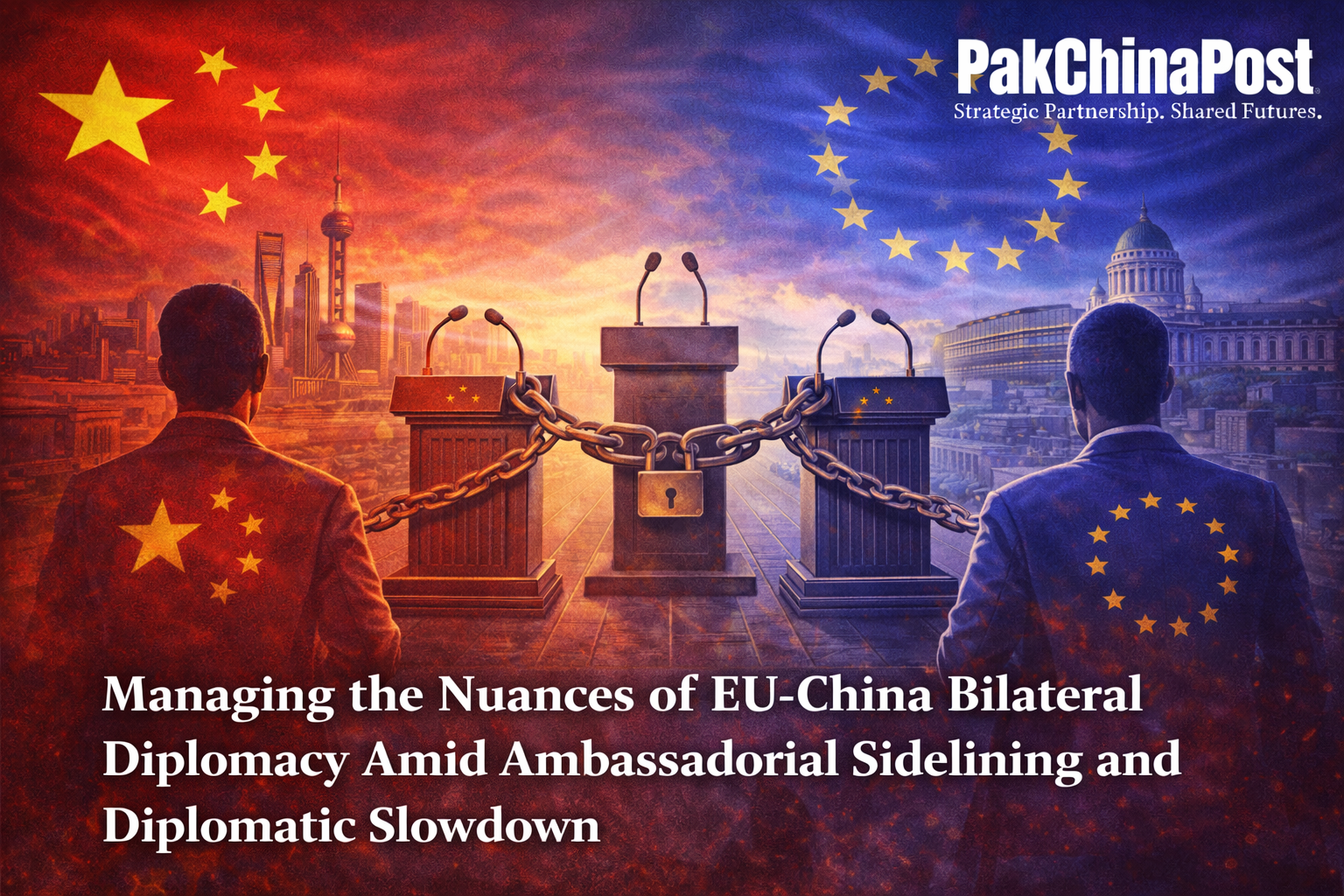

Championing Global Norms: China’s Multilateral Strategy Against Unilateralism and Protectionism


In the contemporary international order, the discourse surrounding unilateralism and protectionism has intensified, presenting both challenges and opportunities for global actors. China, as a rising power with expansive economic reach and growing diplomatic influence, has positioned itself as a proponent of multilateralism and a defender of global norms. This strategic posture seeks not merely to respond to criticism of its policies but to cultivate legitimacy and trust in global governance, particularly within Europe. Against a backdrop of geopolitical uncertainty, trade tensions, and ideological contestation, China’s emphasis on upholding international rules and advocating cooperative mechanisms provides a framework for engagement that seeks to reconcile national interests with broader global stability. This article examines the contours of China’s strategy, the effectiveness of its multilateralist approach in gaining credibility within Europe, and the diplomatic tools it can deploy to consolidate this narrative while advancing its strategic and economic objectives.
China’s framing of unilateralism and protectionism as global challenges is rooted in its perception of contemporary international dynamics. Unilateral measures, whether in the form of tariffs, sanctions, or extraterritorial regulations, disrupt established norms of reciprocity and multilateral cooperation, generating uncertainty in trade, investment, and geopolitical engagements. Protectionist tendencies, often intertwined with nationalist economic policies, challenge the principles of open markets and equitable opportunity that underpin the rules-based international order. For China, these trends pose both practical and symbolic challenges: they threaten the predictability of trade relations, create obstacles for global supply chains, and, critically, risk undermining the credibility of international institutions. By positioning itself as a defender of multilateralism, China seeks to counterbalance these trends and assert its vision of an international system grounded in cooperation, legal norms, and shared responsibility.
Europe represents a pivotal audience for China’s multilateralist narrative. European policymakers and institutions have consistently emphasized adherence to international rules, fair trade, and cooperative problem-solving. However, Europe’s own engagement with China is shaped by concerns about dependency, security risks, and strategic asymmetry, particularly in technology, infrastructure, and investment. China’s challenge is therefore twofold: to demonstrate commitment to global norms in ways that resonate with European priorities, and to counter perceptions that its rise represents a zero-sum challenge to European interests. This requires a sophisticated alignment of rhetoric, action, and institutional engagement, wherein China’s commitment to multilateralism is manifested both in policy outcomes and in tangible contributions to global governance.
Economic diplomacy constitutes a central pillar of China’s multilateralist strategy. By advocating open markets, equitable trade practices, and transparent investment regimes, China positions itself as a reliable partner for Europe and other global actors. Initiatives such as participation in the World Trade Organization, engagement in regional trade agreements, and promotion of cross-border investment cooperation demonstrate China’s willingness to uphold shared norms and facilitate mutually beneficial economic activity. In Europe, such initiatives can counter perceptions of predatory economic behavior, particularly when accompanied by compliance with European regulations, environmental standards, and ethical investment practices. By embedding economic cooperation within a multilateralist framework, China not only enhances its legitimacy but also mitigates the risks of conflict arising from trade disputes or protectionist reactions.
China’s commitment to global governance extends beyond economics into critical areas of international policy, including climate action, public health, and sustainable development. In climate diplomacy, for example, China has engaged in multilateral agreements, contributed to green technology initiatives, and participated in global forums addressing carbon reduction, energy transition, and ecological conservation. By aligning its environmental agenda with European and global priorities, China signals a willingness to engage constructively and responsibly, positioning itself as a stakeholder invested in collective outcomes. Similarly, in public health governance, China’s participation in pandemic preparedness initiatives, vaccine distribution programs, and research collaborations underscores its role as a cooperative actor capable of delivering practical benefits to multilateral efforts. These engagements serve to reinforce China’s narrative as a defender of norms while demonstrating operational competence and credibility in international affairs.
Strategic communication plays a critical role in reinforcing China’s multilateralist posture. Beyond policy actions, China’s ability to frame its intentions, clarify objectives, and manage perceptions is central to shaping European understanding and trust. Through engagement with think tanks, academic institutions, media outlets, and diplomatic channels, China can articulate its vision of a cooperative global order and counter narratives that portray its rise as inherently confrontational or unilateralist. Messaging that emphasizes reciprocity, legal compliance, and shared benefits resonates with European sensibilities, particularly when it highlights concrete contributions to global problem-solving rather than abstract proclamations. By controlling the narrative and proactively addressing misconceptions, China enhances the effectiveness of its multilateral initiatives and reduces the susceptibility of Europe to external influence or adversarial framing.
Institutional diplomacy is another key instrument in China’s strategy. Engagement with multilateral bodies, regional organizations, and international standard-setting institutions allows China to codify its commitment to norms while shaping the rules and procedures that govern global interactions. Participation in organizations such as the United Nations, the G20, and the International Monetary Fund enables China to influence the design of policy frameworks, ensuring that its interests are considered within cooperative mechanisms. Furthermore, multilateral engagement provides platforms for dialogue and dispute resolution, reducing the likelihood that conflicts escalate into unilateral confrontations or protectionist measures. By institutionalizing cooperation, China embeds itself within the architecture of global governance, reinforcing credibility and legitimacy in European eyes.
Soft power complements these institutional and policy-driven initiatives. Cultural diplomacy, educational exchange, and media outreach serve to humanize China’s engagement and reduce the perception of strategic threat. Educational partnerships with European universities, professional exchange programs, and collaborative research initiatives foster trust, knowledge-sharing, and mutual understanding. Cultural initiatives, including exhibitions, language programs, and media collaborations, reinforce the narrative of China as a constructive global actor committed to shared values of dialogue, cooperation, and mutual respect. Soft power functions as a bridge between policy and perception, enhancing the resonance of China’s multilateralist stance while countering cognitive biases that may exaggerate threats or misunderstand intentions.
Addressing protectionism requires particular care. European concerns regarding Chinese market practices, technology transfer, and investment influence often drive protective measures, ranging from regulatory screening to legislative restrictions. China’s multilateralist approach seeks to mitigate these reactions by emphasizing transparency, reciprocity, and adherence to international norms. Establishing joint committees, compliance frameworks, and monitoring mechanisms provides assurances that Chinese engagement respects European legal and ethical standards, reducing the salience of protectionist impulses. By demonstrating that cooperation is governed by predictable rules rather than arbitrary advantage, China can foster confidence, encourage sustained engagement, and reinforce the broader narrative of a rules-based international order.
The cognitive dimension of multilateral diplomacy is equally significant. Europe’s perceptions of China are shaped by historical experience, ideological framing, and domestic political discourse, all of which influence policy attitudes. Misconceptions about China’s intentions, fears of dependency, and concerns about strategic asymmetry can undermine trust and complicate engagement. China’s multilateralist strategy addresses this gap by promoting transparency, fostering dialogue, and creating forums for sustained interaction. Think tanks, academic collaborations, and expert networks function as intermediaries, translating complex policy intentions into comprehensible narratives that highlight alignment with European priorities. By engaging with these cognitive channels, China enhances understanding, reduces misperception, and strengthens the legitimacy of its multilateralist credentials.
Strategic patience underpins the long-term effectiveness of China’s approach. Multilateralism and the defense of global norms are processes that require consistent engagement, incremental trust-building, and sustained demonstration of commitment. Episodic challenges, such as geopolitical tensions or trade disputes, must be addressed within the framework of broader continuity and predictability. By prioritizing long-term outcomes over immediate gains, China reinforces the credibility of its narrative and fosters resilience in the bilateral and multilateral dimensions of its relationships. This strategic patience signals maturity, stability, and reliability qualities that resonate with European partners and global stakeholders alike.
China’s approach also emphasizes inclusivity and cooperation beyond the EU. By engaging in multilateral initiatives with a broad coalition of stakeholders ranging from developing nations to regional alliances, China demonstrates that its commitment to norms is universal rather than selective. Such inclusivity enhances the legitimacy of China’s position, showcasing its role as a global actor that seeks solutions to shared challenges rather than imposing unilateral agendas. Europe, attuned to multilateral principles, perceives such engagement as consistent with its own values, enhancing receptivity to collaboration and reinforcing China’s strategic positioning.
A critical aspect of operationalizing this strategy involves leveraging concrete initiatives to demonstrate normative alignment. Collaborative infrastructure projects, joint research programs, technology partnerships, and environmental initiatives serve as practical embodiments of multilateral principles. Each initiative provides an opportunity to illustrate adherence to international rules, transparency in operations, and mutual benefit in outcomes. By coupling rhetoric with tangible achievements, China translates abstract commitments into visible and credible contributions that resonate with European stakeholders and reinforce legitimacy in the international arena.
Risk management is another dimension of the multilateralist approach. By embedding engagement within predictable frameworks and institutional channels, China reduces exposure to unilateral actions, protectionist impulses, and geopolitical volatility. Predictable processes, formal agreements, and transparent monitoring mechanisms mitigate uncertainty, enhance accountability, and build confidence. Europe, sensitive to risk and perception, values such institutional reliability, which in turn reinforces the credibility of China’s narrative as a responsible, rule-abiding global actor.
Technological and innovation diplomacy further strengthens China’s position. By engaging with European partners in areas such as renewable energy, digital infrastructure, artificial intelligence, and sustainable manufacturing, China demonstrates alignment with international standards, cooperative innovation, and shared strategic objectives. Participation in joint research initiatives, standard-setting committees, and cross-border technological collaborations highlights China’s commitment to shared norms while contributing substantively to European priorities. This approach reinforces the narrative that China’s rise is compatible with global rules rather than a challenge to them, reducing the potential for unilateral countermeasures or protectionist policies.
In conclusion, China’s strategy of positioning itself as a defender of global norms against unilateralism and protectionism represents a sophisticated and multidimensional approach to contemporary international engagement. By integrating economic diplomacy, multilateral participation, strategic communication, soft power, technological cooperation, risk management, and inclusivity, China enhances its legitimacy and credibility within Europe and the broader international system. Effectiveness is contingent upon the alignment of rhetoric with tangible outcomes, the consistent demonstration of reciprocity and transparency, and the cultivation of trust across institutional, cognitive, and cultural dimensions. Through this comprehensive framework, China not only advances its strategic and economic objectives but also reinforces the principles of a cooperative, rules-based, and sustainable global order—one in which partnership, dialogue, and adherence to shared norms underpin enduring international stability and prosperity.
A Public Service Message