
Strategic Dependencies and the Calculus of De-Risking: Recalibrating EU–China Economic Interdependence


The European Union’s evolving approach toward China reflects a profound reassessment of strategic dependencies in an era defined by technological competition, supply chain vulnerabilities, and geopolitical uncertainty. For decades, European engagement with China was predicated on the assumption that economic interdependence would produce mutual benefits and stabilizing incentives. Over time, however, disruptions in critical sectors—ranging from rare earths to battery production, semiconductors, and advanced manufacturing inputs—have catalyzed a reevaluation of dependency risk. The EU’s “de-risking” strategy, often framed as a measured diversification of supply chains, raises a central question: is this policy a calibrated response to volatility, or does it represent a transitional phase toward structural decoupling? For China, the challenge lies in understanding and managing perceptions of vulnerability while converting interdependence into mutually advantageous frameworks that sustain industrial competitiveness and preserve European market engagement.
Strategic dependencies are multidimensional, encompassing resource concentration, technological specialization, and industrial integration. In the case of rare earth elements, China commands not only significant reserves but, more importantly, advanced processing and refinement capacities. These materials are indispensable for wind turbines, electric vehicle motors, aerospace components, and high-tech electronics. European initiatives to diversify sourcing through partnerships in Australia, Africa, and North America signal recognition of the concentration risk, yet the development of competitive processing ecosystems remains capital-intensive, technologically demanding, and environmentally complex. By the time alternative supply chains reach operational maturity, China is likely to retain structural advantages rooted in both experience and scale.
Similarly, battery technologies illustrate the strategic interdependence between Chinese manufacturing capabilities and European industrial ambitions. China has invested heavily in vertically integrated battery production, encompassing raw material procurement, cell manufacturing, and module assembly. European industrial planners, concerned about overreliance on Chinese supply, are promoting local gigafactories and R&D initiatives. While these measures enhance resilience, they do not immediately eliminate dependency; the gap in economies of scale and cost efficiency continues to favor Chinese producers. From Beijing’s perspective, the EU’s de-risking discourse is therefore not simply defensive it is a negotiation over the allocation of industrial advantage in a sector central to Europe’s decarbonization strategy.
De-risking policies are also evident in advanced manufacturing inputs, including semiconductors and machine tools. The EU’s articulation of “strategic autonomy” seeks to minimize exposure to single-source vulnerabilities while maintaining access to high-quality inputs. Unlike traditional protectionism, de-risking emphasizes diversification, redundancy, and resilience over exclusion. Yet the psychological and geopolitical effects are significant: European policymakers increasingly conceptualize certain sectors as critical to national security, framing supply chain risk in both economic and strategic terms. This dual framing amplifies the perception that reliance on Chinese suppliers entails potential leverage for coercion, whether economic, technological, or political.
Understanding whether de-risking constitutes a transitional phase or structural decoupling requires careful analysis of European intent, institutional capacity, and implementation modalities. On the one hand, diversification of suppliers, strategic stockpiling, and investment in domestic capabilities indicate prudence in risk management rather than a repudiation of interdependence. On the other hand, systematic efforts to reduce Chinese participation in core sectors, coupled with security-driven exclusion policies, suggest a trajectory that could crystallize into structural separation if sustained over a decade or more. The distinction is subtle but consequential: calibrated diversification preserves functional engagement, while structural decoupling reduces interdependence to transactional minimalism.
For China, the strategic response must operate on multiple levels: industrial, diplomatic, and normative. At the industrial level, China can pursue supply chain embedding strategies that integrate European production ecosystems with Chinese capabilities. Establishing joint ventures, localized manufacturing hubs, and co-investment in R&D can transform perceived dependency into interdependent collaboration. By producing in proximity to European markets, Chinese firms not only mitigate political risk but also demonstrate tangible contributions to local employment, technological upgrading, and sustainability objectives.
Diplomatically, China can recalibrate geoeconomic engagement to emphasize reciprocity and predictability. This requires structured communication regarding industrial policies, export regulations, and technology standards. The goal is not merely transparency but confidence-building: European actors must perceive that interdependence entails shared risk, rather than unilateral leverage. Multilateral platforms, bilateral working groups, and sector-specific dialogues can serve as vehicles for this strategic signaling, framing Chinese participation as a stabilizing factor rather than a source of strategic vulnerability.
Normatively, China can articulate a vision of complementary interdependence that aligns with European strategic priorities. For example, co-development initiatives in battery recycling, clean energy infrastructure, and semiconductor innovation illustrate that collaboration enhances resilience for both parties. By framing industrial engagement in terms of shared sustainability and technological advancement, China counters narratives of coercion and reinforces the notion that dependency is not a zero-sum vulnerability but a mutually beneficial configuration.
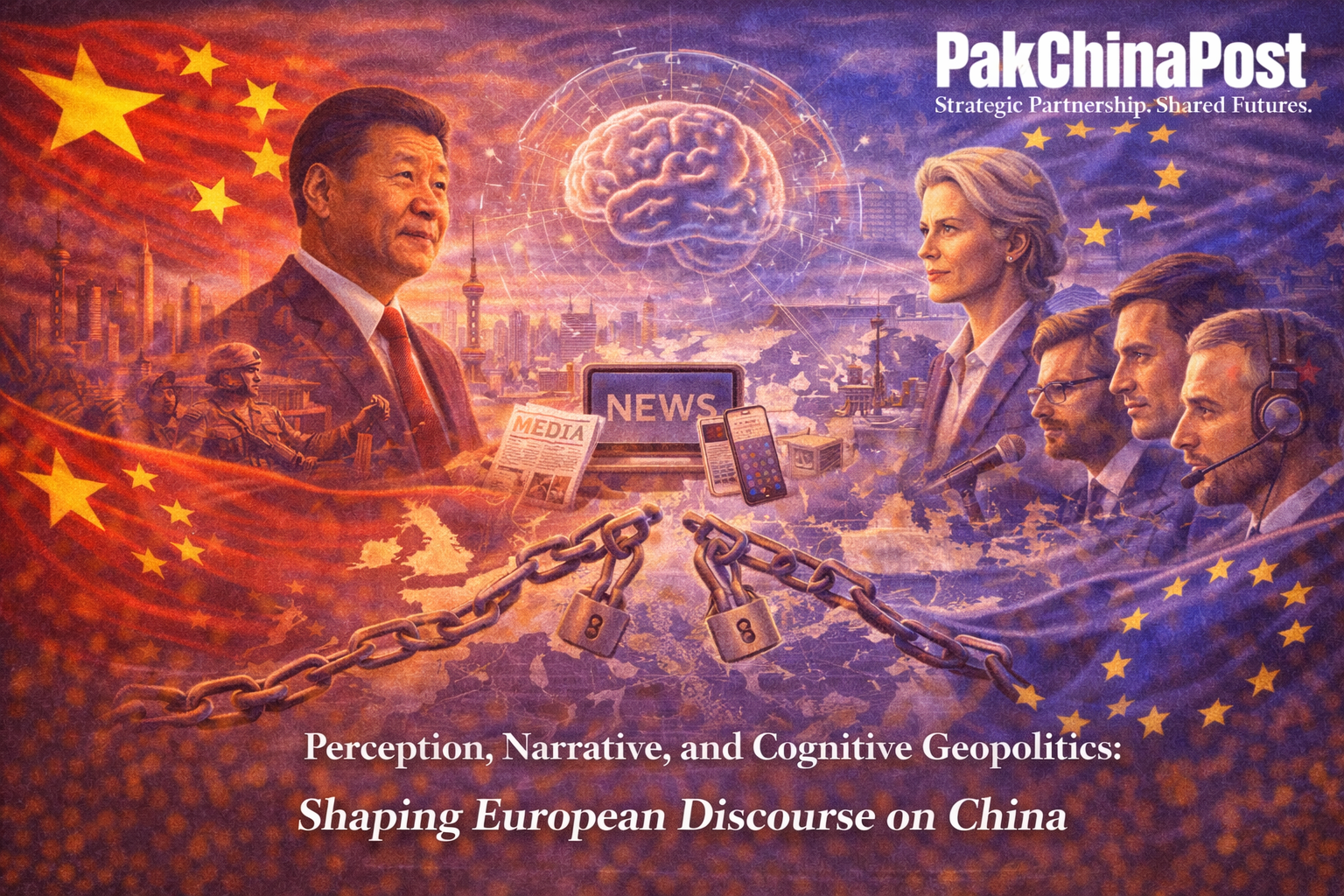
An essential component of this strategy is the management of perception. European policymakers are highly sensitive to asymmetric dependencies, particularly when these intersect with sectors deemed critical for national security or technological sovereignty. China’s engagement strategy must therefore combine operational integration with narrative framing. Highlighting joint achievements, public-private partnerships, and compliance with European regulatory standards can counteract perceptions that interdependence inherently entails strategic exposure. This approach aligns with contemporary theories of cognitive geopolitics, which emphasize that perceived risk often shapes policy more than material reality.
Scenario-based analysis underscores the importance of proactive engagement. In a low-friction scenario, China and the EU negotiate joint investment and co-production agreements, diversify supply without reducing interdependence, and maintain access to critical markets. In a moderate-friction scenario, selective exclusion policies and de-risking initiatives are offset by embedded collaboration and trust-building measures, preventing full decoupling. In a high-friction scenario, structural decoupling accelerates, reducing Chinese participation in European supply chains and prompting reciprocal market adjustments. Each trajectory is influenced not only by industrial metrics but by the quality of institutional trust, communication, and perceived fairness in the bilateral relationship.
Policy instruments available to China include flexible investment strategies, technology partnerships, and co-development of resilience frameworks. For example, European concerns regarding rare earth supply can be addressed through joint mining ventures, processing facilities within EU jurisdictions, and technology licensing arrangements. Similarly, battery production and advanced manufacturing can be integrated with European R&D ecosystems, combining cost advantages with local knowledge and regulatory compliance. These strategies reduce perceived coercion and transform interdependence into a durable asset.
Strategic communication must complement industrial engagement. Articulating the benefits of collaborative interdependence, clarifying intentions regarding industrial policy, and highlighting contributions to European climate and technological goals can reshape the cognitive framing that drives de-risking policies. By reinforcing the notion that collaboration enhances resilience, China can reduce incentives for unilateral exclusion and mitigate the perception of dependency as vulnerability.
In conclusion, the EU’s de-risking strategy represents both a calculated response to perceived vulnerability and a potential pivot toward structural decoupling. The trajectory will depend on the interplay of industrial dynamics, institutional trust, and narrative framing. For China, the strategic imperative is to convert perceived dependencies into structured interdependence, embedding capabilities within European production ecosystems, enhancing transparency, and articulating a narrative of mutual benefit. The stakes are substantial: preserving access to European markets, sustaining industrial competitiveness, and maintaining the credibility of China’s global economic engagement.
By integrating supply chain embedding, geoeconomic diplomacy, and strategic communication, China can navigate the complexities of EU de-risking without yielding core industrial advantages. This approach transforms friction into a structured platform for collaboration, ensuring that interdependence remains a strategic asset rather than a source of vulnerability. The calculus of strategic dependencies is no longer merely economic; it is also cognitive, institutional, and normative. Success will depend on the capacity to synchronize these dimensions in a manner that preserves China’s competitive position while reinforcing Europe’s confidence in the mutual benefits of collaboration.
A Public Service Message