

Pakistan China Partnership Faces Artificial Intelligence Information Warfare Challenges

Pakistan and China increasingly confront a strategic environment in which infrastructure projects, economic integration, scientific cooperation and regional connectivity are no longer challenged solely through conventional geopolitical competition. They are simultaneously exposed to sophisticated information campaigns driven by artificial intelligence, synthetic media, algorithmically
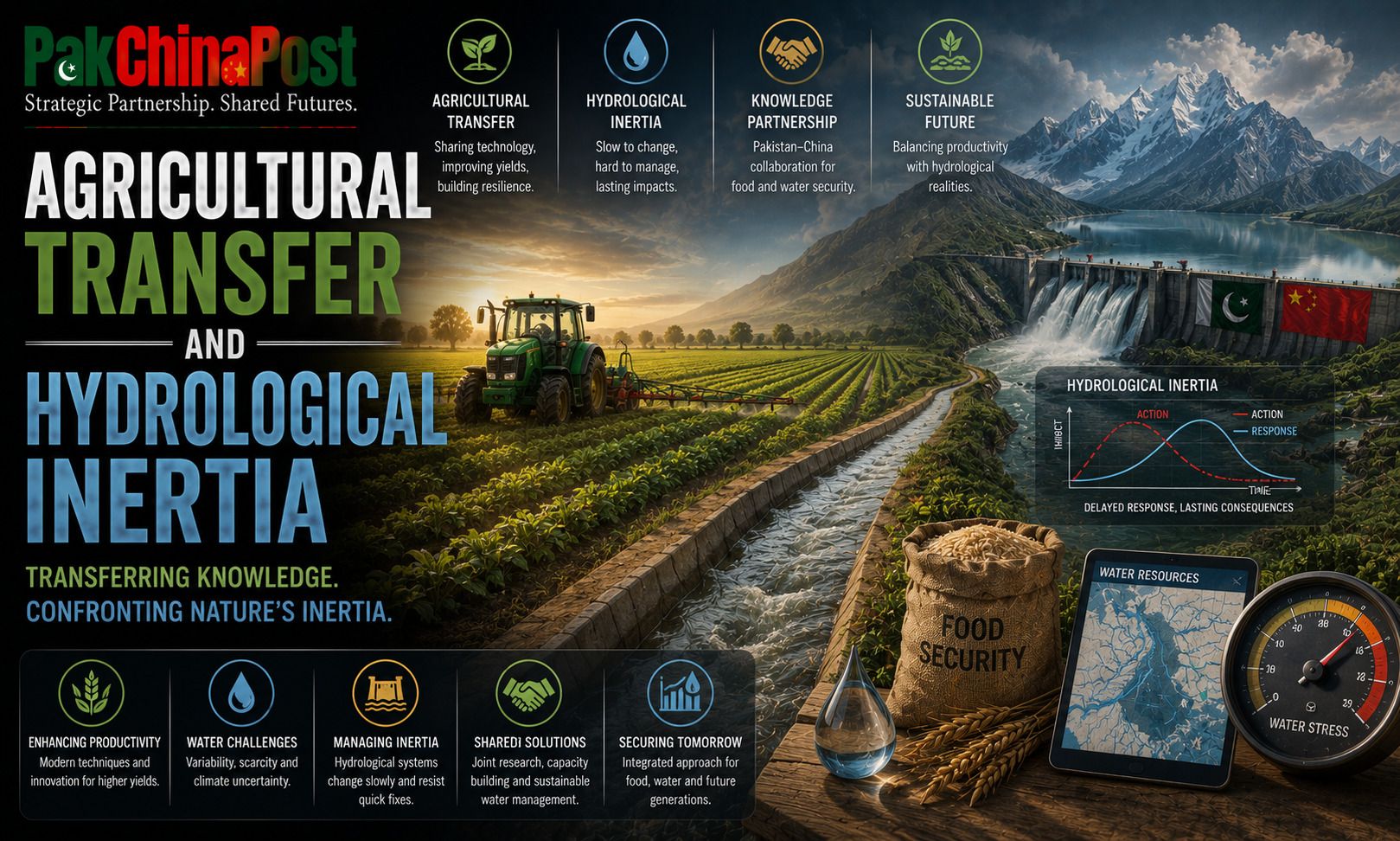
Agricultural Transfer and Hydrological Inertia
Pakistan’s encounter with agricultural modernization has repeatedly been framed as a problem of productivity shortfall, yet beneath this familiar diagnosis lies a more intricate structural impasse: the persistent inability to translate external technological advances into domestically embedded systems of agrarian transformation. Nowhere is
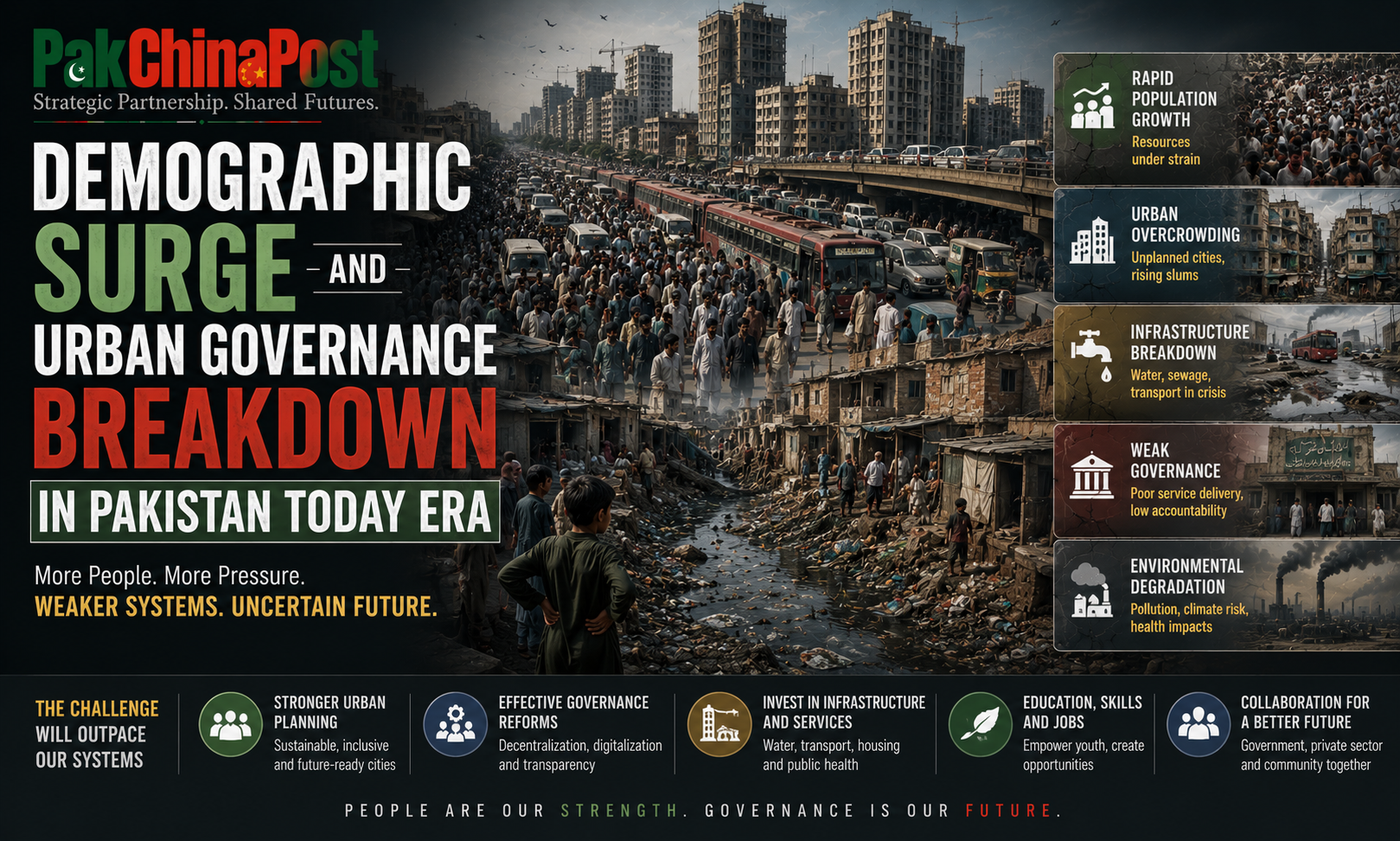
Demographic Surge and Urban Governance Breakdown in Pakistan Today Era
Pakistan’s demographic trajectory has entered a phase of structural acceleration that is no longer adequately interpretable through conventional development economics or incremental governance reform frameworks. The country’s population expansion, marked by sustained high fertility rates, uneven fertility transition, and intensified rural to urban

Energy Insecurity Reshapes Global Economy Through Systemic Political Pressures Unfolding
Energy insecurity has ceased to be a peripheral concern of commodity markets and has instead crystallised into a defining axis of global systemic instability, shaping macroeconomic trajectories, recalibrating geopolitical alignments, and intensifying structural vulnerabilities across both advanced industrial economies and fragile developing states.

Security Before Investment Attacks Instability and Governance Delay CPEC Success
CPEC 2.0 is often presented as a transition from concrete infrastructure toward a more sophisticated phase of industrial cooperation, technological upgrading, and regional integration. Yet beneath this forward-looking narrative lies a far more intractable reality: investment does not arrive in a vacuum of

Strategic Decoupling and Technological Containment in the Age of Great Power Rivalry
The evolving confrontation between China and the United States has entered a phase that is increasingly defined not by traditional military posturing alone but by a deep and deliberate restructuring of technological and economic interdependence. What was once described as competition within a

Trade Balance and Industrial Collaboration Solutions
Pakistan’s economic trajectory has been profoundly shaped by its trade relations, industrial capacity, and strategic partnerships, with China emerging as its most significant economic partner in recent decades. The challenge of addressing trade imbalances has become central to Pakistan’s policy agenda, requiring a

Technological Sovereignty and the Strategic Contest for Innovation
In the unfolding architecture of twenty-first century power, technology has emerged as the decisive terrain upon which national strength is measured and geopolitical influence contested. Military capabilities, economic productivity, digital infrastructure, and even ideological narratives increasingly converge within the domain of technological innovation.

Diplomatic Reciprocity and the Architecture of Trust: Navigating EU–China Relations Amid Institutional Strain
The contemporary landscape of European Union–China relations is increasingly characterized not solely by trade balances or technological competition, but by the subtle architecture of diplomatic legitimacy and institutional trust. In the last decade, structural pressures within both Brussels and Beijing have amplified the