
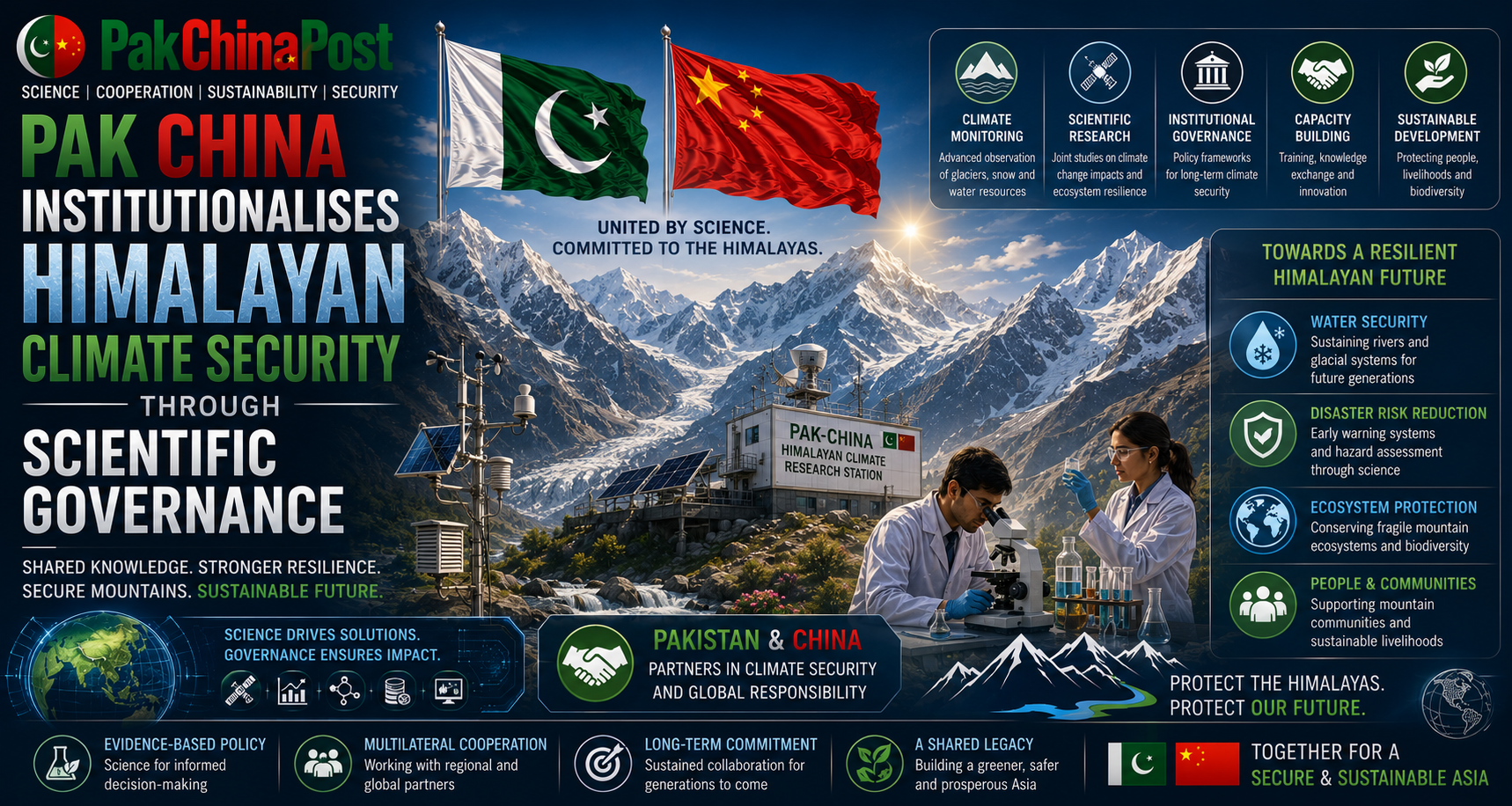
Pak China Institutionalises Himalayan Climate Security Through Scientific Governance

Pak China cooperation is entering an era where environmental intelligence is becoming inseparable from strategic stability. While traditional security calculations have long concentrated upon territorial defence, economic connectivity and technological competition, accelerating cryospheric transformation across the Himalayas is steadily redefining national security priorities.

Governance Standards Define Credibility Across Modern Development Partnerships
Pakistan China cooperation is entering a period where international credibility will increasingly depend not upon the scale of financial commitments but upon the quality of governance accompanying every development initiative. The international development environment has moved decisively beyond measuring partnerships through kilometres of
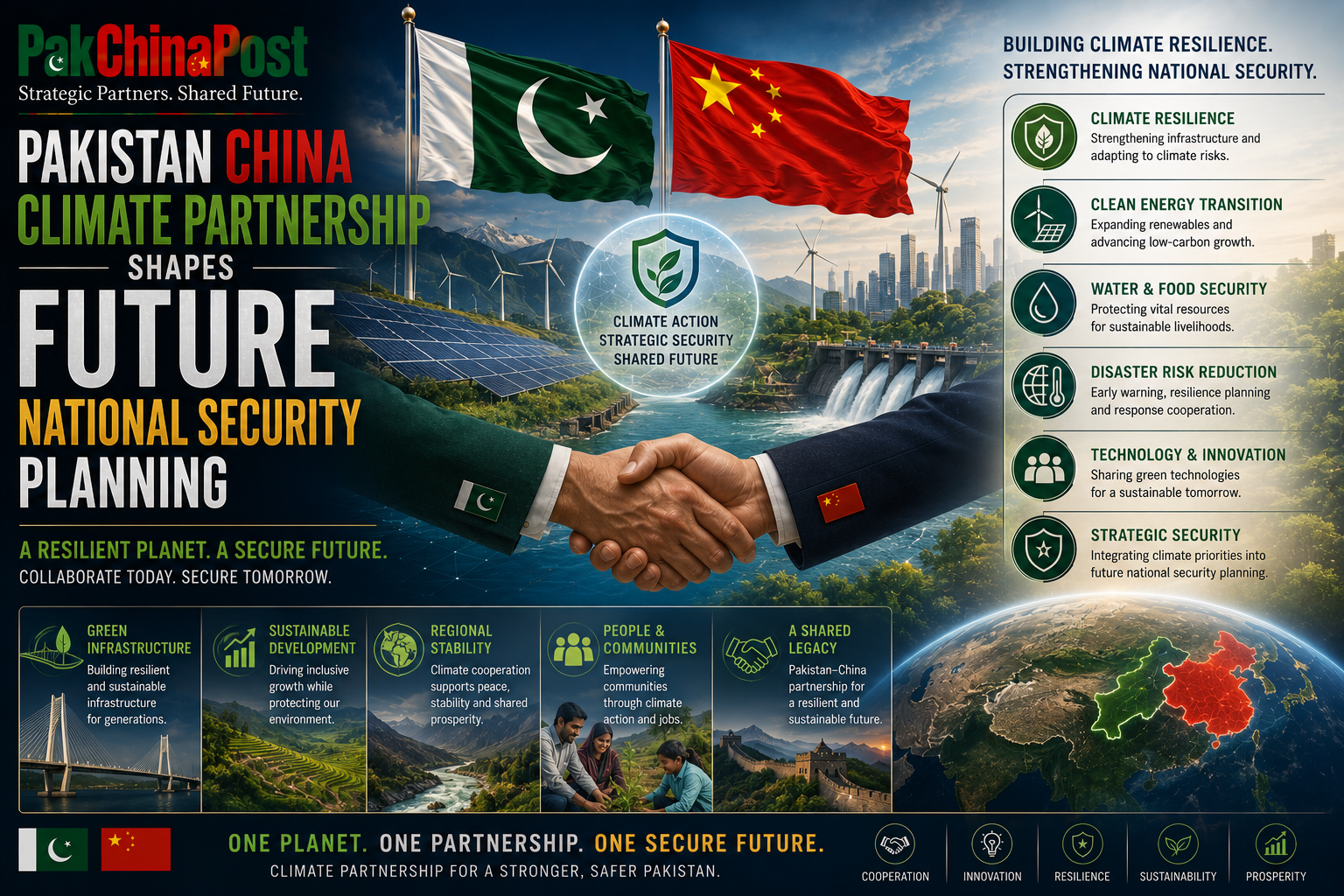
Pakistan China Climate Partnership Shapes Future National Security Planning
Pakistan and China are entering a phase of strategic cooperation in which climate resilience is steadily becoming as significant as traditional economic connectivity and conventional security coordination. What initially emerged through infrastructure investment and industrial integration is increasingly expanding towards environmental governance, ecological
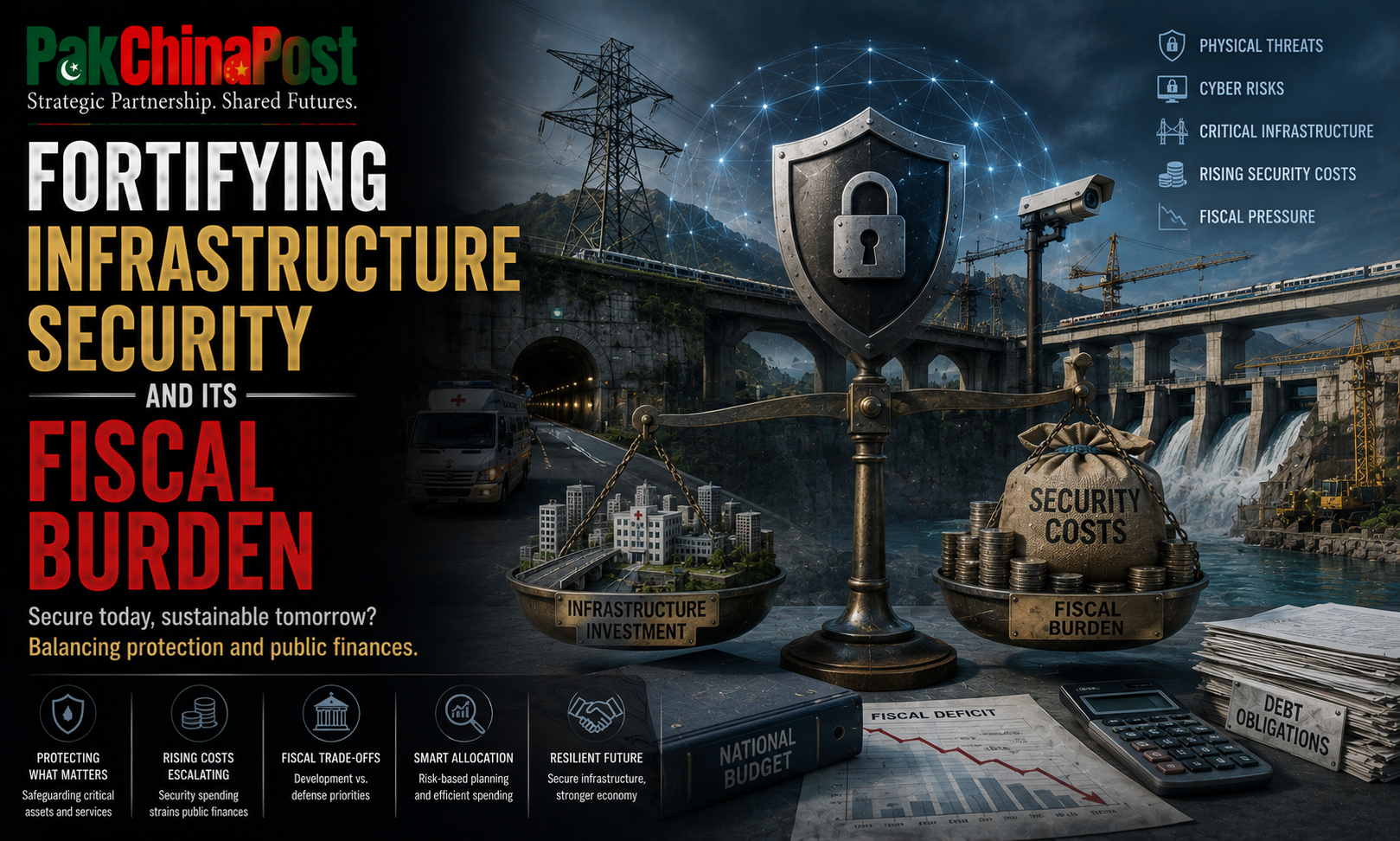
Fortifying Infrastructure Security and Its Fiscal Burden
The securitisation of large-scale infrastructure in Pakistan, particularly within the ambit of China-linked development corridors, has evolved into an enduring structural commitment rather than a temporary operational requirement. What was initially framed as a transitional protection arrangement for engineering projects has gradually crystallised
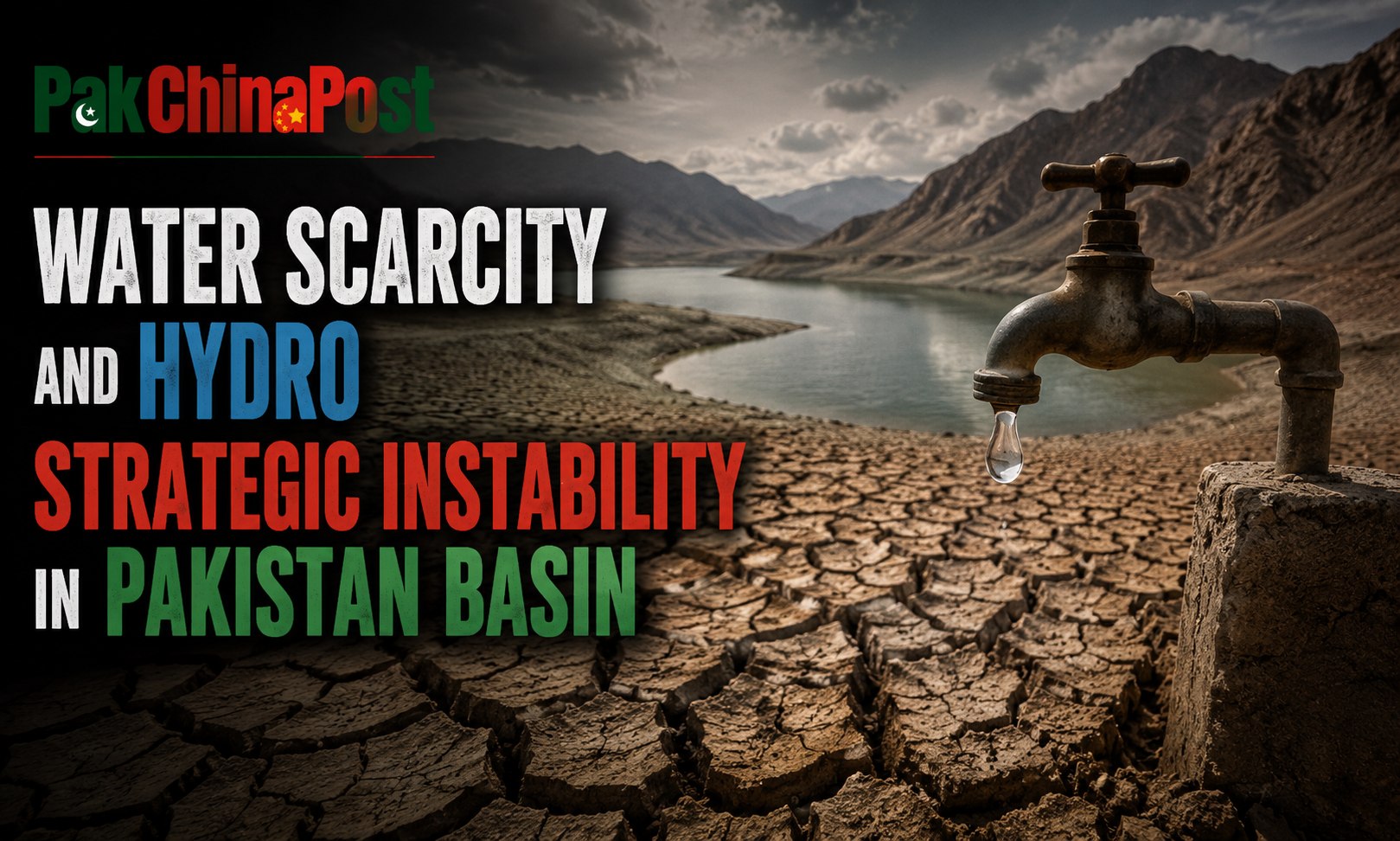
Water Scarcity and Hydro Strategic Instability in Pakistan Basin
Water scarcity in Pakistan is no longer an environmental stress indicator confined to agronomic discourse; it has evolved into a structural determinant of internal cohesion, inter provincial equilibrium, and long term state survivability. The hydro logic of the Indus Basin is entering a
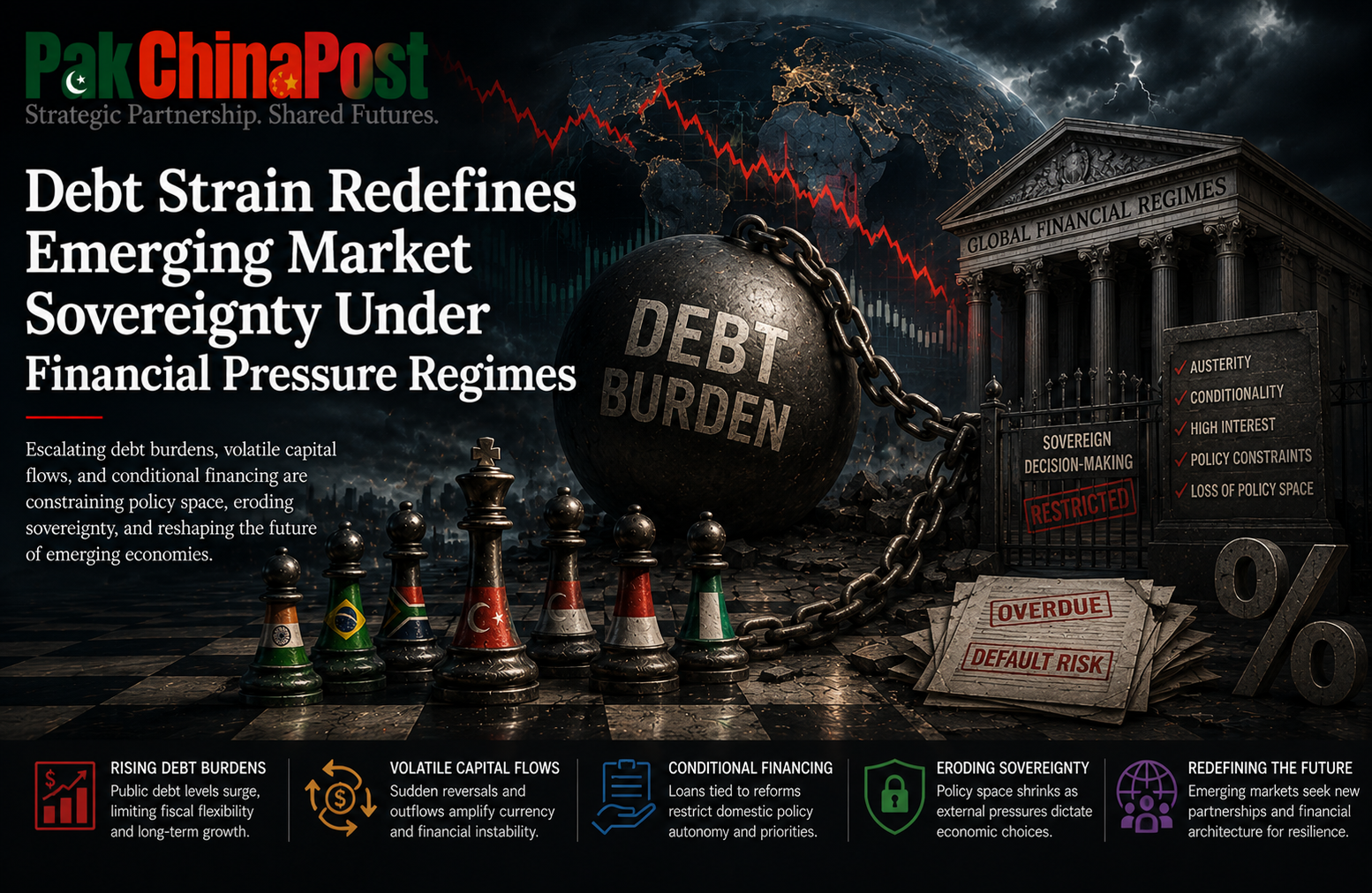
Debt Strain Redefines Emerging Market Sovereignty Under Financial Pressure Regimes
The contemporary global economy is increasingly being reshaped by an undercurrent of sovereign indebtedness that is neither episodic nor cyclical, but structurally embedded within the architecture of post pandemic financial normalisation, tightening global liquidity conditions, and the entrenched asymmetries of dollar denominated capital
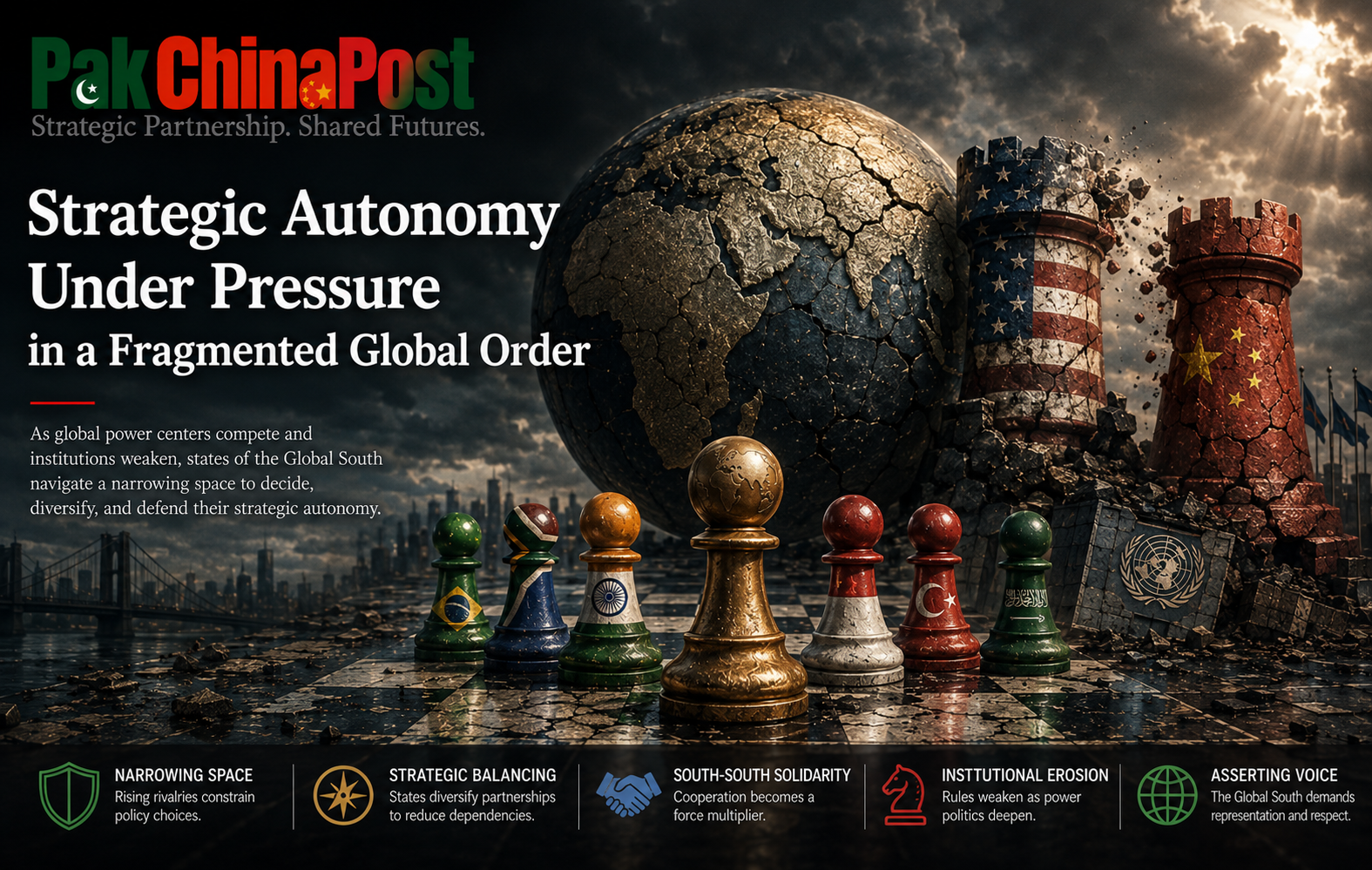
Strategic Autonomy Under Pressure in a Fragmented Global Order
The contemporary international system is increasingly defined by structural polarization, fragmented economic interdependence, and competing technological ecosystems that collectively compress the strategic space available to middle powers. Within this evolving configuration, the concept of strategic autonomy has shifted from a normative aspiration to

Debt Trap Or Development Trap Domestic Capacity Defines CPEC Outcome
The debate over whether Chinese financing under CPEC constitutes a “debt trap” has become one of the most politically charged narratives in contemporary geopolitical discourse on Pakistan’s economic trajectory. Yet this framing, while rhetorically powerful, obscures more than it reveals. It reduces a

Pakistan as the Systemic Pivot in the Re-engineering of Maritime Governance in the Strait of Hormuz
The ongoing reconfiguration of global maritime order reflects a deeper systemic transition in which classical hierarchies of power are being replaced by distributed architectures of governance, coordination, and adaptive control. This transformation is not merely operational but structural, redefining the ontology of maritime

China’s Structural Economic Slowdown and the Testing Limits of State Capitalism
China’s economic trajectory has entered a phase that is no longer defined by the certainties of rapid expansion but by the complexities of structural recalibration. For over four decades, the Chinese growth model stood as a remarkable synthesis of state direction and market