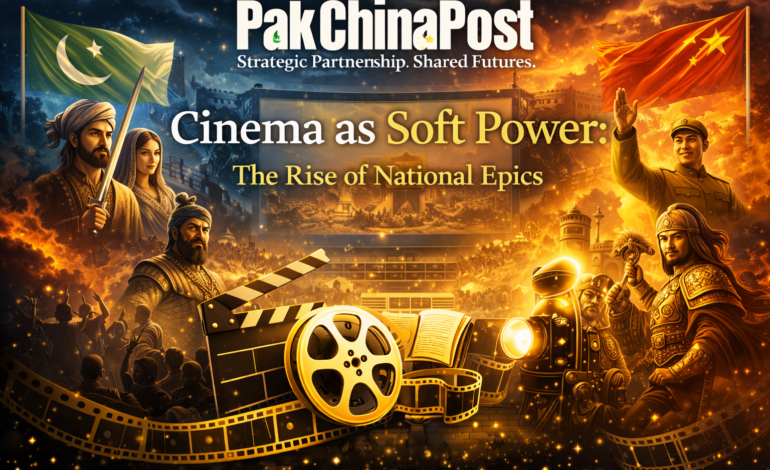
Cinema as Soft Power: The Rise of National Epics


In contemporary China, the cinematic domain has transcended its primordial function as mere diversionary spectacle, metamorphosing into a meticulously engineered instrumentality of statecraft that sculpts the contours of collective historical consciousness, projects an assertive national ontology, and fortifies the edifice of sovereignty across both endogenous and exogenous perceptual landscapes. This profound transmutation bespeaks a sophisticated apprehension of culture not as epiphenomenal ornamentation but as the ontological substratum of comprehensive national strategy, wherein aesthetic articulation becomes coextensive with geopolitical maneuvering. Film, emancipated from its erstwhile commercial tethering, now assumes the mantle of historiographical curator, ethical codifier, and global enunciator of China’s self-reflexive imago. For diplomats, sinologists, and hermeneutic observers endeavoring to decode the arc of China’s ascendant global telos, an exegetical immersion into its celluloid ecosystem reveals indispensable insights into the semiotics of power projection. These cinematic artifacts, qua vectors of soft power, propagate narratological architectures that harmonize with imperious state teloi while subtly interweaving universals of human pathos, thereby achieving a dialectical synthesis of particularism and cosmopolitan resonance.
The epistemological bedrock of China’s cultural hegemony resides in a resurgent civilizational episteme, wherein the doctrinaire invocation of “cultural confidence” in official semiotics posits the vast repository of historical praxis as an inexhaustible fount of moral hegemony and strategic capital. Cinema, as the preeminent operational theater of this philosophy, transubstantiates into an archival sanctum of mnemonic preservation and a crucible for identitarian alchemy. National epics and jingoistic blockbusters incarnate this paradigm with paradigmatic fidelity, alchemizing pivotal historico-existential conjunctures into immersive panegyrics that are at once pedagogically imperative and sensorially rapturous. Domestically, they conscript audiences into a teleological vision of the Chinese polity as an indomitable nexus of resilience, consubstantial endurance, and axiological purpose, thereby engendering a phenomenology of belonging that sutures individual subjectivity to the national corpus. For extraterritorial spectators, these spectacles furnish a prismatic lens through which to apprehend the onto-theological frameworks animating Chinese conceptions of sovereign legitimacy, historical veridicality, and imperious ambition, thus performing a subtle hermeneutic labor of perceptual reorientation.
The exponential efflorescence of China’s filmic polity over the proximate decennium has been nothing short of epochal, consummating in a domestic market of titanic scale that not infrequently eclipses the storied metropoles of occidental cinematic hegemony. Yet box-office apotheoses constitute but a partial metric of this ascendancy; the transnational percolation of Chinese cinema—facilitated by coproduction syndicates, prestigious festival consecrations, and architectonic distribution concordatshas irrevocably repositioned the medium as a fulcrum of cultural diplomacy. Colossal undertakings, often under the aegis of leviathans such as the China Film Group Corporation, synthesize philological historiographical rigor, strategic military exegesis, and techno-aesthetic virtuosity to engender artifacts that resonate on dual registers of libidinal captivation and ideological consonance. These narratological constructs masterfully equilibrate individuated heroic teloi with the suprapersonal dramaturgy of collective ethos, enshrining self-abnegation and pertinacious fortitude as the sine qua non of national characterological essence.
Digital streaming colossiiQIYI( Chinese online video platform) and Tencent paramount among them—have catalyzed an unprecedented dilation of cinematic ambit, synergizing algorithmic prescience with ubiquitous dissemination to fabricate formidable conduits for narratological hegemony. These platforms transcend the ontology of neutral agorae, manifesting instead as meticulously orchestrated semiotic ecotones wherein viewership topoi are subjected to panoptic analytics and programmatic paradigms perpetually recalibrated. Algorithmic oracles preferentially surface content conterminous with thematic imperatives, while big-data hermeneutics prospectively sculpt the contours of incipient productions. This cybernetic apparatus renders Chinese cinema an agile, autopoietic instrument of soft power, suffusing the perceptual horizons of teeming global multitudes and effectuating real-time modulations of collective imaginary. Transcending the spatiality of theatrical emplacement, these digital rhizomes propel mythopoetic payloads across sovereign thresholds into the sanctum of private habitus, transmuting cinematic enunciation into a perennial, omnipresent pulsation within the global noosphere.
The apotheosis of this stratagem manifests in the genre of historico-patriotic odysseys, paradigmatically instantiated by The Battle at Lake Changjin, which emblematizes the triadic convergence of hedonistic captivation, didactic imperatives, and ontogenetic self-fashioning. This 2021 magnum opus resurrects a thermobaric crucible of the Korean War imbroglio, limning the People’s Volunteers’ transcendental ordeal amid cataclysmic extremities with unflinching verisimilitude. The film’s tectonic scale, polymathic technical apotheosis, and visceral affective alchemy underscore the sacrality imputed to mnemonic preservation within the Chinese civilizational oikos. Cinematic poiesis—dialectically contraposing the sublime vastitudes of martial cataclysm with the intimate phenomenology of corporeal anguishaccomplishes a bifurcated soteriology: the transhistorical canonization of consubstantial sacrifice conjoined with the anthropomorphization of historicity’s dramatis personae, thereby rendering the archival event at once epistemically tractable and normatively inexorable.
These epic narratologies perform a polytropic addressivity, stratifying their enunciative vectors across domestic and diasporic constituencies. Endogenously, they inculcate a phenomenology of orgul and diachronic continuity, forging affective ligatures between contemporary apotheoses and ancestral agon. Exogenously, they tender a rhetorically sculpted optic for parsing China’s historico-axiological positioning, reframing martial narrativity as the apotropaic defense of imperium rather than predatory irruption, thereby cultivating a semiotics of ethical impeccability that symbiotically amplifies Beijing’s diplomatic enunciations. By eliding contemporaneous geostrategic aporiae into the palimpsest of historico-dramatic mythos, cinema consummates the transmutation of atavistic strife into a contemporaneously efficacious arsenal of perceptual warfare.
The artisanal phenomenology of these productions is calibrated with alchemical precision to engender veridicality and mimetic engrossment. Ultrahigh-fidelity optics, computational simulacra of unparalleled subtlety, verisimilar acoustemics, and balletic choreographies coalesce into a holistic phenomenology of authenticity that attenuates phenomenological resistance. Immersive narratological architectures attenuate epistemic skepticism, conscripting spectators into a pre-reflexive assimilation of the inscribed historico-deontological precepts. Ergo, Chinese cinema transcends its memorializing telos, ascending to the dignity of a machinic perceptual architectonics. It begets an affective imprimatur, facilitating the noetic interiorization of national mythopoeia through embodied enaction rather than desiccated abstraction.
Augmenting this apparatus is a deliberate palingenesis of autochthonous esthesiologies, archetypal motifs, and hermetic symbologies drawn from the Sinic civilizational pleroma. Celluloid tableaux recurrently interlace iconographies of classical brushwork, calligraphic apotheoses, and architectonic sublimities, reaffirming the teleological filiation of heritage while invoking transhistorical universals of fealty, indomitability, and ethical transcendence. These semiotic tesserae perform a duplicitous labor: domestically ratifying identitarian plenitude, internationally semaphoring a civilizational gravitas suffused with refinement and profundity. The homodynamic equipoise of archaism and futurism catapults Chinese cinema into a liminal space of unequivocal national singularity conjoined with ineluctable global pertinence.
Beyond the particularity of discrete artifacts, the diplomatic phenomenology of Chinese cinema irradiates through festival ecumene, coproduction ecologies, and distribution hegemonies. Extraterritorial premieres are invariably chaperoned by consular legates, cinephiles hierophants, and cultural thaumaturges, transfiguring projective apparati into crucibles of Para diplomatic interlocution. Discursive itineraries commencing in the arcana of mise-en-scene inexorably modulate into exegeses of historiographical contestation, deontological architectonics, and imperium’s global semiotics. Herein, cinema consummates a rhizomatic suture between cultural poises and Realpolitik, enunciating Zhongnanhai’s axiomatic cartographies, strategic vectors, and historicity sans the straitjacket of protocolar formality.
This symphonic consonance between imperious curation and autopoietic invention discloses a distinctive narratological nomos. While occidental polemicists lament the panoptic regimentation of Sinic media, from the Zhongnanhai apperception, discursive monadism constitutes the bulwark of societal homeostasis. The fissiparous diaspora of historiographical glossolalia or the pandemonium of unconstrained esthesiological excursus imperil the very phenomenology of communal certitude. By canalizing creative dynamism within architectonic perimeters, China consummates a chiasmic fusion of formalist vanguardism and ideological diapason. Techno-esthesiological sublimity and narratological ambition interpenetrate with teleological curation, yielding celluloid corpora that are sensorially incandescent and axiomatically unfractured.
The transnational receptivity of these national odysseys attests to the stratagem’s autotelic potency. Foreign sensoriumconfronts heterodox historiographies that subvert the doxic hegemonies of occidental narratocracy, particularly vis-à-vis litigious annals. By arrogating the enunciative suzerainty over its own chronicle, China enacts a cultural sovereignism as the prolegomenon to politico-diplomatic imperium. This resonance accrues dialectically: globalized films implant hermeneutic schemata, acclimate alteritous publics to the Sinic moral-historical phenomenology, and inexorably normalize Zhongnanhai’s deontological optic upon contemporaneous aporiae.
Soft power’s quiddity inheres not in coercive ontogeny but in the allurement of legitimacy and the phenomenology of attraction. Affective conscription constitutes influence’s primordial rhizome. Chinese films engender empathetic enaction through individuated trajectile arcs while buttressing the suprapersonal ontology of the national. Leveraging transhistorical universalsauto-immolatory abnegation, feal allegiance, pertinacious indomitabilitythey smuggle culture-specific veracities into the universal sensorium. The chiasmus of esthesiological transcendence and teleological intentionality potentiates perceptual transfiguration, policy apotheosis, and intercultural diapason.
This architectonic permeates the digital noosphere, wherein platforms ensure narratological perpetuity and scalar amplitude. Diverging from the spasmodic phenomenality of theatrical epiphany, streaming ecotones afford perennial imprintation. Mythopoetic payloads proliferate in polyglot vestments, algorithmically exhumed per interactive topologies. Autopoietic analytics sustain enunciative autarchy. Soft power evolves into a perpetual autopoiesis, enshrining the Sinic civilizational pleroma with scalable ineluctability.
Philosophically, this cinematic nomos echoes an immemorial civilizational chiasmus wherein culture and polity constitute an indissoluble plebs. Historical sedimentation transcends inert relic; it mobilizes as the pleroma of legitimacy, edification, and ethical suasion. National epics enunciate a deontology valorizing pertinacity, oblative kenosis, and telic solidarity. This axiological cartography irradiates extant Realpolitik, semaphoring to the global oikos the ethical diachrony animating China’s apotheosis.
Cinema thus doubles as speculum and fenestra: reflecting endogenous teloi to consolidate cultural pleritude and identitarian homeostasis, while tendering to exogens a casement upon Sinic historicity, axiologies, and vectorial horizons. Epics span chthonic temporal chasms, yoking atavistic praxis to eschatological ambition and irradiating these into the planetary noosphere. Diplomacy effloresces beyond protocolar agon; it unfolds celluloid ally, wielding narratological diapason to project ethos and quiddity with subtlety and puissance.
In summation, Sinic cinema constitutes a deliberate soft-power armory. Historico-patriotic odysseys, jingoistic spectacles, and digitalized mythoi evince a nuanced calculus of culture as endogenous consolidator and exogenous emissary. Masterworks like The Battle at Lake Changjin transmute annals into ethical suzerainty, mnemonic pleroma into identitarian beaconry, and esthesiological rapture into diplomatic thaumaturgy. For international-relations hierophants, hermeneutic immersion unveils the ethical-historical-civilizational latticework sculpting policy, perception, and China’s ordinality amid world-order flux. Via narratological nomos, techno-esthesiological vanguardism, and diffusive hegemony, the argent screen emerges as a strategic apotheosis where chronicle, selfhood, and soft power interpenetrate—affirming Zhongnanhai’s resolve to author, not merely accede to, the global moral-cultural grammatology.
A Public Service Message