

China’s Digital Yuan and the Transformation of Monetary Sovereignty

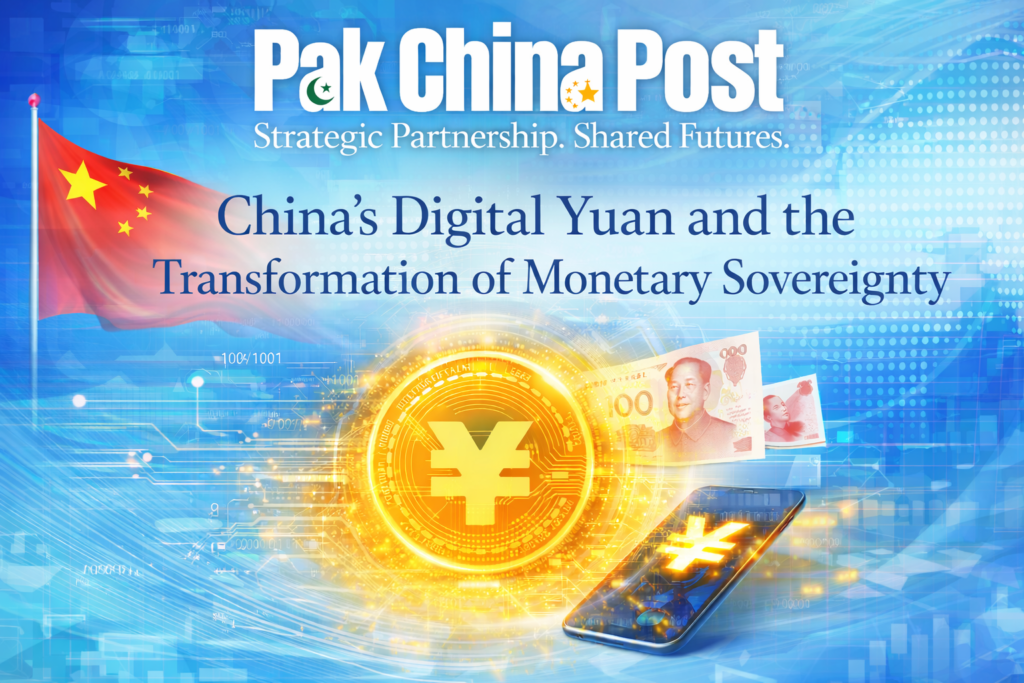
The evolution of money has always mirrored the transformation of civilizations. From metallic coins stamped with imperial authority to paper currencies issued by modern central banks, monetary systems have historically reflected the political and technological structures of their age. In the twenty first century this evolution is entering a new phase defined by digitalization, cryptographic networks, and algorithmic financial systems. Within this emerging environment China has positioned itself at the forefront of monetary innovation through the development of the digital yuan, a central bank digital currency designed to redefine the relationship between the state, the financial system, and the citizen.
China’s decision to pioneer a digital currency is not merely a technological experiment but a strategic initiative rooted in broader economic and geopolitical considerations. The digital yuan represents an effort to modernize domestic financial infrastructure while simultaneously enhancing monetary sovereignty in an increasingly digitized global economy. By creating a state issued digital currency Beijing seeks to integrate financial transactions into a unified technological ecosystem capable of operating with efficiency, transparency, and security.
The advantages of such a system are considerable. Traditional payment mechanisms often rely upon complex networks of intermediaries including commercial banks, clearing houses, and international settlement systems. These layers introduce delays, transaction costs, and vulnerabilities to systemic disruptions. A digital currency issued directly by the central bank has the potential to streamline these processes by enabling instantaneous transfers between individuals and institutions without reliance on multiple intermediaries.
For China this technological efficiency aligns with the broader objective of constructing a sophisticated digital economy. The country already possesses one of the world’s most advanced mobile payment infrastructures, with millions of citizens routinely conducting transactions through smartphones. Integrating a central bank digital currency into this environment could further enhance financial inclusion by providing secure payment options for populations that may not possess traditional bank accounts.
Another significant advantage lies in the realm of financial oversight. Digital currencies generate detailed transaction records that allow monetary authorities to monitor economic activity with unprecedented precision. Such visibility can assist regulators in detecting illicit financial flows, combating corruption, and implementing targeted monetary policies. During periods of economic turbulence central banks could potentially deploy digital currency systems to distribute stimulus funds directly to citizens, thereby accelerating policy implementation.
From a geopolitical perspective the digital yuan also carries strategic implications. For decades the international financial system has been dominated by established reserve currencies and settlement networks controlled largely by Western institutions. While China does not seek to abruptly replace these systems, the development of a digital currency introduces the possibility of alternative financial architectures that operate outside traditional channels. Cross border digital payments denominated in yuan could gradually expand the currency’s international role, particularly in regions engaged in extensive trade with China.
Yet the transformation of money into a digital format also raises profound questions regarding privacy, governance, and financial stability. Critics express concern that a state issued digital currency could enable unprecedented levels of financial surveillance. Because every transaction within a digital currency system can theoretically be recorded and analyzed, individuals may fear that their economic activities could be subject to excessive monitoring. Balancing transparency with personal privacy therefore becomes an essential design challenge for any central bank digital currency.
Chinese policymakers acknowledge these concerns and emphasize that the digital yuan is intended to preserve a degree of anonymity for ordinary transactions while maintaining regulatory oversight to prevent criminal misuse. Achieving this equilibrium requires sophisticated technological solutions that encrypt personal information while allowing authorities to intervene when necessary. Whether such a balance can be maintained in practice remains a topic of intense debate among economists and technologists.
Another potential challenge involves the relationship between digital currencies and the traditional banking sector. If citizens were to hold large quantities of digital yuan directly with the central bank commercial banks might experience reductions in deposits, potentially affecting their capacity to provide loans and financial services. Policymakers must therefore design mechanisms that integrate digital currency within the existing financial ecosystem rather than displacing it entirely.
Technological infrastructure also represents a critical consideration. A digital currency system must maintain exceptional resilience against cyberattacks, technical malfunctions, and data breaches. Given the immense scale of China’s population the infrastructure supporting the digital yuan must be capable of processing billions of transactions securely and continuously. Ensuring such reliability demands ongoing investment in cybersecurity, encryption technologies, and redundant network architectures.
Despite these complexities China continues to advance its digital currency initiative with deliberate caution. Pilot programs conducted in several cities allow authorities to observe user behavior, refine technological systems, and evaluate economic implications before nationwide implementation. This gradual approach reflects an understanding that monetary innovation requires careful experimentation rather than abrupt transformation.
The broader philosophical dimension of the digital yuan lies in its potential to redefine monetary sovereignty in the digital age. In traditional financial systems the issuance and circulation of currency occur through intricate relationships among central banks, commercial institutions, and private payment platforms. Digital currency consolidates many of these functions within a single technological framework overseen by the state. This consolidation may enhance efficiency but also concentrates significant responsibility within central monetary authorities.
For China the digital yuan represents an opportunity to align financial infrastructure with national technological capabilities. The integration of digital currency with emerging technologies such as blockchain inspired ledgers, artificial intelligence analytics, and secure mobile networks could create a highly sophisticated monetary ecosystem tailored to the country’s economic environment.
International observers watch these developments with both curiosity and caution. Some economists view China’s initiative as a pioneering experiment that may accelerate the global adoption of central bank digital currencies. Others interpret it as part of a broader strategic effort to expand China’s financial influence within the international system. Regardless of interpretation the digital yuan undeniably represents one of the most ambitious monetary innovations of the modern era.
Ultimately the success of this initiative will depend upon its capacity to deliver tangible benefits to citizens and businesses while preserving trust in the financial system. Money functions effectively only when individuals possess confidence in its stability, security, and acceptance. If the digital yuan can achieve these attributes it may become a model for how nations adapt monetary institutions to the technological realities of the twenty first century.
China therefore stands at the frontier of a new monetary experiment in which digital technology converges with state authority to redefine the nature of currency itself. The outcome of this experiment will shape not only China’s financial landscape but potentially the evolution of global monetary systems.
As societies increasingly conduct economic life within digital networks the question confronting every nation is how to reconcile technological innovation with financial stability and individual freedom. China’s digital yuan represents one possible answer to this question, an ambitious attempt to modernize money while preserving the sovereign authority of the state over the circulation of value.
The coming years will reveal whether this experiment becomes a cornerstone of the digital economy or merely a transitional phase in the long history of monetary evolution. What is already evident, however, is that China’s exploration of digital currency marks a decisive step toward redefining the relationship between technology, finance, and national power in the modern world.
A Public Service Message