

Regulatory Predictability Determines Pakistan China Investment Confidence

Pak China economic cooperation has gradually entered a phase where regulatory certainty carries greater strategic significance than investment announcements themselves. Infrastructure commitments, industrial relocation, advanced manufacturing partnerships and technology cooperation increasingly depend less upon political declarations than upon confidence that commercial rules will
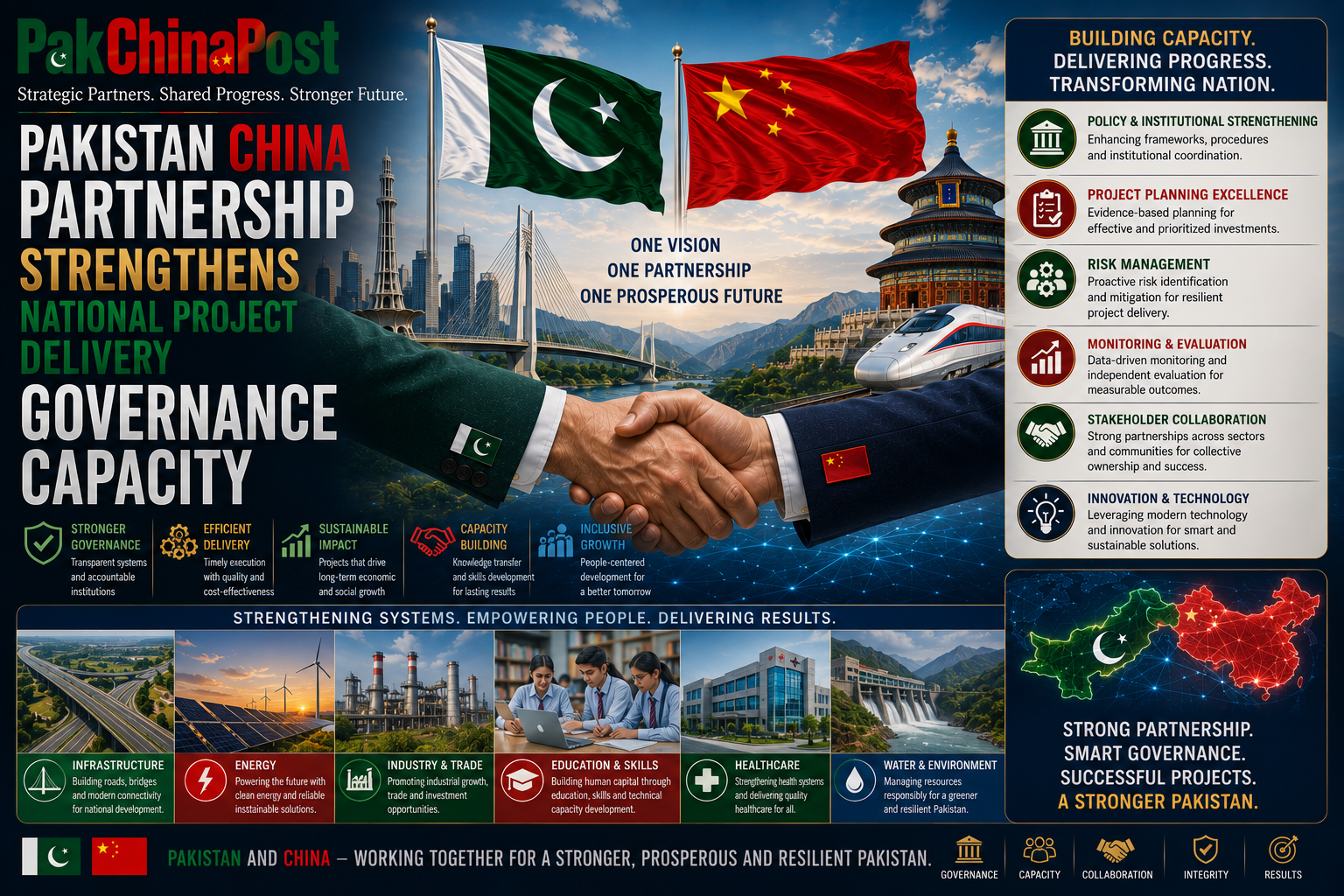
Pakistan China Partnership Strengthens National Project Delivery Governance Capacity
Pakistan and China increasingly recognise that the future of their strategic partnership will be determined not merely by the scale of financial commitments but by the quality of institutional execution. As bilateral cooperation matures beyond infrastructure construction into industrial modernisation, technological collaboration, public
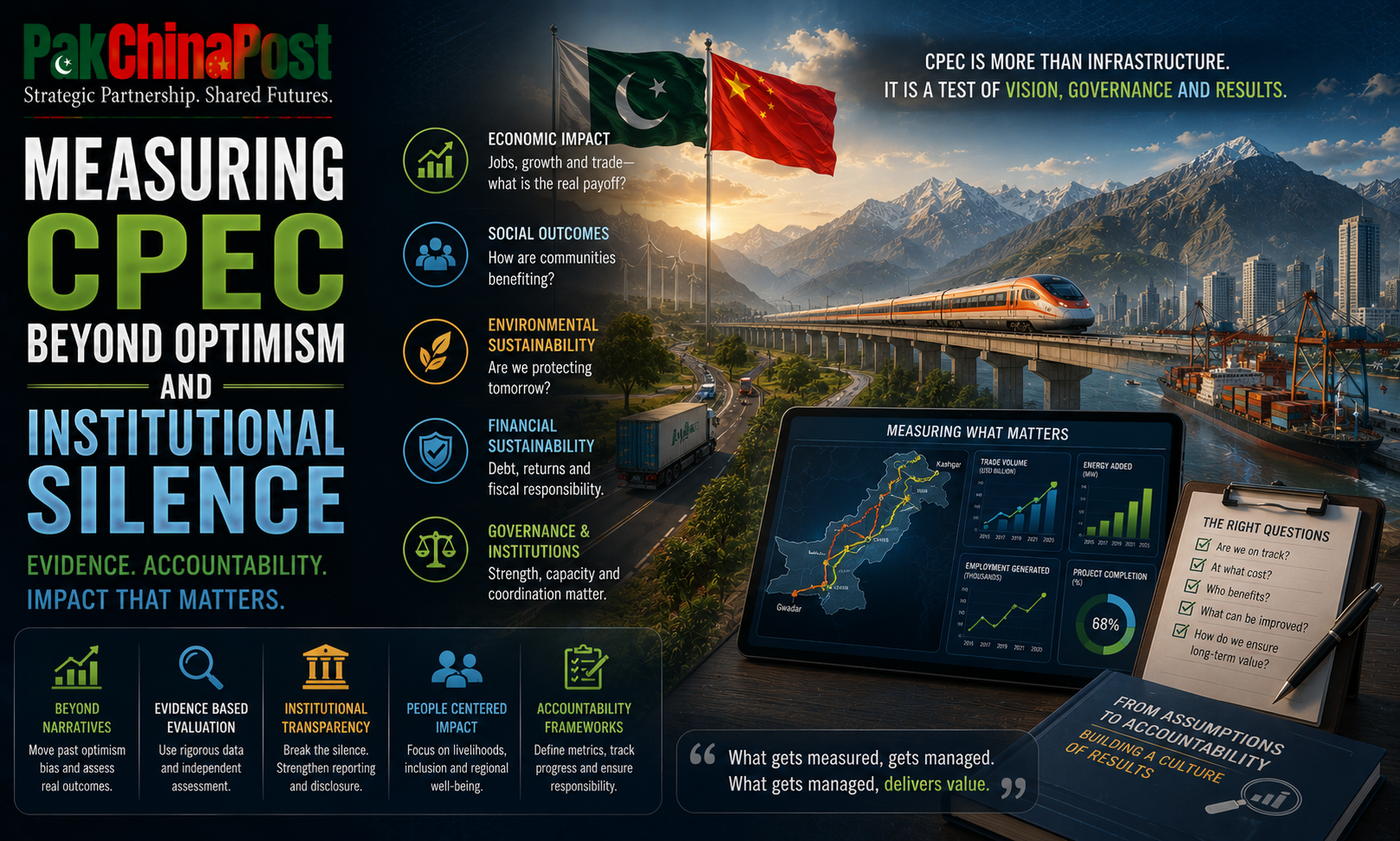
Measuring CPEC Beyond Optimism and Institutional Silence
The absence of a coherent, empirically grounded performance architecture for large-scale bilateral infrastructure engagement has become one of the most consequential blind spots in Pakistan’s development governance, particularly in relation to long-term cooperation with China. Over the past decade, public discourse surrounding CPEC

National Resilience, Pakistan Security Doctrine, Integrated Security, Strategic Stability, Hybrid Threat Response
Pakistan’s struggle to maintain a coherent strategic narrative, both domestically and internationally, has evolved into a structural governance challenge rather than a communication shortfall. In an era where perception increasingly determines power, narrative fragmentation operates not as a secondary issue of public relations

Rethinking Development Finance In A Fragmented Global Order
The architecture of global development finance is undergoing a quiet but profound crisis of legitimacy. Institutions once designed to stabilise post war reconstruction and later to manage orderly globalisation now operate in an environment defined by fragmentation, geopolitical rivalry, debt saturation, and climate
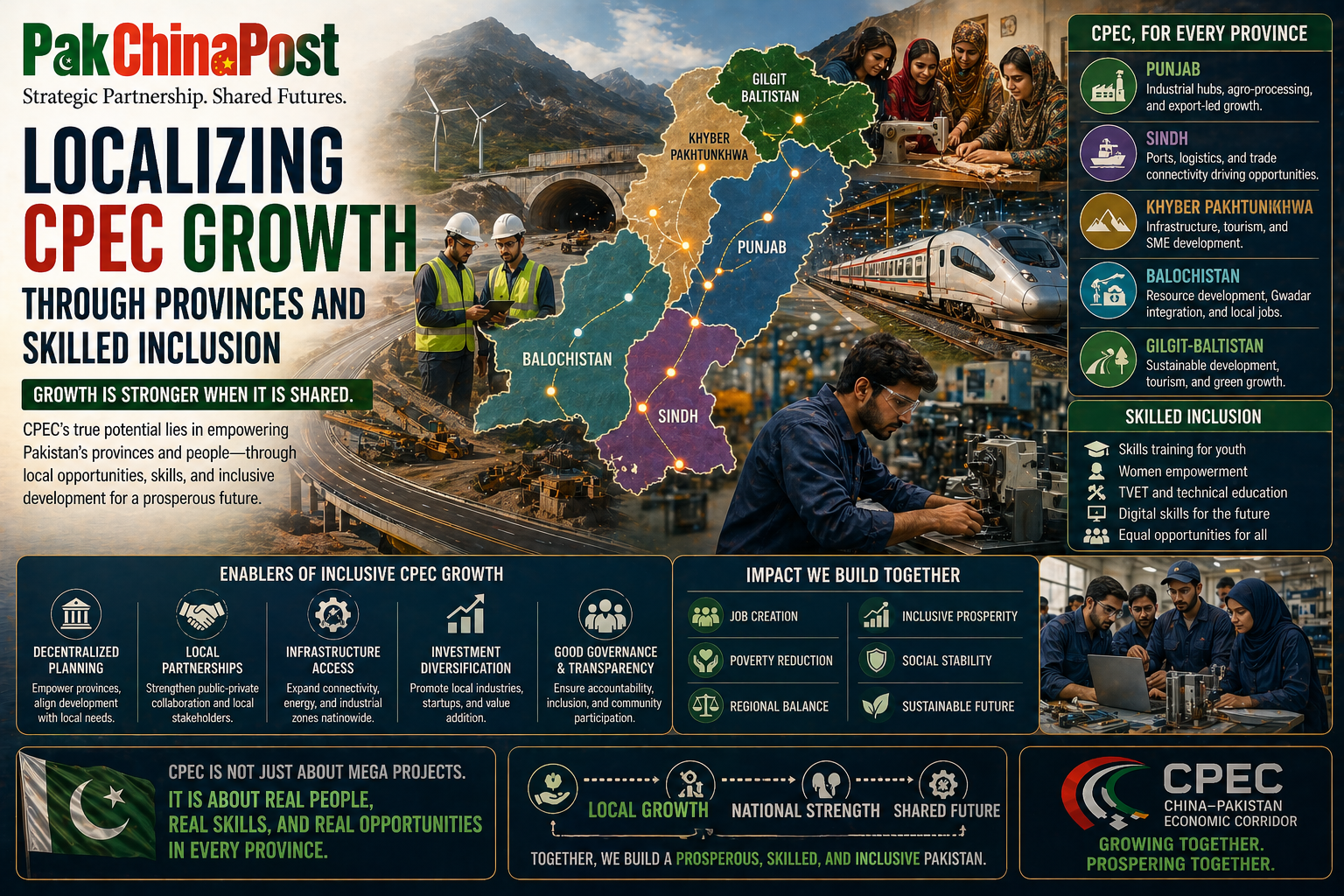
Localizing CPEC Growth Through Provinces And Skilled Inclusion
Pakistan’s experience with large scale external investment has consistently revealed a central paradox. Capital inflows can be negotiated at the highest diplomatic level, yet their developmental dividends are ultimately determined at the lowest levels of institutional execution. The China Pakistan Economic Corridor has
Development Finance Architecture and Infrastructure Led Growth Transformation in Pakistan’s Economic System
The development trajectory of Pakistan is undergoing a structural transition toward an infrastructure led growth model supported by multilateral development finance institutions, public sector investment reforms, and increasingly coordinated corridor based economic planning. This transition reflects a broader reorientation of economic policy away

PAKISTAN AND THE GREAT POWER FRAMEWORKS OF THE 2020s: TRADE, DEFENSE, AND INVESTMENT
In the unfolding geopolitical architecture of the early 2020s, Pakistan’s national planning has been profoundly shaped by two competing international policy frameworks whose ambitions reach far beyond conventional diplomacy. The United States Indo‑Pacific Strategy seeks to assert a vision of free and open

Youth Development and the China Opportunity in Pakistan
Young people represent the most dynamic and promising segment of Pakistan’s population. Comprising a significant majority of the nation’s demographic profile, they embody the potential for innovation, economic growth, social transformation, and technological advancement. Harnessing this vast reservoir of human capital requires strategic

China’s Digital Yuan and the Transformation of Monetary Sovereignty
The evolution of money has always mirrored the transformation of civilizations. From metallic coins stamped with imperial authority to paper currencies issued by modern central banks, monetary systems have historically reflected the political and technological structures of their age. In the twenty first