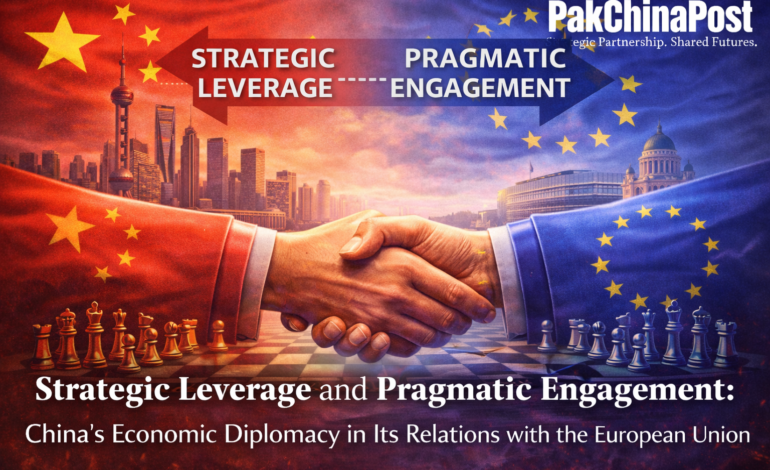
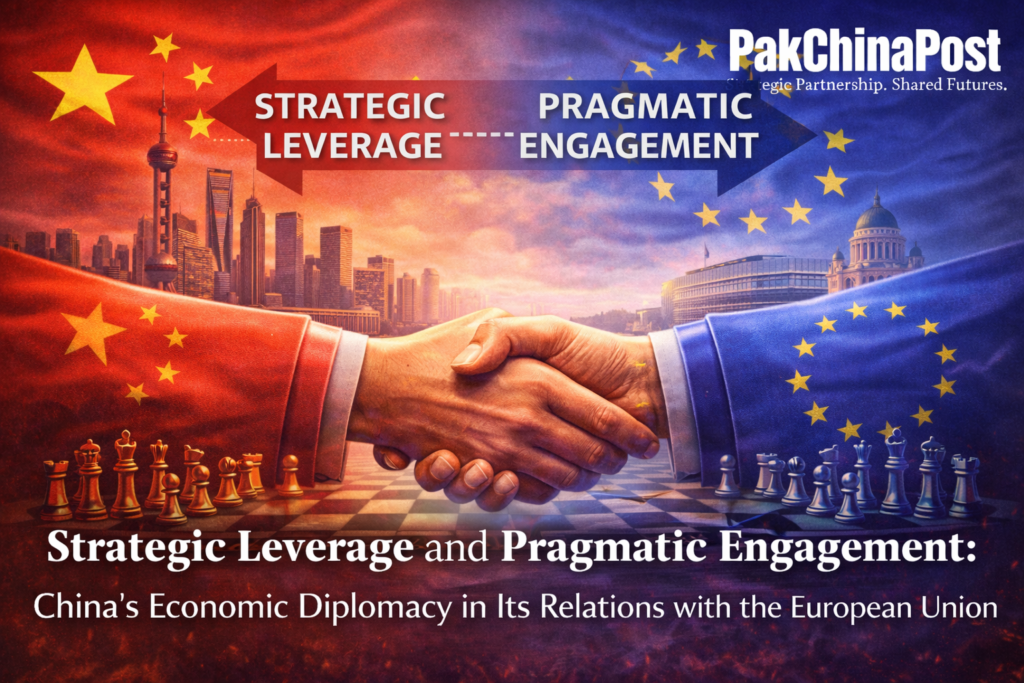
Strategic Leverage and Pragmatic Engagement: China’s Economic Diplomacy in Its Relations with the European Union

The economic relationship between China and the European Union has evolved beyond traditional trade engagement into a sophisticated arena of strategic statecraft. Economic diplomacy, in this context, functions not merely as a facilitative instrument of commerce but as a calibrated mechanism for shaping regulatory environments, influencing investment frameworks, and aligning market interdependence with broader geopolitical objectives. For diplomats managing this complex bilateral axis, understanding the interplay between trade leverage, market access, subsidies, and supply chain influence is essential to navigating both opportunity and resistance.
China’s economic diplomacy toward the European Union operates on a foundational premise: pragmatic interdependence generates structural incentives for stability. The European Union, as one of the largest integrated markets globally, offers China not only consumer demand but also technological partnerships, capital markets access, and normative legitimacy within multilateral institutions. Conversely, European firms depend heavily on access to China’s expansive domestic market, particularly in automotive manufacturing, luxury goods, advanced machinery, and chemicals. This reciprocity forms the structural backbone upon which diplomatic maneuvering occurs.
Trade leverage constitutes a central component of China’s approach. Bilateral trade volumes exceeding several hundred billion euros annually create material stakes that temper abrupt policy shifts. China’s role as a principal supplier of intermediate goods, industrial components, and green technologies such as solar panels and battery materials positions it as a critical node within European production networks. By maintaining reliability and price competitiveness, China reinforces perceptions of indispensability. This economic embeddedness, when combined with diplomatic engagement, can shape deliberations within EU institutions regarding trade defense instruments or regulatory revisions.
Market access policy further amplifies diplomatic influence. The attractiveness of China’s domestic consumer base particularly for German automotive manufacturers and French luxury brands creates a channel of influence that extends beyond bilateral government dialogues. European corporations with significant exposure to the Chinese market often advocate for stable and cooperative relations, thereby moderating the most confrontational policy proposals within Brussels. This dynamic illustrates how economic diplomacy operates indirectly through private-sector stakeholders whose interests intersect with diplomatic objectives.
Subsidy policy represents a more contested dimension. China’s industrial policy framework, characterized by targeted state support in strategic sectors, has attracted scrutiny within the European Union. Anti-subsidy investigations, particularly in the electric vehicle sector, reflect concerns regarding market distortion. From a diplomatic standpoint, transparency in subsidy structures and alignment with international trade obligations can reduce friction. Conversely, perceived opacity fuels narratives of unfair competition and justifies restrictive countermeasures. Thus, subsidy management becomes both an economic and reputational variable within diplomatic strategy.
Supply chain influence has become increasingly salient in the era of resilience discourse. China’s dominance in rare earth processing, battery manufacturing, and critical mineral refinement affords structural leverage. However, leveraging such dominance overtly risks accelerating diversification efforts under the EU’s “de-risking” agenda. Consequently, economic diplomacy must balance subtle influence with predictability. Reliable supply continuity, participation in joint industrial initiatives, and engagement in sustainable sourcing dialogues enhance trust while preserving strategic advantage.
Alignment of pragmatic trade policies with geopolitical objectives requires nuanced calibration. China’s broader strategic goals enhancing multipolarity, resisting containment, and shaping global governance norms intersect with economic engagement in Europe. For instance, participation in climate cooperation initiatives with the EU advances both environmental commitments and soft power positioning. Collaboration on renewable energy supply chains illustrates how shared priorities can offset competitive narratives.
However, economic diplomacy also encounters structural pushback. The European Union’s regulatory culture prioritizes competition policy, environmental standards, and human rights considerations. Measures such as foreign investment screening mechanisms and supply chain due diligence regulations reflect a precautionary approach. China’s capacity to shape these frameworks is constrained by institutional complexity within the EU, where member state interests, European Parliament dynamics, and Commission authority intersect.
Case studies illustrate both influence and resistance. The Comprehensive Agreement on Investment (CAI), negotiated in principle in 2020, demonstrated China’s ability to engage in high-level economic negotiation resulting in expanded market access commitments. Yet subsequent political tensions and parliamentary sanctions stalled ratification, revealing the limits of economic incentives when normative disputes escalate.
Similarly, in infrastructure cooperation, Chinese enterprises have successfully acquired stakes in Southern European ports, enhancing logistical connectivity and commercial integration. These investments were initially welcomed for their capital infusion. Over time, however, heightened scrutiny emerged regarding strategic dependency and security implications. This trajectory underscores the necessity of anticipatory diplomacy embedding transparency and local stakeholder engagement at early stages to mitigate later resistance.
In the telecommunications domain, Chinese firms encountered restrictions or exclusion in certain member states’ 5G network deployments. Security considerations, influenced by transatlantic dynamics, overrode purely economic evaluations. The episode demonstrates that economic competitiveness alone cannot neutralize geopolitical alignment pressures. Economic diplomacy must therefore incorporate alliance-sensitive awareness, recognizing that EU policy is not formulated in isolation from broader strategic partnerships.
Optimizing China’s economic diplomacy requires a multi-layered approach. First, institutional engagement with EU bodies should be intensified, emphasizing technical dialogue on standards, competition law, and regulatory harmonization. Early-stage consultation can preempt misinterpretation and reduce reactive policymaking.
Second, corporate diplomacy must complement state diplomacy. Chinese enterprises operating in Europe should cultivate local employment, community integration, and transparent governance practices. Positive local economic impact generates political goodwill that buffers against abstract geopolitical concerns.
Third, narrative management is critical. Public diplomacy initiatives highlighting joint research, climate cooperation, and mutual prosperity can counteract adversarial framing. European public opinion increasingly influences legislative behavior; economic diplomacy must therefore extend beyond executive channels.
Fourth, reciprocity should be structured rather than rhetorical. Gradual liberalization of selected sectors within China’s domestic market can demonstrate goodwill and create leverage for advocating balanced treatment of Chinese firms in Europe. Measured reciprocity reinforces credibility.
Fifth, conflict management mechanisms should be institutionalized. Establishing rapid-response diplomatic channels for trade disputes can prevent escalation into systemic confrontation. Technical disagreements, if left unmanaged, may acquire symbolic geopolitical weight.
Reducing reputational and political risks also entails sensitivity to European normative frameworks. Environmental, social, and governance (ESG) compliance is no longer peripheral but central to investment approval processes. Aligning Chinese corporate conduct with these standards enhances legitimacy.
Strategically, economic diplomacy should avoid zero-sum framing. The European Union’s quest for strategic autonomy does not inherently preclude partnership with China. Rather, it seeks balanced interdependence. By acknowledging Europe’s resilience objectives and offering cooperative pathways such as joint ventures, co-financing arrangements, and shared research platforms China can position itself as a partner in autonomy rather than an obstacle.
Looking forward, technological transition, energy transformation, and digital regulation will define the next phase of economic diplomacy. Engagement in standard-setting for artificial intelligence, battery safety, and sustainable finance offers avenues to shape norms collaboratively. Participation signals commitment to rule-based integration, mitigating perceptions of systemic rivalry.
In conclusion, China’s economic diplomacy in its relations with the European Union operates within a landscape of mutual dependence, regulatory complexity, and geopolitical sensitivity. Trade leverage, market access, subsidies, and supply chain influence are instruments whose effectiveness depends on restraint, transparency, and strategic foresight. Success lies not in coercive utilization of economic weight but in cultivating durable interdependence that aligns commercial pragmatism with geopolitical stability. By integrating institutional dialogue, corporate responsibility, and normative engagement, China can maximize strategic gains while minimizing reputational exposure, sustaining a balanced and resilient bilateral partnership in an increasingly fragmented global economy.
A Public Service Message