
Editorial Authority Collapses as Digital Journalism Fragments Trust


The contemporary media environment in Pakistan is undergoing a structural dislocation that is best understood not as a cyclical downturn in journalism, but as a systemic reconfiguration of authority, credibility, and narrative production. What was once a relatively hierarchical ecosystem—anchored in print newspapers, broadcast networks, and editorial gatekeeping—has been replaced by a decentralised, algorithmically mediated information economy in which trust is dispersed, contested, and increasingly personalised. Within this evolving architecture, journalism no longer functions as a singular institutional voice but as a fragmented assemblage of competing narrative agents operating under divergent economic, political, and technological incentives.
At the core of this transformation lies the erosion of editorial authority. Traditional news organisations, once perceived as arbiters of verified information, are now operating under intense structural pressures that undermine their epistemic reliability. Ownership concentration within media conglomerates has produced conditions in which editorial independence is frequently subordinated to financial sustainability imperatives and political proximity networks. The resulting environment is characterised by subtle forms of narrative alignment, selective reporting, and constrained investigative latitude, all of which contribute to a gradual degradation of public trust.
This decline is not merely perceptual; it is infrastructural. The economic foundations of mainstream journalism have been destabilised by the migration of advertising revenue toward digital platforms that operate outside national regulatory jurisdictions. As advertising capital flows toward algorithmically optimised ecosystems, legacy media institutions experience diminishing financial autonomy, leading to workforce contraction, reduced investigative capacity, and increased reliance on syndicated or politically safe content. The newsroom, once a site of editorial deliberation and verification hierarchy, is increasingly reduced to a content processing unit under economic constraint.
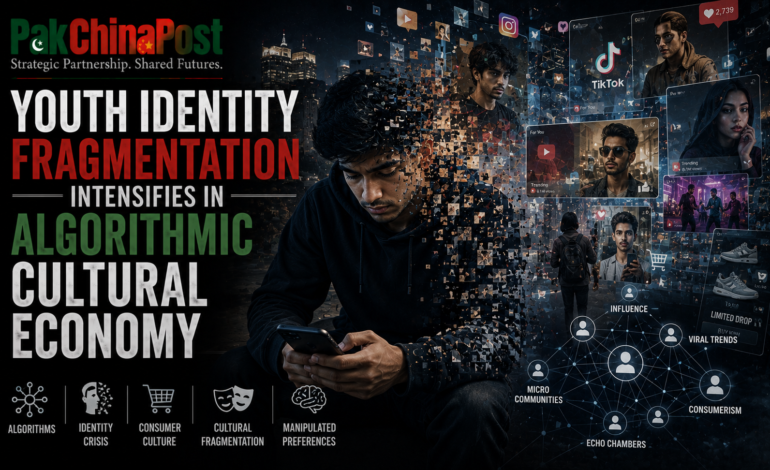
Simultaneously, the audience is undergoing a profound behavioural shift. News consumption is no longer anchored in scheduled broadcasts or print circulation cycles but is instead embedded within continuous digital streams curated by social media platforms. In this environment, the audience is no longer a passive recipient of editorially curated information but an active participant in algorithmically mediated content selection. The implication is profound: editorial judgment is being displaced by engagement metrics, and journalistic authority is being subordinated to platform visibility logic.
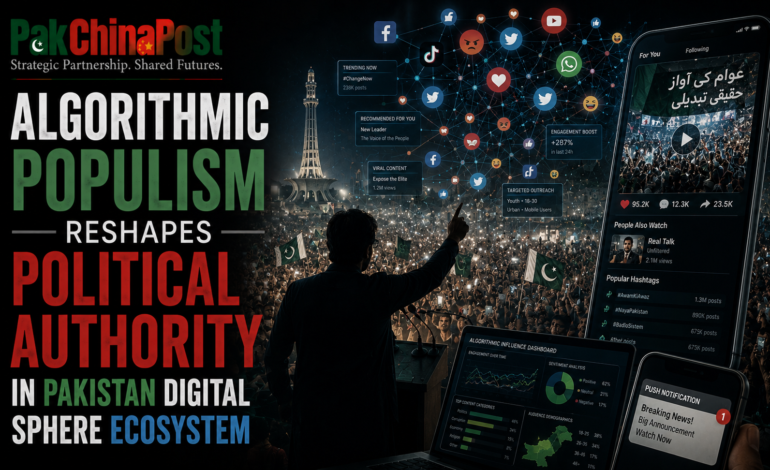
The rise of independent digital voices further complicates this landscape. YouTube-based political commentators, TikTok news analysts, podcast-based investigative narrators, and Telegram-based information channels have emerged as alternative epistemic authorities. These actors often operate outside institutional journalism frameworks, yet they command substantial audiences and exert significant influence over public opinion. Their credibility is not derived from institutional accreditation but from perceived authenticity, immediacy, and rhetorical accessibility. This shift marks a transition from credential-based authority to performative credibility, where trust is constructed through audience resonance rather than editorial validation.
However, this decentralisation of voice has produced a paradoxical outcome: while informational diversity has increased, epistemic stability has decreased. The proliferation of non-institutional news producers has fragmented the shared informational baseline required for coherent public discourse. In the absence of unified verification standards, competing narratives coexist without resolution, leading to what can be described as a condition of epistemic plurality without epistemic hierarchy. The consequence is not only confusion but structural uncertainty regarding what constitutes authoritative knowledge.
Algorithmic distribution systems intensify this fragmentation. Content ranking mechanisms prioritise engagement velocity, emotional intensity, and retention probability over factual accuracy or journalistic rigor. As a result, sensationalised narratives often outperform carefully verified reporting in terms of visibility and circulation. This creates a structural incentive misalignment in which even established media organisations are compelled to adapt their content strategies toward more emotionally resonant formats, thereby diluting traditional editorial standards.
Within Pakistan’s socio-political environment, this transformation intersects with pre-existing vulnerabilities in media governance. Regulatory frameworks remain largely oriented toward broadcast-era paradigms and are insufficiently equipped to address platform-based information flows. The absence of comprehensive digital media regulation has allowed transnational platforms to function as de facto regulators of national information ecosystems, effectively externalising editorial control to algorithmic systems governed by opaque corporate logic.
The consequences for crisis reporting and conflict-sensitive journalism are particularly acute. In fast-moving political or security situations, the speed of digital dissemination often outpaces verification processes, leading to the rapid circulation of incomplete, distorted, or misleading information. Traditional media organisations, constrained by verification protocols, are frequently unable to match the temporal velocity of digital platforms, resulting in a perception gap in which slower but accurate reporting is overshadowed by faster but less reliable narratives.
This asymmetry contributes to the deterioration of public trust in mainstream journalism. As audiences encounter conflicting versions of events across multiple platforms, the perceived credibility of all sources declines, producing a generalized scepticism toward institutional reporting. In such an environment, trust becomes relational rather than institutional, anchored in individual preference networks rather than shared professional standards.
The strategic implications of this fragmentation extend beyond media systems into the domain of governance and national cohesion. A society in which informational authority is dispersed across unregulated digital actors faces heightened risks of narrative manipulation, coordinated misinformation campaigns, and episodic epistemic crises. The absence of a stabilised informational hierarchy undermines the state’s ability to construct coherent public messaging during periods of political transition or external pressure.
Establishment concerns in this context are increasingly focused on the structural vulnerability of the information ecosystem rather than isolated incidents of misinformation. The central challenge lies in the fact that informational disorder is now systemic rather than episodic. It is embedded within the architecture of content distribution itself, making conventional reactive regulation insufficient.
Policy responses must therefore move toward structural intervention in the media ecosystem. First, there is an urgent need to establish transparent media ownership registries that clearly delineate political and financial affiliations of media conglomerates. Without such transparency, public trust cannot be meaningfully reconstructed.
Second, regulatory frameworks must be modernised to include platform accountability mechanisms that address algorithmic amplification of harmful or misleading content. This does not imply direct content censorship but rather requires enforceable obligations for transparency, auditability, and risk mitigation in political information dissemination.
Third, the sustainability of investigative journalism must be rethought through public-interest funding models that reduce dependence on commercial advertising and political patronage. Independent editorial foundations, insulated from both market volatility and political interference, could serve as stabilising institutions within the broader media ecosystem.
Fourth, newsroom restructuring is essential. Traditional hierarchical editorial models must evolve toward hybrid systems that integrate data journalism, digital verification units, and real-time content analysis teams capable of operating within algorithmically accelerated environments. Journalistic training must also be updated to include platform literacy, computational storytelling, and misinformation forensics.
Fifth, there is a need for professional re-certification systems for digital journalists and independent content creators who increasingly function as de facto news providers. Establishing baseline ethical and verification standards for digital reporting would help bridge the gap between institutional journalism and decentralized media production.
From a strategic perspective, Pakistan’s media ecosystem is entering a phase where informational sovereignty is no longer guaranteed by domestic institutional presence alone. The dominance of global platforms means that narrative formation is increasingly influenced by external technological infrastructures that operate beyond national jurisdictional control. This raises critical questions about the future of state capacity in shaping collective understanding.
The long-term risk is not simply the decline of traditional journalism but the emergence of a permanently fragmented informational order in which no single institution possesses sufficient authority to stabilise public truth. In such a scenario, governance becomes increasingly reactive, operating in a landscape where perception is continuously destabilised by competing narrative streams.
The challenge, therefore, is not to restore a previous media order but to construct a new epistemic framework capable of operating within decentralised, algorithmically mediated environments. This requires a fundamental rethinking of journalism not as a fixed institution but as a dynamic system of verification, accountability, and public reasoning distributed across multiple platforms and actors.
Without such structural adaptation, the trajectory points toward an enduring condition of informational volatility, where trust is perpetually reconstructed and immediately destabilised, and where journalism exists not as an authority but as one narrative among many in an unanchored digital universe.
A Public Service Message