
Pakistan’s Strategic Role in China’s Global Supply Chain

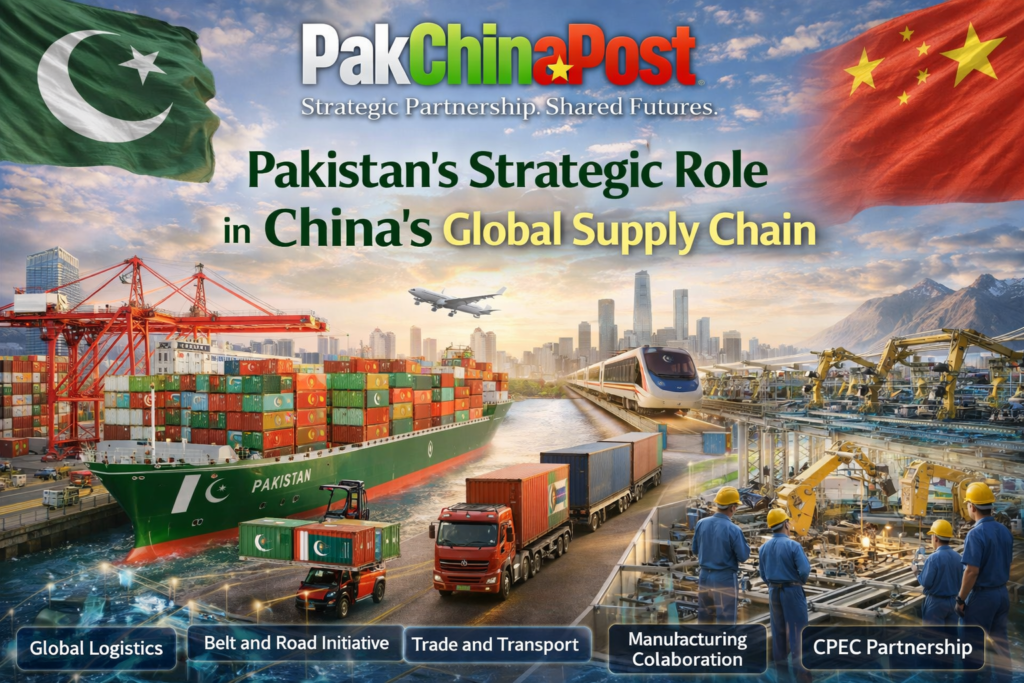
Pakistan’s strategic integration into China’s global supply chain represents a pivotal opportunity for economic transformation, industrial competitiveness, and long‑term growth. Against the backdrop of evolving global trade structures, geopolitical realignments and technological disruption, Pakistan’s geographic location, expanding industrial base, and ambitious policy frameworks position it as a compelling partner for China’s supply chain networks. This potential is further underscored by China’s commitment to building open, inclusive and resilient industrial ecosystems, where countries beyond East Asia can actively contribute to and benefit from manufacturing networks, digital value chains and cross‑border commerce. China’s emphasis on maintaining stable and open supply chains signals a diplomatic and economic environment conducive to deeper cooperation, and Pakistan’s willingness to align its development strategies with global trends opens pathways for inclusive industrial integration and balanced economic growth.
Pakistan’s position in South Asia makes it a gateway for regional connectivity and trade facilitation. Its proximity to China, access to seaports on the Arabian Sea, and evolving transport infrastructure provide natural advantages for participation in extended manufacturing and logistics corridors. The China‑Pakistan Economic Corridor initiative, a key component of China’s Belt and Road Initiative, has laid the groundwork for future industrial embeddedness by developing transport networks, energy infrastructure and special economic zones designed to attract investment and enhance production capabilities. The shift from phase one of infrastructure connectivity to phase two’s emphasis on industrial clusters signals a strategic intention to embed Pakistan more deeply into China’s production networks. This transition envisages not only the movement of goods but the co‑location of manufacturing capacity, technology transfer, and shared value creation that can elevate Pakistan’s role beyond a transit state to an active producer within supply chains.
Trade facilitation is central to Pakistan’s ability to integrate into China’s supply chains. Efficient customs procedures, digital documentation systems, and streamlined logistics can significantly lower transaction costs for exporters and importers alike. Strategic improvements in logistic performance, including the modernization of port operations and expansion of freight connectivity, are essential for meeting the just‑in‑time delivery expectations of global manufacturers. Recent research highlights how smart port technologies and interoperable logistics platforms can improve operational efficiency and environmental sustainability, thereby enhancing Pakistan’s attractiveness as a supply chain node. These developments align with China’s own experience with smart ports that utilize big data, artificial intelligence and Internet of Things technologies to optimize cargo processing and reduce bottlenecks. By adopting similar technological standards, Pakistan can cultivate a logistics ecosystem capable of supporting advanced manufacturing supply chains and attracting foreign direct investment.
The potential for joint ventures between Pakistani and Chinese firms holds significant promise in driving industrial integration. Collaborative projects in sectors such as automotive components, electronics assembly, renewable energy equipment and textiles can serve as entry points into larger supply networks. For example, Pakistan’s growing role in mineral processing, particularly in copper and other metals used in electronics and clean energy products, demonstrates how targeted industrial activity can align with China’s demand for raw materials and intermediate inputs. Enhanced collaboration that moves beyond raw material export toward value‑added production, such as refined metals and components tailored for Chinese manufacturers offers a more sustainable and mutually advantageous supply chain model. This shift not only creates higher‑skilled jobs within Pakistan but also strengthens the durability of economic ties by making Pakistan an indispensable part of production ecosystems.
Industrial collaboration must be underpinned by robust skill development programs that equip Pakistan’s workforce with the capabilities required by advanced manufacturing and technology sectors. The expansion of industrial clusters and joint ventures will necessitate competencies in quality control, production management, advanced machinery operation and supply chain analytics. Vocational training aligned with industry needs, supported by partnerships between educational institutions, Chinese firms and government agencies, can build a cadre of skilled professionals ready to meet international standards. Such programs not only serve the immediate needs of integrated supply chains but also contribute to long‑term competitiveness by fostering innovation, adaptability and productivity. Skilled labor is a critical determinant of whether Pakistan’s participation in global value chains will be transient or sustainable, and thus investment in human capital must remain a cornerstone of strategic planning.
Pakistan’s policy frameworks and regulatory environment are key determinants in facilitating or impeding its integration into China‑linked supply networks. Policymakers need to ensure that industrial policies, tax incentives, and trade agreements support foreign investment, encourage technology collaboration and protect intellectual property while maintaining compliance with international standards. Clear regulations regarding foreign ownership, dispute resolution mechanisms and transparent procurement processes enhance investor confidence and reduce operational risk for multinational corporations looking to establish or expand production bases in Pakistan. Aligning national development strategies with the requirements of global supply chains enables Pakistan to present an attractive investment climate that complements China’s strategic vision of diversified, resilient production networks.
Pakistan’s regulatory compliance with environmental, social and governance standards will also influence its integration into global value chains. Increasingly, multinational corporations and global buyers require partners to adhere to strict criteria regarding labor practices, environmental impact and corporate transparency. Enhancing sustainable supply chain practices within Pakistan’s manufacturing sector not only improves export competitiveness but also positions the country as a responsible participant in industrial ecosystems shaped by multinational standards. Research into sustainability practices within manufacturing highlights how adopting green supply chain management and eco‑design can improve operational efficiencies and align with broader global objectives toward resource conservation and reduced emissions. By embracing these practices, Pakistani firms can meet international expectations, attract higher quality investment and reduce vulnerability to non‑tariff barriers that increasingly shape cross‑border trade in the twenty‑first century.
The transformation of Pakistan’s industrial base is integral to its capacity to participate meaningfully in supply chains that extend beyond bilateral trade and into regional and global manufacturing networks. Rather than serving primarily as a provider of raw materials or a destination for imported goods, Pakistan’s engagement can evolve toward higher value‑added production by leveraging its demographic dividend, geographic connectivity and policy reforms. Productivity improvements driven by capital investment, technology transfer and efficient production processes can elevate Pakistan’s industrial competitiveness. Empirical work emphasizes that productivity enhancement, coupled with human capital development and innovation adoption, is essential for sustained economic growth and export expansion. Pakistan’s efforts to develop its manufacturing sector in alignment with these principles will determine the quality and depth of its integration into China’s supply networks.
Participation in regional value chains offers additional benefits for Pakistan, including diversification of export destinations and risk mitigation against concentrated demand dependencies. By embedding itself in a network that links Chinese industrial clusters with markets in Central Asia, the Middle East and Africa, Pakistan can increase its exposure to broader market dynamics while reinforcing its strategic role as a logistics and production hub. The expansion of regional trade agreements and connectivity infrastructure further supports this objective by reducing barriers to cross‑border commerce and facilitating the movement of goods across contiguous markets. Regional integration not only amplifies Pakistan’s contribution to supply chains but also strengthens economic resilience by reducing vulnerability to shocks confined to a single market.
Despite the promise of integration into China’s supply chains, there are concerns that warrant careful consideration and strategic management. Dependency on a single major partner for trade and industrial growth can expose Pakistan to economic vulnerabilities if global demand shifts or geopolitical tensions disrupt established patterns. Moreover, over‑reliance on Chinese technology and production models without corresponding development of indigenous capabilities may limit Pakistan’s ability to innovate independently and move up the value chain. Policymakers and business leaders must therefore balance collaboration with efforts to cultivate domestic strengths, ensuring that integration enhances rather than undermines long‑term economic autonomy. Addressing these concerns requires strategic vision, robust dialogue between stakeholders and a development model that prioritizes inclusive growth alongside external engagement.
Furthermore, geopolitical risks and regulatory compliance pressures can create uncertainties for supply chain participation. Pakistan’s manufacturing sector must navigate external variables such as evolving global trade policies, regional security dynamics and certification requirements imposed by major markets. Research indicates that supplier dependence and regulatory compliance pressures influence supply chain resilience, underscoring the importance of diversified supplier networks, risk monitoring systems and investment in compliance infrastructure. Strengthening institutional capacity to manage these elements enhances Pakistan’s readiness to participate in sophisticated supply networks, reduces potential trade frictions and aligns domestic capabilities with international expectations.
Economic integration also entails building financial and liquidity frameworks that support cross‑border business operations. Recent collaborations between China and Pakistan in financial cooperation aim to streamline global supply chain processes by addressing liquidity challenges and facilitating smoother trade transactions. Enhanced financial linkages, including trade credit facilitation, currency arrangement partnerships, and payment systems interoperability, reduce transactional friction and enable firms to operate with greater predictability and stability. These financial instruments are foundational to supply chain integration, as they ensure that cross‑border trade is supported by reliable and efficient monetary mechanisms that can withstand market volatility.
Capacity building in technology and digital infrastructure is another critical dimension of supply chain integration. As digital transformation accelerates worldwide, supply chains increasingly rely on advanced systems for tracking, inventory management, quality control and predictive analytics. Pakistan’s adoption of digital platforms, integration of data analytics into logistics operations, and alignment with cyber‑secure systems are essential for meeting the technological sophistication expected by global manufacturers. Strategic collaboration with Chinese technology firms and knowledge transfer initiatives can accelerate Pakistan’s digital readiness, enabling local firms to meet the technical requirements of integrated supply chains and participate in value networks that prioritize efficiency, reliability and traceability.
For Pakistan, careful calibration of policy priorities, economic diversification and industrial upgrading will determine the success of its integration into China’s supply chain networks. While challenges such as infrastructure gaps, skill shortages and compliance requirements exist, the potential rewards in terms of export growth, job creation, technology upgrading and regional economic connectivity are substantial. A balanced approach that embraces global opportunities while strengthening domestic capabilities can enable Pakistan to emerge as a trusted partner in China’s global manufacturing and technology networks. This integrated strategy not only enhances economic performance but also reinforces Pakistan’s strategic relevance in a world where supply chains increasingly define geopolitical and economic influence.
In conclusion, Pakistan’s strategic role in China’s global supply chain hinges upon a confluence of policy reforms, industrial modernization, trade facilitation, skill development and digital transformation. The evolving landscape of global trade offers Pakistan an unprecedented chance to transition from a primarily import‑dependent economy to a competitive production partner embedded in regional and international value chains. By leveraging its geographic advantages, strengthening institutional capacity, and fostering equitable joint ventures, Pakistan can carve out a sustainable and mutually beneficial position within China’s supply networks. With careful planning, strategic investment and shared commitment to innovation and inclusivity, this integration can contribute to balanced economic growth and deeper bilateral cooperation between Pakistan and China.
A Public Service Message