AIIB and China‑Led Multilateral Development Finance

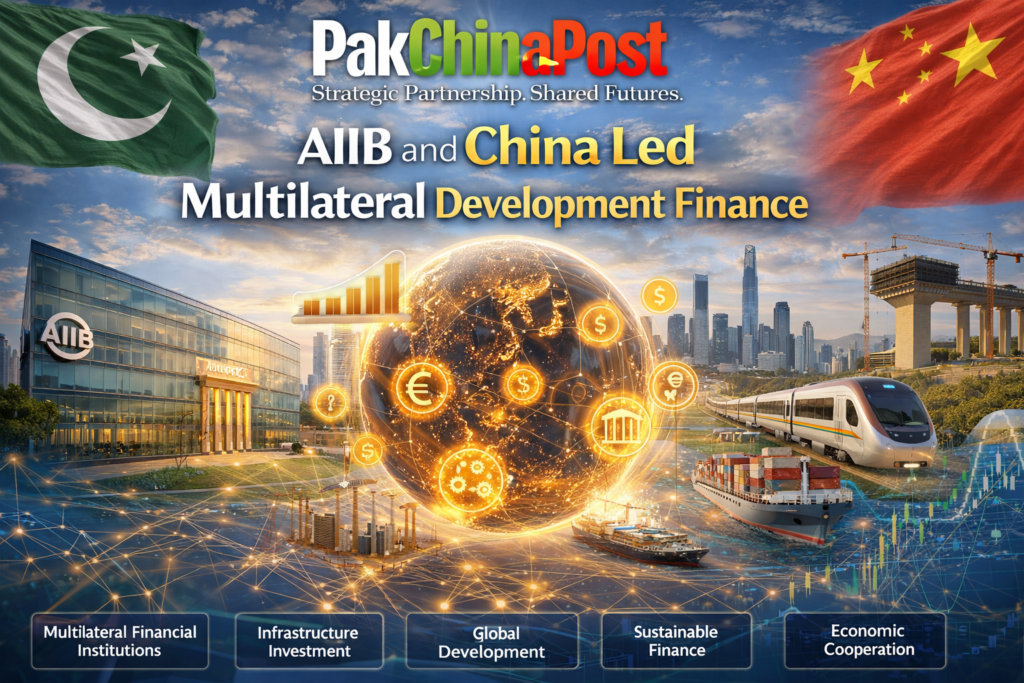
The Asian Infrastructure Investment Bank represents a significant evolution in international development finance and serves as a pivotal mechanism for supporting strategic infrastructure, technology, and industrial projects in countries seeking sustainable growth. Since its inception, the AIIB has embodied principles of inclusivity, environmental sensitivity, and economic pragmatism that align with the needs of emerging economies. Pakistan’s engagement with the AIIB reflects a broader strategic partnership under which China’s leadership has proven instrumental in shaping a multilateral finance institution designed to complement existing global development frameworks. AIIB’s evolving role in Pakistan’s development landscape underscores how development finance can be mobilized to generate sustainable, transformative outcomes that extend beyond physical infrastructure to embrace technology adoption, industrial modernization, and long‑term economic resilience. Through investments that are structured to balance fiscal responsibility with developmental impact, AIIB has contributed to a finance architecture that supports shared prosperity, regional connectivity, and inclusive growth.
The creation of the Asian Infrastructure Investment Bank marked a meaningful shift in development finance. With a strong founding membership led by China, AIIB’s establishment responded to the pressing need for greater investment in infrastructure‑driven development across Asia and beyond. Unlike traditional multilateral development banks that emerged during earlier phases of global economic expansion, AIIB was founded with the explicit motivation of addressing twenty‑first century development challenges, including rapid urbanization, climate change adaptation, and the technological transformation of production systems. China’s vision for AIIB reflected an understanding that long‑term economic growth in the region would require not only hard infrastructure but also the integration of digital technologies, human capital development, and industrial ecosystems capable of absorbing innovation. The emphasis on sustainability and inclusion sets AIIB apart from conventional finance models, as it prioritizes projects that deliver tangible socio‑economic benefits while safeguarding environmental integrity and fiscal prudence.
Pakistan’s engagement with the AIIB has been shaped by its own development priorities and its strategic partnership with China. As Pakistan seeks to expand its infrastructure capacity, improve energy systems, and modernize its industrial base, the AIIB has emerged as a crucial financing partner. The alignment of Pakistan’s development vision with AIIB’s operational priorities has enabled the mobilization of capital for projects that yield not only immediate economic returns but also enduring structural gains. Strategic corridors that enhance connectivity, energy systems that reduce reliance on carbon‑intensive generation, and technology‑enabled public services represent the core areas where AIIB’s financing contributes to Pakistan’s sustainable development trajectory. Through these investments, AIIB supports objectives that resonate with the nation’s long‑term plans for inclusive growth, job creation, and regional integration.
China’s leadership in AIIB has been essential in shaping the institution’s operational culture, governance norms, and strategic priorities. From the earliest discussions on the bank’s mandate, China emphasized principles of partnership, respect for sovereignty, and alignment with national development strategies of member states. This approach fosters a collaborative investment environment where borrowing countries retain agency over project design, implementation, and policy coherence. In the context of Pakistan, China’s influence has facilitated a harmonization of AIIB’s finance mechanisms with national development frameworks, ensuring that projects funded by the bank are consistent with Pakistan’s socio‑economic objectives and environmental commitments. China’s engagement also signals a broader commitment to rebalancing the global development finance architecture by promoting institutional models that are responsive to the needs of developing economies.
Strategic infrastructure projects financed by AIIB in Pakistan exemplify how multilateral finance can generate multiplier effects across the economy. Investments in port modernization, transportation networks, and logistical hubs reduce trade costs, enhance market access, and create environments conducive to domestic and foreign investment. By improving the efficiency of transport corridors, AIIB‑backed projects facilitate the flow of goods, services, and human capital, thereby strengthening competitiveness and economic linkages within Pakistan and across the region. These outcomes are not merely technical improvements to physical assets but foundational enhancements that support industry clustering, greater private sector participation, and deeper integration into global value chains. The economic dynamism generated through these projects illustrates how long‑term finance, when strategically deployed, can expand the productive capacity of the economy while generating inclusive job opportunities.
Technology projects supported by AIIB form an increasingly important component of the development finance ecosystem, especially as digital transformation becomes a central driver of economic growth. Investments in digital infrastructure, telecommunications networks, and data centers help bridge the digital divide and enable more efficient public service delivery. In Pakistan, where technology adoption has become a priority across sectors such as education, health, and finance, AIIB’s support for digital projects enhances connectivity, empowers small and medium enterprises, and strengthens institutional capacities. These technology‑enabled outcomes dovetail with broader national objectives to cultivate a knowledge‑driven economy that can compete in global markets. Furthermore, by integrating digital considerations into infrastructure planning, AIIB projects ensure that physical assets are complemented by the connectivity and intelligence needed for efficient operation in a digital era.
Industrial projects financed by AIIB reflect a commitment to structural transformation. Within Pakistan’s economy, industrial clusters that focus on value‑added manufacturing, renewable energy component production, and export‑oriented goods have the potential to accelerate job creation and diversify economic output. AIIB’s investment in these sectors underscores a recognition that sustainable development requires a balanced growth model that embraces both services and manufacturing. Industrial modernization that incorporates advanced production techniques, quality standards, and environmentally responsible processes contributes to long‑term competitiveness. AIIB’s role in facilitating these investments supports policy frameworks that encourage domestic firms to adopt global best practices and participate more fully in regional and international supply chains. The combination of finance, technology, and strategic guidance positions Pakistan’s industrial sector to capture new opportunities while contributing to broader socio‑economic progress.
AIIB’s emphasis on sustainability and environmental considerations strengthens the resilience of financed projects. Climate change poses a significant challenge to Pakistan, with impacts ranging from water scarcity in agricultural regions to flooding and infrastructure damage in urban centers. Projects funded by AIIB are evaluated against environmental performance metrics that ensure ecological sensitivity and adaptive capacity. By prioritizing renewable energy investments, energy efficiency upgrades, and resilient infrastructure design, AIIB contributes to Pakistan’s climate adaptation agenda while supporting economic growth. This dual focus aligns with global commitments to sustainable development and positions Pakistan to benefit from finance that is both fiscally sound and environmentally responsible. China’s influence in articulating these priorities reflects its broader commitment to sustainable finance and its ongoing efforts to integrate environmental considerations into development cooperation.
The governance framework of AIIB reinforces accountability, transparency, and operational rigor. As a multilateral institution, the bank adheres to high standards of project evaluation, stakeholder consultation, and risk assessment. This governance discipline mitigates the potential for project delays, cost overruns, and social disruption. In the Pakistan context, the alignment of AIIB governance norms with national institutional capacities enhances the capacity of local agencies to implement and monitor development projects effectively. The transfer of operational knowledge and institutional best practices contributes to stronger public financial management and improves the ecosystem for future investments. This strengthening of institutional capacities is itself a developmental dividend that extends beyond the immediate scope of financed projects and supports the broader objective of building resilient governance structures capable of sustaining long‑term growth.
China’s leadership role in AIIB also extends to fostering partnerships with other multilateral and bilateral institutions. By encouraging co‑financing arrangements with institutions such as the World Bank, the Asian Development Bank, and national development banks, AIIB amplifies the impact of its investments and encourages the blending of expertise from diverse finance partners. These co‑financing structures enable larger, more comprehensive projects that address complex development challenges requiring multiple forms of expertise and finance. For Pakistan, this collaborative finance approach means that strategic projects benefit from a combination of institutional strengths, risk sharing, and technical assistance that collectively enhance the quality and sustainability of outcomes. China’s diplomatic and strategic role in facilitating this cooperation reinforces AIIB’s capacity to function as a bridge between finance partners and to mobilize resources at scale for developmental impact.
Human capital development is another area where AIIB’s engagement intersects with long‑term socio‑economic objectives. Projects that enhance educational infrastructure, vocational training programs, and workforce readiness contribute to the development of a skilled labor force capable of sustaining economic growth. Pakistan’s demographic profile, with a large youth population, necessitates investments that prepare the workforce for participation in modern industries. AIIB’s financing of projects with human capital implications—such as technical education facilities, digital learning platforms, and institutional capacity‑building initiatives—supports the development of skills that align with emerging economic sectors. This focus on people as part of the development equation enhances the overall impact of infrastructure and technology investments by ensuring that they are supported by a workforce capable of operating, managing, and innovating within modern systems.
The long‑term nature of AIIB finance supports fiscal stability by enabling Pakistan to undertake transformative projects without compromising short‑term budgetary balance. Capital mobilized through AIIB is structured to reflect maturity periods aligned with project life cycles, reducing the pressure on annual budgets and allowing governments to allocate resources more strategically. This patient capital approach contrasts with short‑term financing models that often burden sovereign budgets with unsustainable repayment schedules. The multilateral nature of AIIB also offers confidence to international investors and credit rating agencies, signaling that projects have undergone rigorous evaluation and are supported by a consortium of member states with shared development objectives. This confidence can translate into improved investment climates, greater private sector participation, and enhanced access to global finance markets.
In considering AIIB’s broader impact on Pakistan’s development trajectory, it is evident that the institution’s role extends beyond financing individual projects to shaping the contours of sustainable growth. Through strategic investments that integrate infrastructure, technology, industrial development, environmental responsibility, human capital, and institutional strengthening, AIIB contributes to a comprehensive development agenda. Pakistan’s engagement with AIIB underlines a shared commitment to inclusive and sustainable development, where finance serves as an enabler of long‑term prosperity rather than a short‑term instrument.
China’s leadership in championing AIIB’s mission and operational principles underscores a vision of multilateral development finance that is responsive to the needs of emerging economies. By prioritizing partnership, respect for national development strategies, and a balance between economic and environmental imperatives, China has helped shape an institution that embodies forward‑looking development cooperation. For Pakistan, participation in AIIB projects represents not only access to finance but also entry into a model of development that privileges sustainability, inclusivity, and strategic impact.
Looking forward, the continued evolution of AIIB and its engagement with Pakistan will likely deepen as both partners explore new opportunities in technology, renewable energy, industrial modernization, and regional connectivity. The integration of digital infrastructure, climate‑resilient systems, and human capital development into strategic investment plans will further enhance Pakistan’s capacity to achieve sustainable development outcomes. As AIIB continues to expand its portfolio and refine its operational practices, Pakistan stands to benefit from a finance partnership that aligns with its long‑term development aspirations and reinforces economic resilience.
In conclusion, the Asian Infrastructure Investment Bank represents a transformative model of multilateral development finance that advances strategic infrastructure, technology adoption, industrial progress, and inclusive growth. Pakistan’s engagement with AIIB reflects a confluence of national development priorities and a multilateral finance agenda that emphasizes sustainability, partnership, and long‑term impact. China’s leadership in shaping AIIB’s vision and operational culture has been instrumental in mobilizing capital, fostering institutional cooperation, and aligning development finance with emerging global challenges. Through this collaboration, Pakistan is advancing projects that not only address immediate infrastructure needs but also lay the foundation for enduring socio‑economic resilience and shared prosperity. The AIIB’s role in Pakistan’s development journey exemplifies how multilateral finance, guided by inclusive principles and strategic foresight, can contribute meaningfully to sustainable transformation in emerging economies.
A Public Service Message