

Pak China Delivery Credibility Depends Upon Institutional Execution Capacity

Pak China cooperation is entering a phase where the political value of announcing ambitious projects is steadily being eclipsed by the strategic significance of delivering them with measurable precision. Across the contemporary international investment environment, infrastructure diplomacy is no longer judged by ceremonial
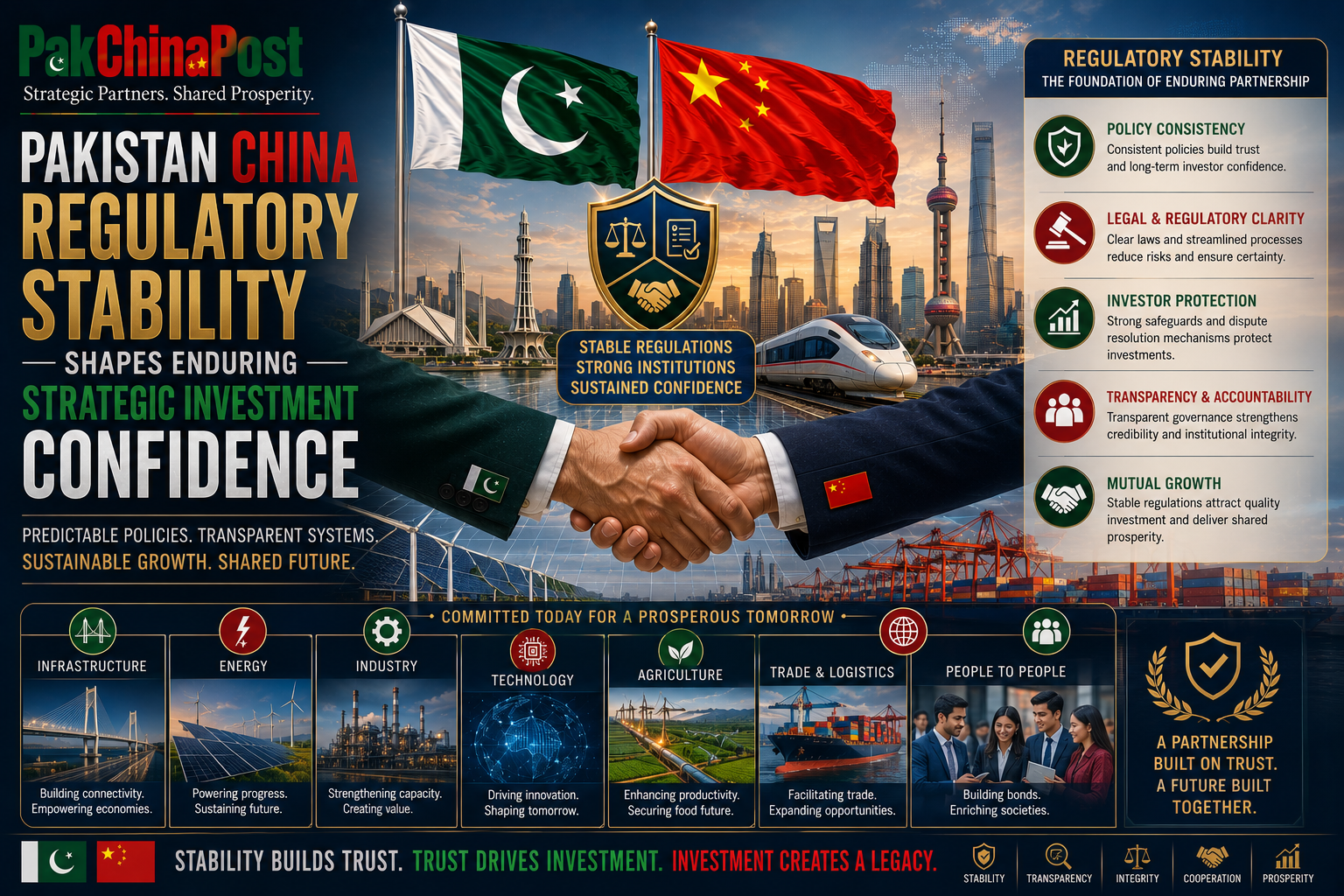
Pakistan China Regulatory Stability Shapes Enduring Strategic Investment Confidence
Pakistan and China increasingly recognise that the next phase of their economic partnership will be determined less by the announcement of ambitious investment packages than by the credibility of institutions responsible for implementing them. Across global capital markets, strategic investors no longer assess
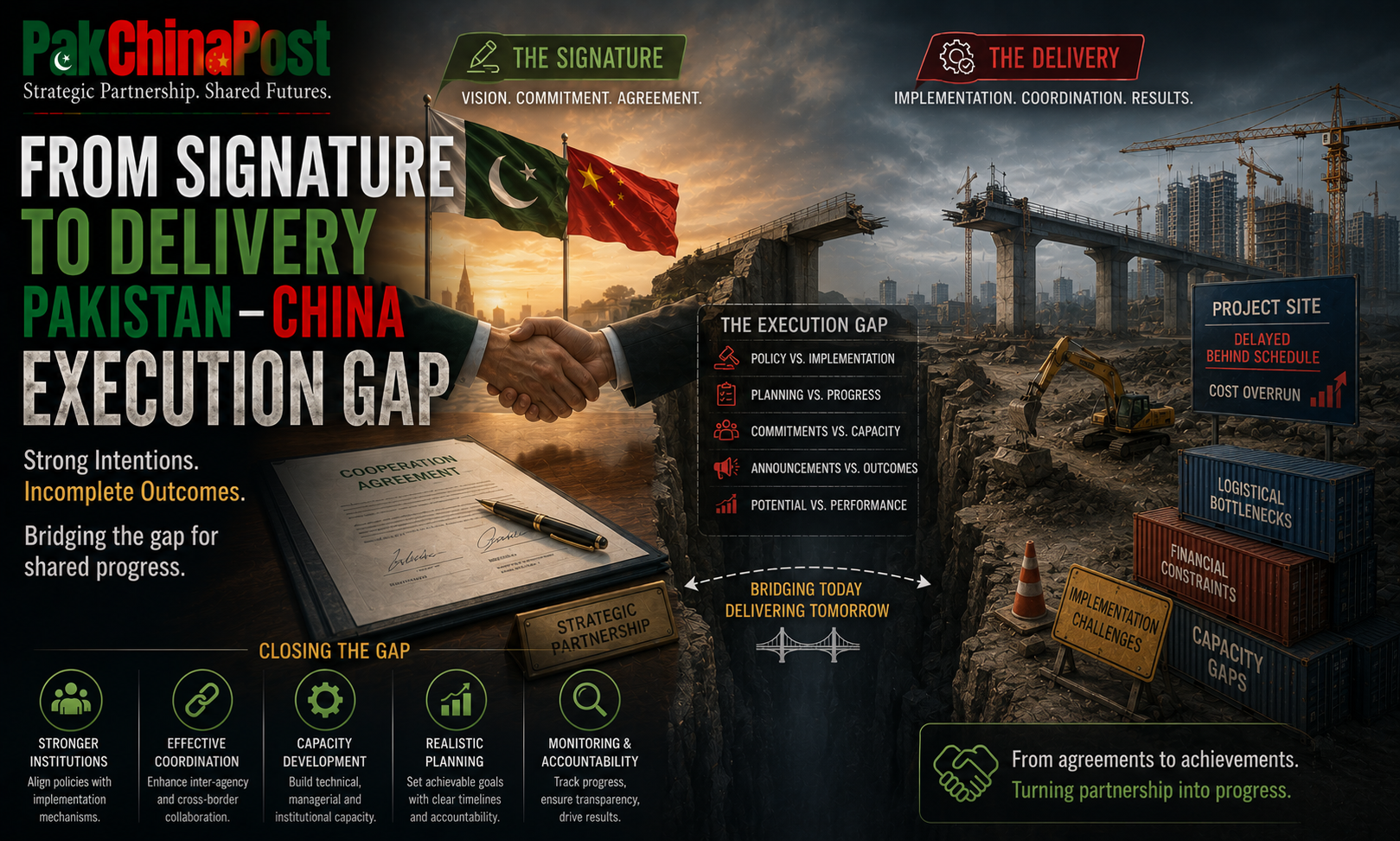
From Signature to Delivery Pakistan China Execution Gap
The acceleration of formal agreements between Pakistan and China has become one of the most visible features of bilateral statecraft over the past decade, yet beneath the surface of ceremonial convergence lies a more consequential institutional paradox: the velocity of signing increasingly outpaces
Pakistan Security Doctrine Shifts Toward Integrated National Resilience
Pakistan’s prevailing national security architecture, historically constructed upon the imperatives of territorial defence, strategic deterrence, and conventional force readiness, is increasingly confronted by a paradox of relevance. The operational grammar of security, once defined by borders, military balance, and external threat matrices, is

Subsidy Retrenchment and Fiscal Survival in Crisis Stricken Economies Dilemma
Across the developing world, a quiet but consequential transformation is unfolding within the architecture of state economic governance. Under the austere gaze of international financial orthodoxy, energy subsidies once regarded as indispensable instruments of social protection are being systematically dismantled, recalibrated, or reclassified

CPECTransition, StateCapacity, EconomicReform, InstitutionalDevelopment, SustainableGrowth
Pakistan’s development trajectory under the China Pakistan Economic Corridor has reached a structural inflection point where the central constraint is no longer the availability of external capital but the internal coherence of institutions responsible for absorbing, distributing, and transforming that capital into sustained

Institutional Trade Reform, Multilateral Compliance, and the Evolution of Rules Based External Economic Governance in Pakistan
The external economic governance system of Pakistan is undergoing a structured transformation characterized by increasing alignment with multilateral trade institutions, standardized regulatory frameworks, and internationally recognized legal compliance mechanisms. This transformation reflects a gradual but consistent transition from discretionary administrative trade management toward
From Alignment to Agency: Pakistan’s Foreign Policy Reorientation in 2026
Pakistan’s foreign policy in 2026 reflects the culmination of an extended period of strategic adaptation that has unfolded against the backdrop of a global order shifting toward multipolarity. For decades the state’s external engagements were shaped by imperatives born of the Cold War,

Trade Balance and Industrial Collaboration Solutions
Trade imbalances have long constituted a central challenge in bilateral economic relations, particularly between emerging economies and their strategic partners. In the context of Pakistan-China relations, the structural asymmetry in trade flows has generated policy discourse that emphasizes the necessity of systemic adjustments,

China’s Dual Circulation Doctrine and the Reconfiguration of Economic Sovereignty
When the Chinese Communist Party articulated the doctrine of dual circulation it signaled not merely a tactical adjustment within foreign trade policy but a paradigmatic reimagining of the national development model. In the current historical juncture globalization is simultaneously in retreat and reconfiguration,