
All Weather Friendship Narrative and Pakistan China Media Legitimacy Construction


The idea of an “All Weather Friendship” between Pakistan and China has long moved beyond diplomatic shorthand. In contemporary Pakistani media ecology it has become a narrative architecture, repeatedly circulated, refined, and re-embedded across news broadcasts, talk shows, newspaper columns, digital portals, and increasingly algorithmically amplified social media content. What once functioned as a foreign policy descriptor has evolved into a semi-institutionalised language of legitimacy, shaping how development, sovereignty, and external partnership are imagined in public discourse. The relationship is now not only geopolitical but also deeply mediated, sustained through an ecosystem where emotion, infrastructure, and state narrative intersect in ways that blur the boundary between reporting and persuasion.
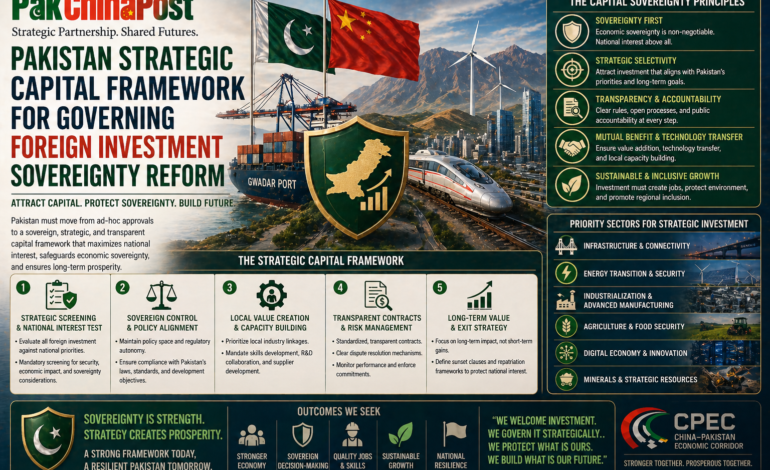
In recent years, particularly under the expansion of China Pakistan Economic Corridor related projects, Pakistani media representation of China has taken on a distinct tonal consistency. Infrastructure is not merely reported as economic activity but framed as civilisational uplift. Roads, energy plants, and ports are not only material developments but symbolic markers of historical redemption and future stability. This narrative shift is not accidental. It reflects a broader transformation in how state-aligned media systems operate in environments where economic dependency, strategic alignment, and developmental urgency converge. The media does not simply describe China’s presence in Pakistan; it constructs it as emotionally necessary.
At the heart of this construction lies what can be described as emotional legitimacy. Unlike legal or procedural legitimacy, emotional legitimacy operates through affective repetition and symbolic reassurance. The public is not persuaded through detailed policy analysis alone but through sustained exposure to narratives of friendship, resilience, and shared destiny. Television anchors routinely invoke the idea of brotherhood, newspaper editorials frame bilateral cooperation as inevitable, and documentary segments highlight images of engineers, highways, and ports as visual evidence of progress. Over time, this creates a cognitive environment in which China is not merely a partner state but a stabilising presence in national imagination.
This process is reinforced by the structural nature of Pakistani media economy. Much of the mainstream media is dependent on state narratives, advertising flows tied to development projects, and access to official information channels. In such an environment, alternative or critical framing of large scale bilateral initiatives often remains constrained. This does not necessarily imply direct censorship in every instance, but rather a subtler form of narrative convergence where editorial incentives, institutional alignments, and geopolitical realities produce similar representational outcomes. The result is a narrowing of interpretive space in which China related reporting tends to cluster around positivity, inevitability, and strategic necessity.
Yet the emotional legitimacy of the All Weather narrative is not built solely on institutional alignment. It is also sustained by genuine material transformations on the ground. Power plants that reduce electricity shortages, highways that shorten travel times, and port infrastructure that expands trade capacity are all tangible developments that feed into public perception. For many citizens, particularly in infrastructure affected regions, these changes are experienced as real improvements in daily life. The media amplification of these developments therefore does not operate in a vacuum; it interacts with lived experience, reinforcing the plausibility of the narrative.
However, the translation of material infrastructure into narrative certainty is not neutral. It involves selective visibility. Certain dimensions of large scale development remain underrepresented in mainstream coverage, particularly issues related to debt structuring, local displacement, environmental concerns, and uneven regional distribution of benefits. These absences are not always the result of explicit suppression but often emerge from the priorities of news cycles that privilege macro level achievements over micro level disruptions. The emotional grammar of national progress tends to foreground scale, speed, and symbolism rather than granular social costs.
In this context, China’s image in Pakistani media becomes increasingly stabilised through repetition rather than interrogation. The All Weather Friendship narrative functions as a stabilising discourse that reduces cognitive uncertainty in a complex geopolitical environment. In a region marked by fluctuating alliances, security tensions, and economic volatility, the portrayal of an unwavering partnership offers psychological reassurance. Media narratives emphasise continuity over contingency, alignment over divergence, and trust over negotiation. This produces a simplified geopolitical imagination that is easier to communicate and consume but less reflective of underlying complexities.
It is important to note that this narrative construction is not unique to Pakistan China relations. Many international partnerships are mediated through similar affective frameworks. However, the intensity and consistency of the All Weather narrative in Pakistan is distinctive because it operates at the intersection of strategic necessity and developmental aspiration. Pakistan’s ongoing economic challenges, energy constraints, and infrastructure deficits create a receptive environment for narratives that emphasise external partnership as a pathway to stability. In such a setting, China’s representation as a reliable and enduring partner acquires heightened significance.
The Chinese side also plays an active role in shaping this media environment, although often through indirect mechanisms. Cultural exchanges, state media cooperation, training programs for journalists, and content sharing arrangements contribute to a shared communicative space in which certain themes are amplified. These include connectivity, mutual respect, non interference, and win win cooperation. Over time, this produces a semi synchronised media language where key concepts circulate across borders with minimal friction. The result is not identical narratives but harmonised ones that reinforce each other’s legitimacy.
Yet beneath this surface of narrative coherence, tensions remain. The very stability of the All Weather discourse can generate conditions for its contestation. In digital spaces, particularly on platforms driven by algorithmic visibility, alternative framings occasionally emerge. Questions about local inclusion in CPEC projects, concerns over labor conditions, and debates about regional autonomy surface intermittently, often gaining traction in moments of political sensitivity or security incidents. These narratives do not always enter mainstream media with equal force, but their presence indicates that emotional legitimacy is not monolithic.
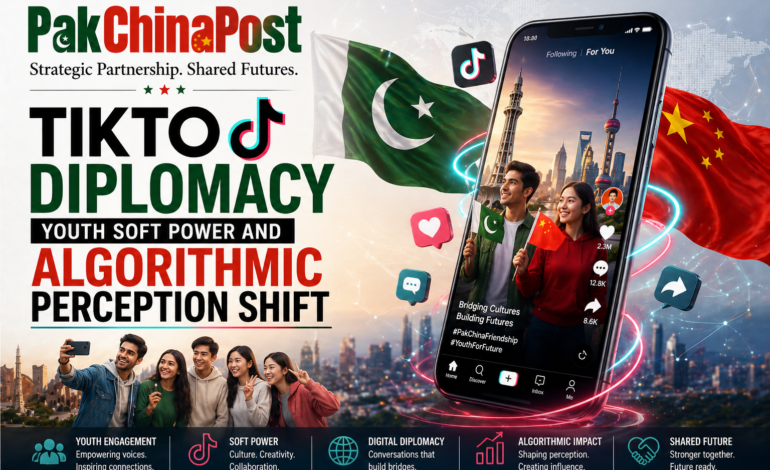
The rise of digital media has complicated the earlier dominance of traditional broadcast and print narratives. Social media platforms have introduced fragmented, decentralised, and sometimes contradictory flows of information. While mainstream outlets may sustain a consistent pro partnership framing, digital environments allow for more heterogeneous interpretations. However, even in these spaces, the All Weather narrative retains significant visibility due to its institutional reinforcement and symbolic simplicity. In moments of geopolitical tension, official accounts and mainstream outlets often regain narrative dominance, reasserting coherence over fragmentation.
The All Weather Friendship narrative also functions as a form of strategic communication in external perception management. It signals to international audiences that Pakistan maintains a stable and predictable alignment with China, thereby reducing perceived uncertainty in bilateral relations. At the same time, it communicates domestically that strategic partnerships are resilient despite internal and external pressures. This dual audience function is central to its persistence. The narrative is not only about describing reality but about shaping expectations of continuity.
However, the long term sustainability of emotionally driven legitimacy depends on its ability to adapt to emerging socio economic realities. As development projects mature and their distributive consequences become more visible, public expectations may shift from symbolic affirmation to substantive accountability. Media systems may then face pressure to incorporate more nuanced reporting that includes both achievements and challenges. The evolution of the narrative will likely depend on how effectively it integrates complexity without losing coherence.
In analytical terms, the All Weather Friendship narrative can be understood as a hybrid construct situated between diplomacy, media production, and national identity formation. It is neither purely propaganda nor purely reportage. Instead, it exists in a grey zone where strategic communication overlaps with journalistic framing. Its effectiveness lies in its capacity to align state interests, media incentives, and public aspirations into a relatively unified discursive field.
What distinguishes the current phase is the increasing sophistication of this alignment. The narrative is no longer solely top down. It is reinforced through documentaries, social media content, academic conferences, and even entertainment formats that embed developmental themes within cultural storytelling. This multi platform reinforcement creates a dense communicative environment in which repetition across mediums strengthens perceived authenticity.
Yet the very density of this narrative system raises questions about interpretive diversity. When a single framing becomes dominant across multiple channels, the space for alternative perspectives can narrow, not necessarily through prohibition but through marginalisation. Stories that do not align with the dominant grammar of friendship and progress may struggle to achieve visibility, not because they are absent but because they are structurally deprioritised.
At the same time, it would be reductive to view Pakistani media as a monolithic amplifier of state aligned narratives. There remain pockets of critical journalism, investigative reporting, and academic commentary that interrogate aspects of the China Pakistan relationship. However, their reach often remains limited compared to mainstream narrative flows. The result is a layered media environment where dominant narratives coexist with fragmented counter narratives, without necessarily achieving equilibrium.
Ultimately, the All-Weather Friendship narrative is best understood not as a fixed ideological construct but as an evolving media process. It is continuously produced and reproduced through interactions between state priorities, economic realities, media institutions, and public perception. Its strength lies in its flexibility and emotional resonance, rather than in rigid doctrinal consistency.
As Pakistan and China move deeper into the next phase of their strategic partnership, particularly in areas of technology, industrial relocation, and regional connectivity, the media representation of their relationship is likely to become even more complex. The challenge for journalists, policymakers, and scholars will be to understand how emotional legitimacy interacts with material outcomes, and how narratives of friendship can coexist with demands for transparency, inclusion, and accountability.
The All-Weather Friendship, in this sense, is not merely a description of bilateral relations. It is a mediated construction of certainty in an uncertain world, one that reflects both the possibilities and limitations of contemporary geopolitical storytelling.
A Public Service Message