
Global Governance Norms and Legitimacy Contestation: China’s Strategic Positioning in Europe


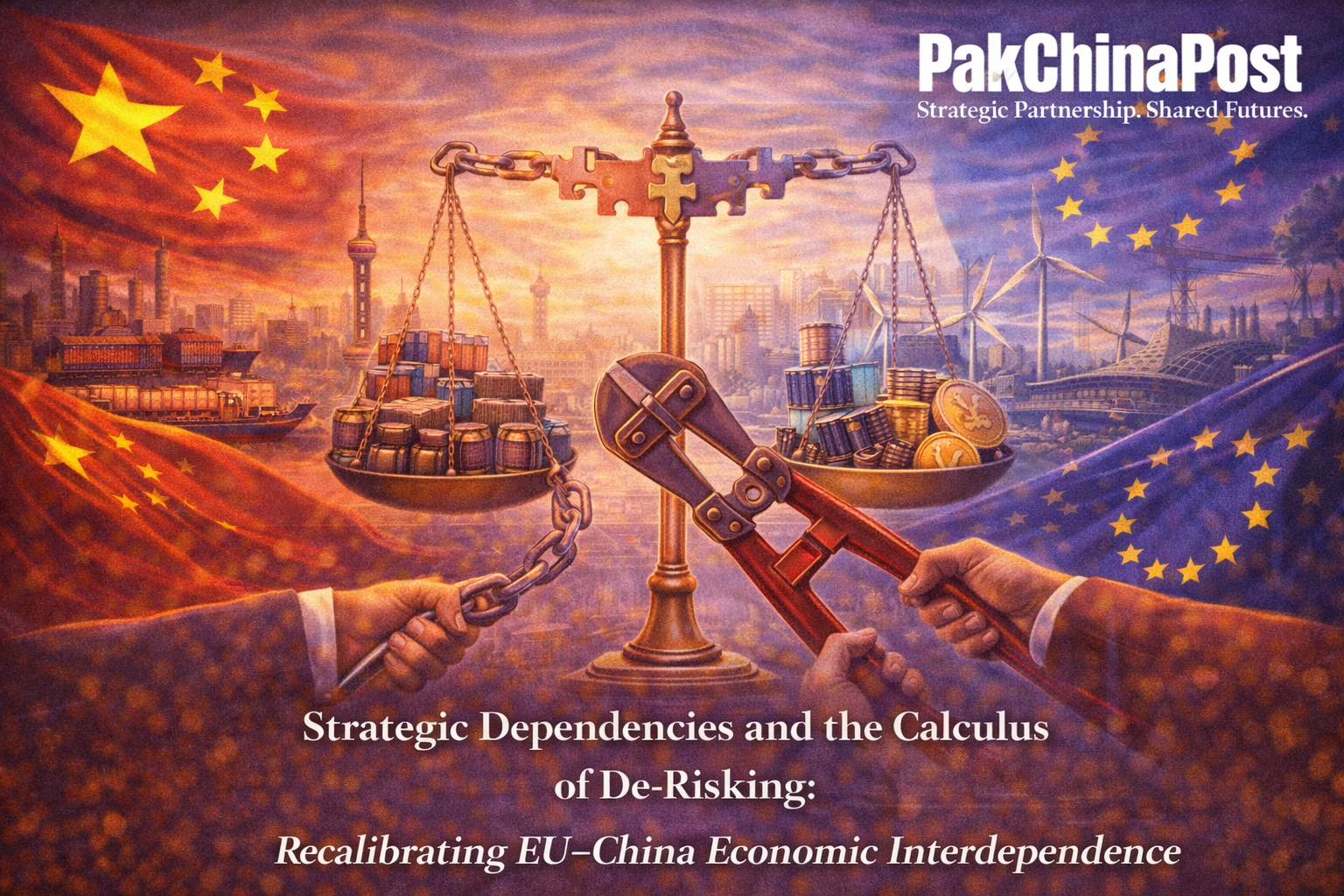
In the contemporary international order, the European Union’s engagement with China is increasingly framed not only by trade, technology, and strategic interdependence but also by normative considerations and institutional legitimacy. China’s efforts to project itself as a defender of multilateralism, in contrast to perceived Western unilateralism, intersect with European skepticism regarding normative commitments, rule-making behavior, and institutional transparency. Multilateralism whether in climate governance, the World Trade Organization (WTO), or global development finance serves as both a strategic instrument and a site of contestation, wherein credibility, predictability, and adherence to shared norms define the capacity to shape influence. Understanding how China navigates this terrain is critical for assessing the sustainability of EU–China relations and the potential for structural alignment or divergence in global governance frameworks.
European skepticism toward China’s normative positioning is rooted in multiple dimensions. First, there is historical precedent: Europe observes patterns of selective engagement in international regimes, including compliance inconsistencies and the use of bilateral arrangements that bypass multilateral rules. Second, operational transparency remains a concern. Despite formal participation in multilateral institutions, European policymakers question the clarity of China’s policy intentions, the inclusivity of decision-making processes, and the alignment between stated commitments and observed behavior. Third, perceptions of asymmetry particularly in economic leverage and voting influence—reinforce the view that China’s multilateralism is instrumental rather than normative, designed to advance strategic interests while maintaining structural advantage.
Climate governance offers a paradigmatic case. Europe has framed the European Green Deal, the EU Emissions Trading System, and climate financing as instruments of both environmental ambition and geopolitical influence. China, in response, has emphasized multilateral frameworks such as the United Nations Framework Convention on Climate Change (UNFCCC), Belt and Road Initiative (BRI) green projects, and partnerships in renewable energy deployment. While Beijing highlights cooperative contributions investment in solar and wind infrastructure, technology transfer initiatives, and participation in global climate funds—European analysts often interpret these actions through a strategic lens, questioning whether they constitute genuine commitment or leverage-based diplomacy. The cognitive gap between stated intentions and perceived strategic motivation forms the core of normative contestation.
In the context of the WTO, similar dynamics are evident. China’s accession and participation in trade regimes exemplify multilateral engagement, yet enforcement, dispute resolution, and regulatory alignment remain sources of European concern. Issues such as industrial subsidies, technology transfer policies, and state-owned enterprise governance are frequently cited as gaps between procedural compliance and normative expectation. European skepticism is therefore not categorical but selective, reflecting a tension between the operational benefits of engagement and the perceived risk of norm asymmetry. These perceptions shape regulatory policy, investment screening, and sector-specific de-risking measures, influencing the broader trajectory of EU–China economic relations.
Global development financing constitutes a third domain of contestation. China’s outward investment and infrastructure financing often framed under the BRI—provide critical capital for developing regions. European observers, however, interpret these programs as dual-purpose instruments: facilitating development while extending geopolitical influence and creating dependency networks. The narrative of legitimacy contestation emerges here, as Europe questions whether Chinese projects adhere to internationally recognized principles of debt sustainability, transparency, and local governance. These debates influence European engagement in multilateral financial institutions and color bilateral discussions, reinforcing skepticism regarding China’s normative commitments.
China’s strategic challenge is therefore to reconcile operational engagement with credibility in European perception. Achieving normative legitimacy requires three interlocking strategies: procedural compliance, demonstrable reciprocity, and narrative alignment. Procedural compliance involves adhering to established rules, contributing substantively to multilateral initiatives, and ensuring transparency in policy implementation. In climate governance, this could include verifiable emission reduction commitments, open data reporting, and collaborative R&D with European partners. In WTO and trade frameworks, it entails dispute resolution engagement, regulatory alignment, and consistent enforcement of agreed standards.
Demonstrable reciprocity involves ensuring that engagement is mutually beneficial rather than unilaterally advantageous. Projects, agreements, and institutional participation must create value for both Chinese and European actors, emphasizing co-investment, technology transfer, and local capacity-building. Reciprocity signals respect for institutional norms and mitigates the perception that China leverages multilateralism solely to expand strategic advantage. Joint infrastructure projects, co-financing initiatives, and technology partnerships exemplify this principle in practice, providing tangible evidence of commitment to shared objectives.
Narrative alignment constitutes the third pillar. European skepticism is not merely procedural; it is cognitive, reflecting interpretations of intent, motivation, and strategic alignment. Strategic communication must therefore contextualize Chinese engagement in terms of collective benefits, alignment with shared global objectives, and adherence to established rules. This requires nuanced public diplomacy, engagement with think tanks, academic discourse, and civil society, emphasizing transparency, operational integrity, and the constructive contributions of Chinese participation. Effectively managed, narrative alignment can reduce cognitive friction, foster trust, and position China as a credible partner in global governance.
Scenario analysis illustrates the stakes of legitimacy contestation. In a low-friction scenario, procedural compliance and reciprocity are evident, and European skepticism is mitigated, facilitating collaboration in climate initiatives, trade policy, and development financing. In a moderate-friction scenario, selective perception gaps persist, prompting cautious engagement, regulatory oversight, and sector-specific de-risking measures. In a high-friction scenario, persistent skepticism crystallizes into structural decoupling, reduced participation in European multilateral initiatives, and a bifurcation of governance influence. The trajectory is shaped not only by material compliance but also by the effectiveness of strategic communication, transparency, and narrative framing.
China’s approach must integrate multilateral engagement with bilateral reassurance. Participation in European-led initiatives, collaboration on regulatory standards, and co-financing of infrastructure projects reinforce credibility while addressing operational gaps. Importantly, these actions must be accompanied by transparent reporting, verifiable compliance mechanisms, and clear articulation of mutual benefits. Engagement in climate financing, technology standardization, and development aid can thereby serve as instruments of legitimacy consolidation, reinforcing the perception of normative alignment.
The broader implication is that legitimacy contestation is both an operational and cognitive phenomenon. Material compliance alone is insufficient; perceptions of fairness, reciprocity, and transparency are equally influential in shaping European trust. By combining procedural fidelity with strategic narrative management, China can stabilize bilateral and multilateral engagement, preserve market access, and enhance its role as a normative actor in Europe. Failure to address these dimensions risks reinforcing skepticism, undermining cooperative initiatives, and accelerating defensive European policies such as de-risking, exclusionary regulation, or selective decoupling.
In conclusion, global governance norms and institutional legitimacy are central to the EU–China strategic relationship. European skepticism reflects not only material concerns but also cognitive interpretations of intent, reciprocity, and transparency. For China, sustaining credibility in Europe requires procedural compliance, demonstrable reciprocity, and narrative alignment across climate governance, trade regulation, and development financing. By integrating operational excellence with strategic communication, China can navigate legitimacy contestation, reinforce multilateral credibility, and preserve a cooperative foundation for long-term engagement with the European Union.
A Public Service Message