
China Policy Pivot Consumption Versus Industrial Expansion


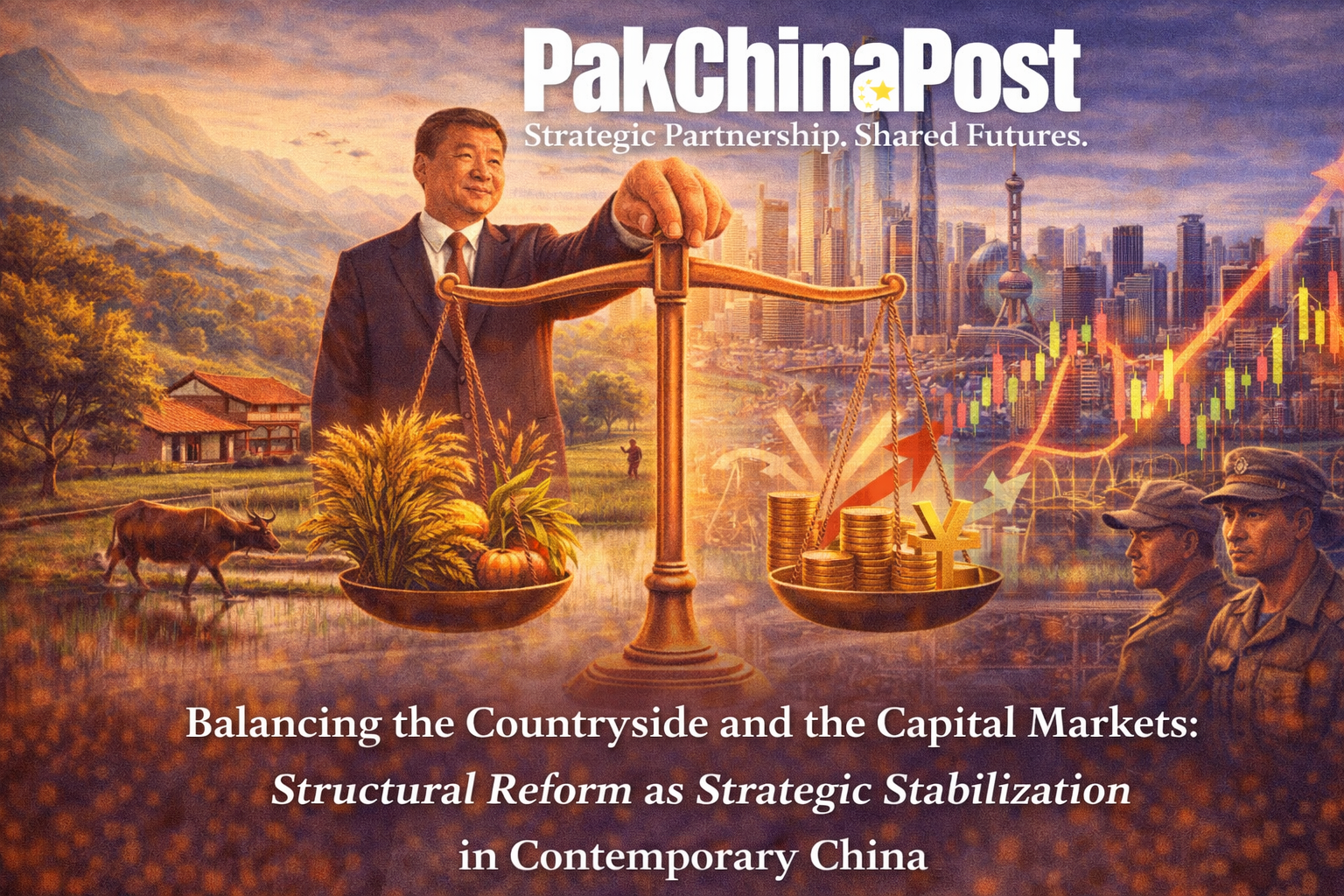
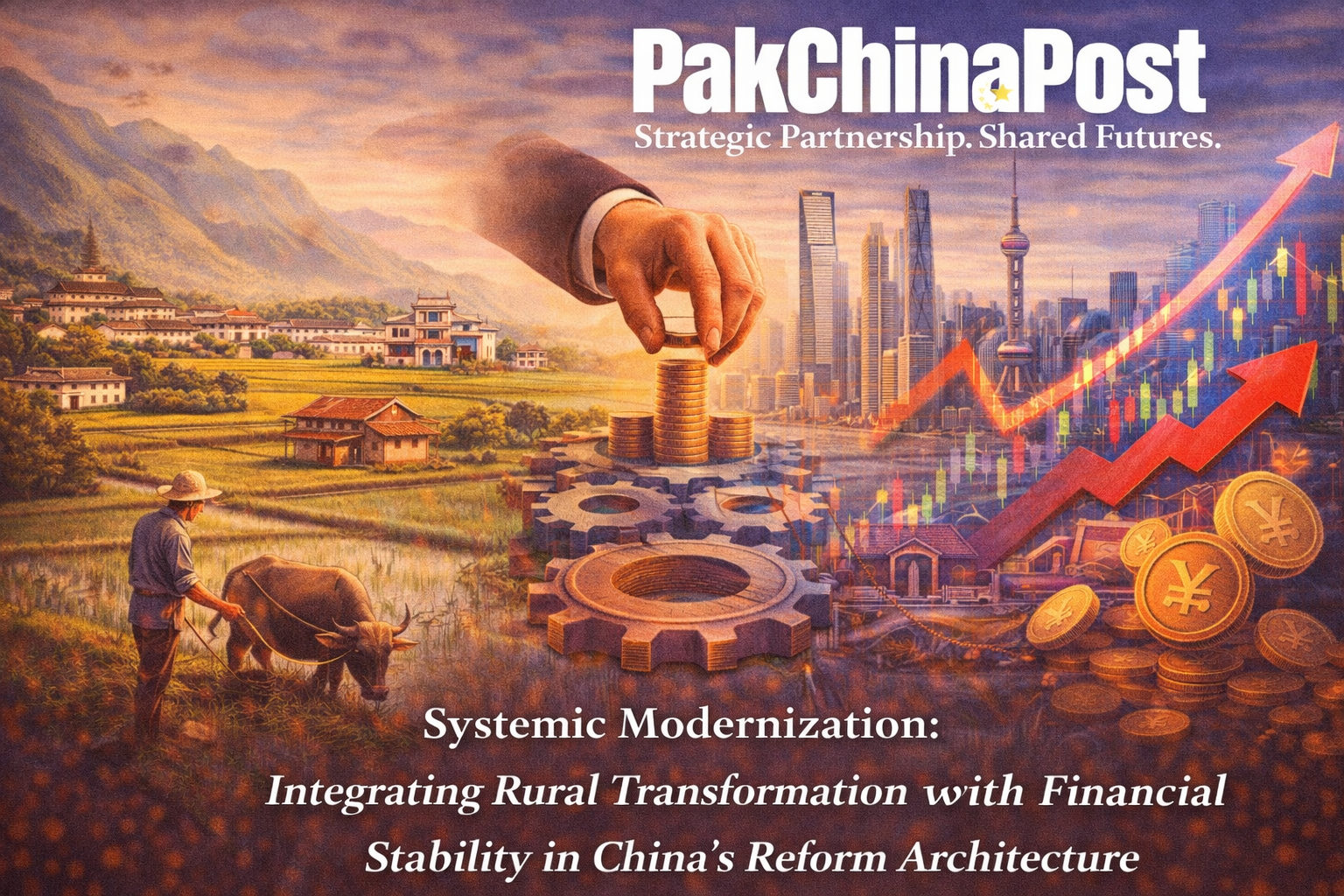
China’s economic trajectory has entered a phase of structural recalibration that carries implications far beyond its national borders. The long standing growth model, anchored in investment led industrial expansion, export competitiveness, and state directed infrastructure accumulation, is now being reassessed under the pressures of demographic slowdown, property sector fragility, external demand uncertainty, and rising geopolitical friction. At the centre of this recalibration lies a contested policy dilemma: whether to accelerate a transition toward consumption driven growth or to preserve the industrial backbone that has defined China’s rise as a global manufacturing power.
This tension is not merely technical. It reflects a deeper structural contradiction within China’s development model, where industrial overcapacity has historically coexisted with suppressed household consumption. For decades, the Chinese state has channelled capital into infrastructure, heavy industry, and export oriented production, producing extraordinary growth rates and transforming global supply chains in the process. However, this model has also generated persistent imbalances, including elevated corporate debt, regional disparities, and a consumption share of GDP that remains significantly below global averages.
The International Monetary Fund and other global economic institutions have repeatedly emphasised the need for structural rebalancing toward domestic consumption. The rationale is straightforward. A more consumption driven economy is assumed to be more sustainable, less vulnerable to external shocks, and more conducive to long term stability. Rising household consumption would, in theory, reduce reliance on export demand, mitigate trade tensions, and create a more internally resilient growth engine.
Yet the feasibility of this transition is constrained by structural and institutional realities that cannot be resolved through policy exhortation alone. Household consumption in China is suppressed not only by income distribution patterns but also by precautionary savings behaviour rooted in insufficient social safety nets, education costs, healthcare burdens, and property market uncertainties. The very foundations of consumption expansion are therefore embedded in broader welfare system design, not merely in macroeconomic reallocation.
At the same time, the industrial sector remains deeply entrenched in China’s economic and political architecture. Manufacturing capacity is not simply an economic variable; it is a strategic asset linked to technological sovereignty, employment stability, and geopolitical leverage. The transition away from industrial expansion therefore carries risks that extend beyond GDP composition. It touches upon labour absorption capacity, regional development stability, and China’s position within global value chains.
Recent policy signals suggest an attempt to navigate this duality rather than resolve it decisively. On one hand, there is increasing emphasis on high quality development, innovation driven growth, and domestic demand expansion. On the other hand, industrial policy continues to prioritise advanced manufacturing, semiconductor independence, green technology dominance, and supply chain resilience. The result is not a linear transition but a layered strategy in which consumption is encouraged without fully displacing industrial expansion.
This dual track approach reflects a recognition that abrupt rebalancing could generate destabilising effects. A rapid contraction in industrial output would risk employment shocks, particularly in export dependent regions. Simultaneously, premature reliance on consumption without adequate income redistribution mechanisms could produce uneven demand growth and exacerbate inequality. The policy challenge is therefore one of sequencing, calibration, and controlled transformation rather than wholesale substitution.
From a global perspective, China’s internal reconfiguration has significant spillover effects. Global commodity markets, manufacturing supply chains, and emerging market export structures are closely integrated with Chinese industrial demand. Any sustained slowdown in industrial investment would reverberate through resource exporting economies, while shifts toward consumption could alter import composition patterns, particularly in services, consumer goods, and high value products.
For developing economies integrated into China centric supply chains, the transition introduces both risks and opportunities. Reduced infrastructure investment may dampen demand for raw materials, while rising consumption could create new export niches. However, these adjustments are unlikely to be evenly distributed. Economies heavily dependent on industrial commodities may face greater adjustment pressure than those positioned to benefit from consumer market expansion.
The property sector crisis adds another layer of complexity to the rebalancing debate. Real estate has historically functioned as a key store of wealth for Chinese households and a major driver of local government revenues. Its slowdown has weakened household balance sheets, reduced consumption confidence, and constrained fiscal capacity at sub national levels. Without stabilisation of this sector, efforts to stimulate consumption risk encountering structural resistance.
Demographic dynamics further complicate the policy landscape. An ageing population, declining birth rates, and shrinking labour force participation rates place downward pressure on potential growth. In such a context, consumption driven growth cannot simply be engineered through stimulus; it requires a broader recalibration of lifecycle income distribution, pension systems, and labour productivity enhancements.
The industrial sector, meanwhile, is undergoing its own transformation. China’s focus on advanced manufacturing, artificial intelligence, electric vehicles, and green technologies reflects an attempt to move up the value chain rather than retreat from industrialisation altogether. This suggests that industrial expansion is not being abandoned but redefined. The emphasis is shifting from scale driven growth to innovation driven competitiveness.
However, this transition carries risks of overinvestment in strategic sectors, potentially replicating earlier cycles of capacity excess in new technological domains. The challenge for policymakers lies in avoiding structural repetition while maintaining technological momentum. This requires more refined coordination between central planning objectives and market based allocation mechanisms.
From a macroeconomic standpoint, the coexistence of consumption promotion and industrial upgrading creates a complex policy equilibrium. Monetary and fiscal tools must operate within a constrained space, balancing credit support for innovation sectors with measures to boost household income and confidence. The effectiveness of such policies depends heavily on institutional coordination and the credibility of long term reform commitments.
Internationally, China’s rebalancing is often interpreted through the lens of global demand reallocation. A more consumption oriented China could contribute to global demand stabilisation, particularly in the context of weakening Western consumption cycles. However, the extent of this contribution depends on the elasticity of Chinese import demand and the structure of its consumption basket, which remains skewed toward domestic services rather than imported goods.
There is also a geopolitical dimension to this transition. Industrial self sufficiency and technological autonomy are increasingly viewed as strategic imperatives in a fragmented global order. This limits the extent to which industrial contraction can be pursued purely for macroeconomic rebalancing purposes. Economic policy is therefore increasingly intertwined with national security considerations, complicating traditional efficiency based policy prescriptions.
For policymakers within China, the central challenge is not choosing between consumption and industrial expansion, but managing their coexistence within a coherent developmental framework. This requires a redefinition of growth quality that incorporates stability, resilience, and strategic autonomy alongside traditional output metrics. It also requires institutional reforms that strengthen household income security, reduce precautionary savings, and enhance the redistributive capacity of fiscal policy.
Ultimately, China’s policy pivot represents not a linear transition but a structural evolution of its development model. The outcome will depend on the state’s ability to synchronise multiple objectives across competing domains: domestic welfare, industrial competitiveness, global integration, and geopolitical strategy. In a world increasingly characterised by fragmentation and uncertainty, China’s internal recalibration will continue to function not only as a domestic economic adjustment but as a central axis of global economic reordering.
A Public Service Message