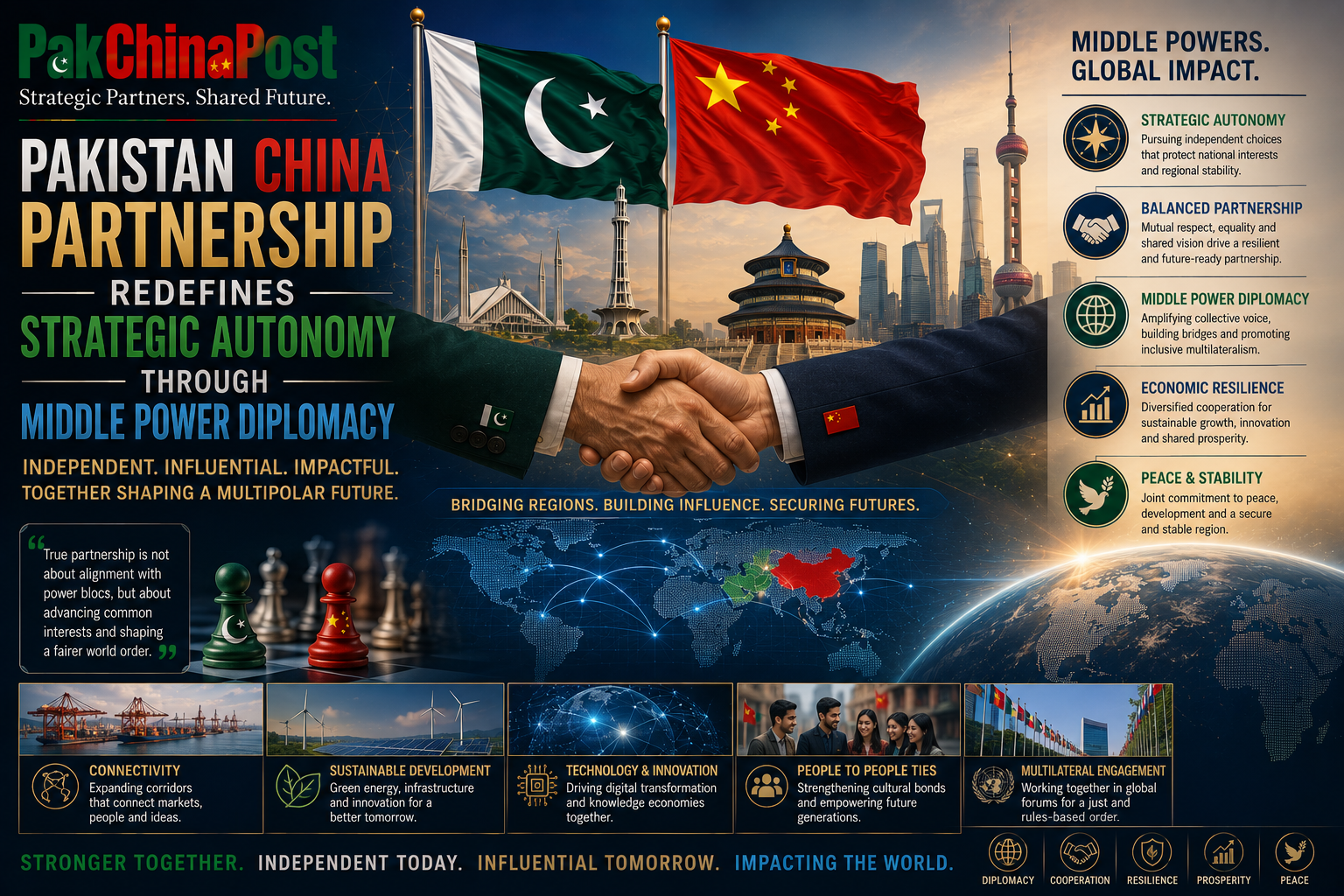
Pakistan China Partnership Redefines Strategic Autonomy Through Middle Power Diplomacy

By Shafqat Ali Qureshi Pakistan and China increasingly find themselves operating within an international environment where strategic influence is no longer determined solely by military capability or ideological alignment, but by the capacity to manage competing relationships without sacrificing sovereign decision making. The

Pakistan Between Washington Beijing Cold Peace Strategic Compression

The contemporary international system is no longer adequately described by Cold War binaries, nor by the euphemistic language of post bipolar interdependence. It has instead settled into a more ambiguous and structurally unstable condition often best described as a cold peace, in which
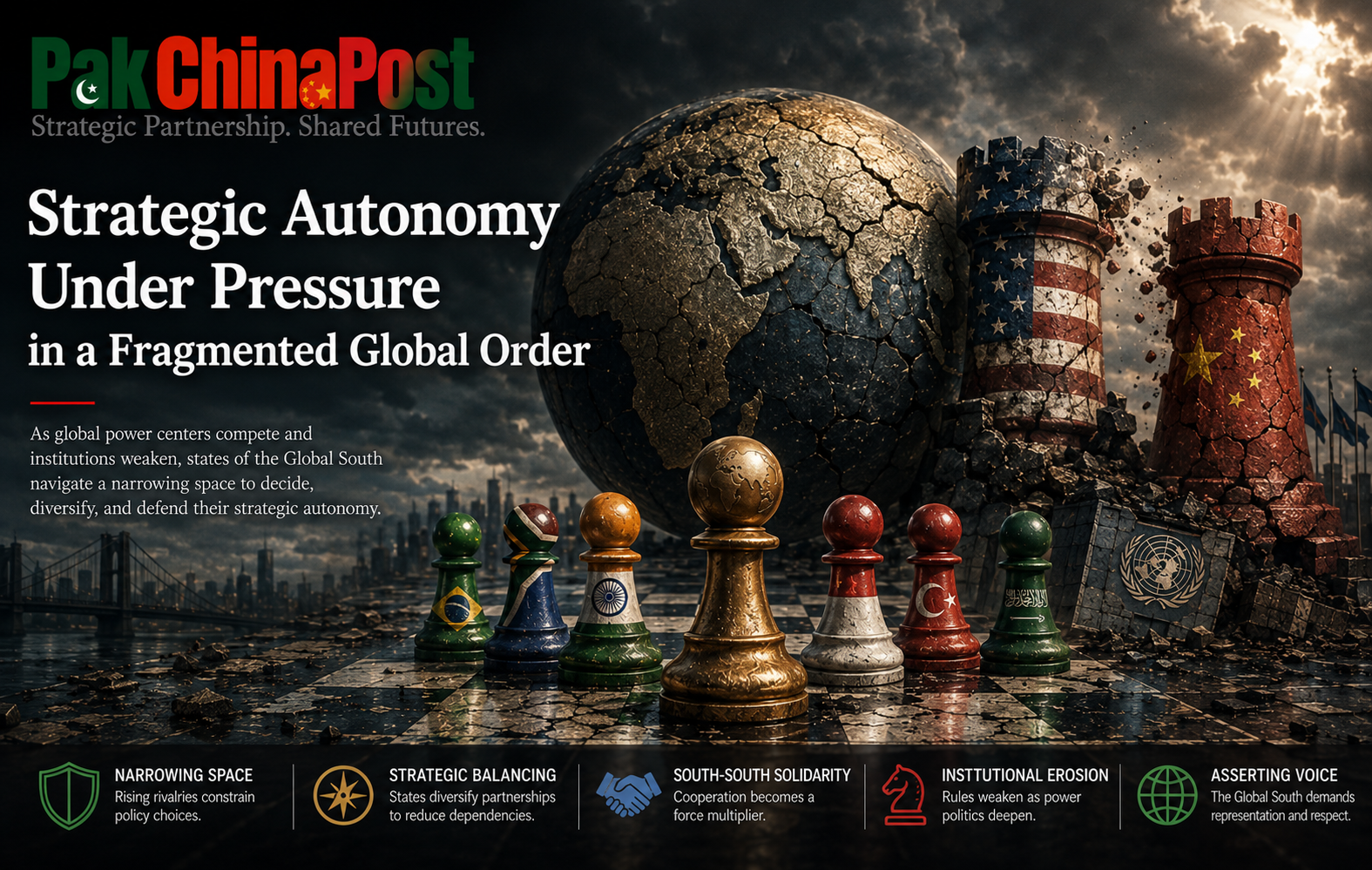
Strategic Autonomy Under Pressure in a Fragmented Global Order

The contemporary international system is increasingly defined by structural polarization, fragmented economic interdependence, and competing technological ecosystems that collectively compress the strategic space available to middle powers. Within this evolving configuration, the concept of strategic autonomy has shifted from a normative aspiration to
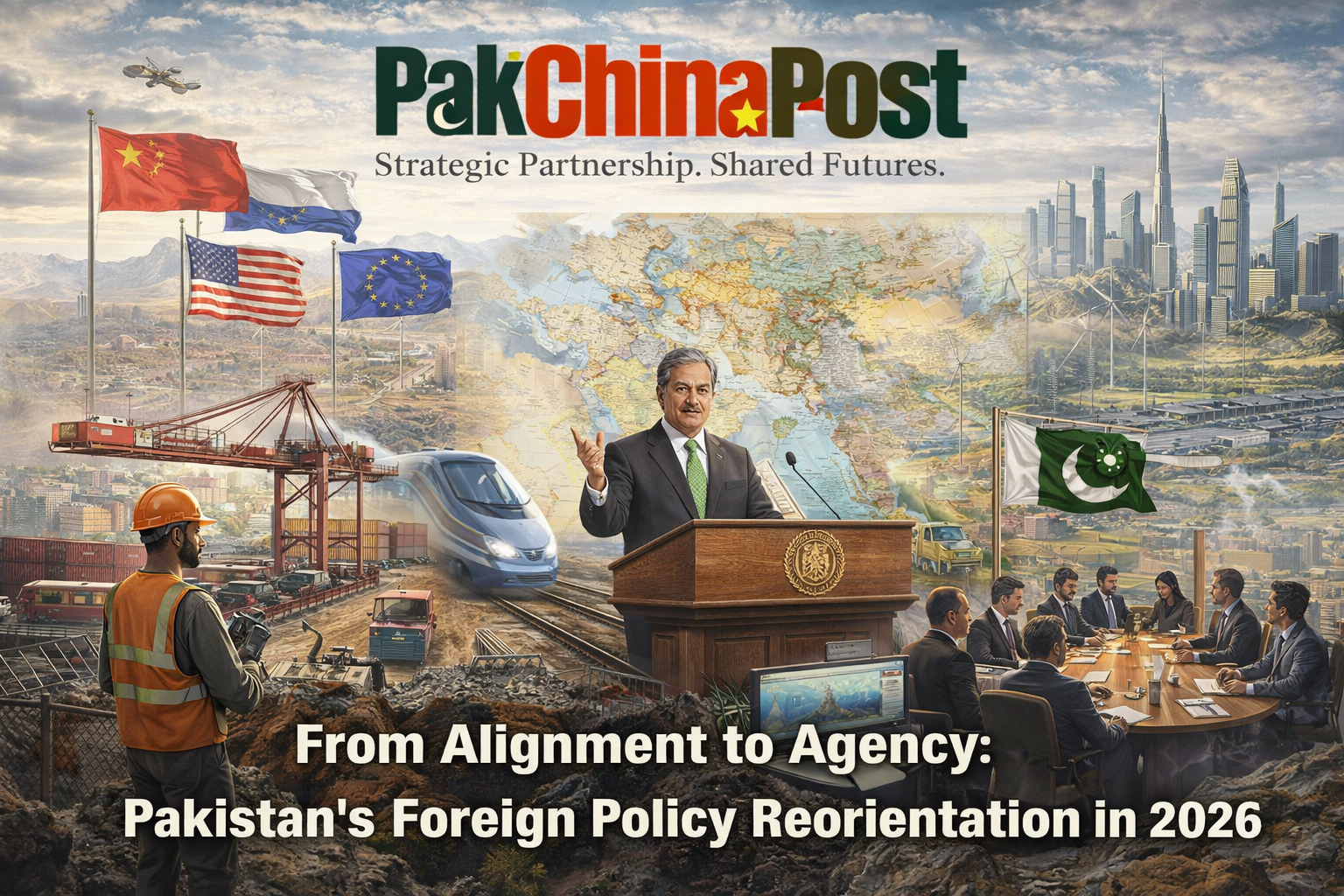
From Alignment to Agency: Pakistan’s Foreign Policy Reorientation in 2026

Pakistan’s foreign policy in 2026 reflects the culmination of an extended period of strategic adaptation that has unfolded against the backdrop of a global order shifting toward multipolarity. For decades the state’s external engagements were shaped by imperatives born of the Cold War,

Pakistan’s Border Diplomacy and Strategic Autonomy in South and Central Asia

Pakistan’s border environment is a complex and enduring factor in its foreign policy calculus and geopolitical positioning. Situated at the confluence of South and Central Asia, Pakistan faces a multifaceted frontier challenge that encompasses Afghanistan to the west, India to the east, and

Pakistan’s Geopolitical Agency in an Era of Multipolarity
Pakistan’s geopolitical relevance in the early decades of the twenty‑first century is rooted in its unique position at the nexus of South Asia, Central Asia, and the broader Indian Ocean region. Its strategic environment is defined by the overlapping interests of global powers