

South China Sea Disputes: Sovereignty, Security Depth, and the Geopolitical Contest Shaping Asia’s Maritime Future

The South China Sea has emerged as one of the most strategically sensitive maritime regions in the world. Stretching across vital sea lanes that connect the Pacific and Indian Oceans, this body of water carries an estimated one third of global maritime trade

Technology and Semiconductor War: The Strategic Contest That Will Shape the Next Superpower

The rivalry between China and the United States has moved far beyond tariffs, diplomatic protests, or naval maneuvers. At its core, the defining battlefield of the twenty first century lies in technology. Control over advanced innovation ecosystems, semiconductor supply chains, artificial intelligence platforms,

The Taiwan Question: The Most Sensitive Flashpoint in U.S.–China Relations

The Taiwan question stands at the very center of strategic tensions between China and the United States. No other issue combines historical grievance, national identity, military rivalry, technological competition, and ideological divergence in such a concentrated and potentially explosive way. The Taiwan Strait
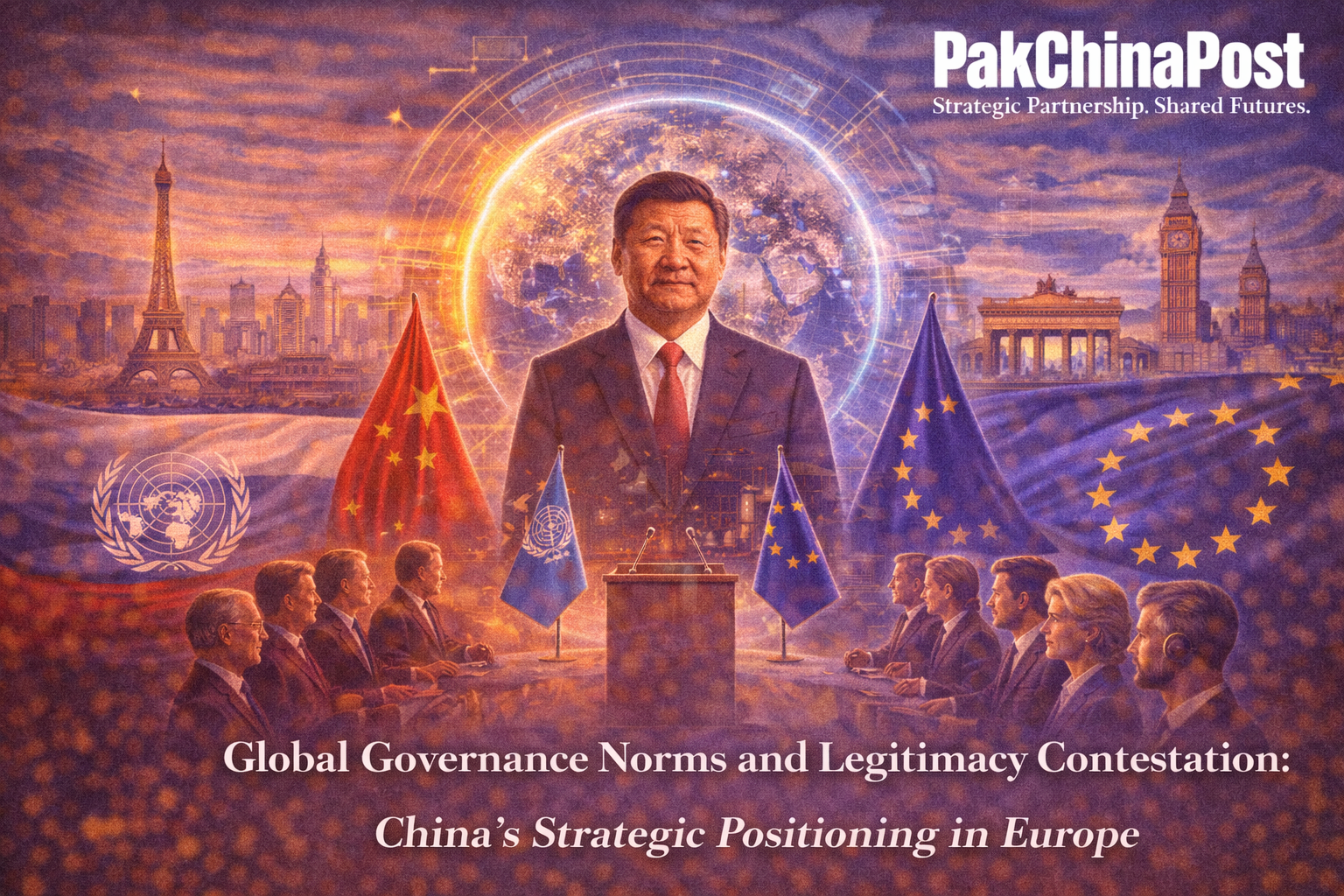
Global Governance Norms and Legitimacy Contestation: China’s Strategic Positioning in Europe

In the contemporary international order, the European Union’s engagement with China is increasingly framed not only by trade, technology, and strategic interdependence but also by normative considerations and institutional legitimacy. China’s efforts to project itself as a defender of multilateralism, in contrast to

The Russia Factor and EU–China Strategic Calculus: Managing Perceptions, Conflict Spillovers, and Geoeconomic Alignment

The interplay between China, the European Union, and Russia represents one of the most complex dimensions of contemporary geostrategic analysis. While EU–China relations are often framed in terms of trade, technology, and diplomatic reciprocity, the Russia factor introduces an additional layer of uncertainty,
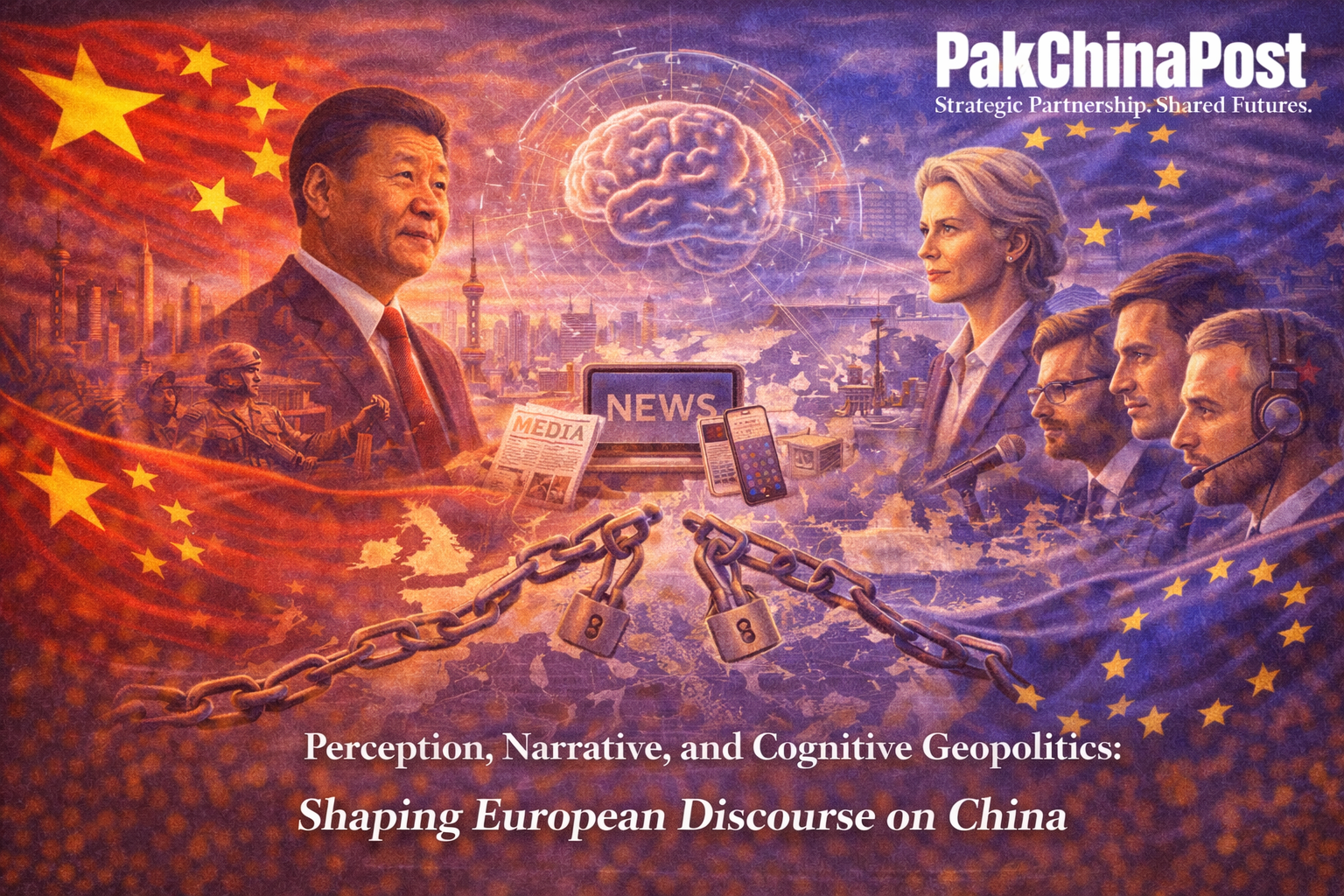
Perception, Narrative, and Cognitive Geopolitics: Shaping European Discourse on China

By Dr. M Ahsan Sardar In the contemporary European Union–China landscape, strategic interaction extends far beyond conventional trade and investment calculus. Increasingly, cognitive dimensions—perceptions, narratives, and discourse—play a pivotal role in shaping policy choices, regulatory frameworks, and bilateral trust. European anxieties surrounding technological
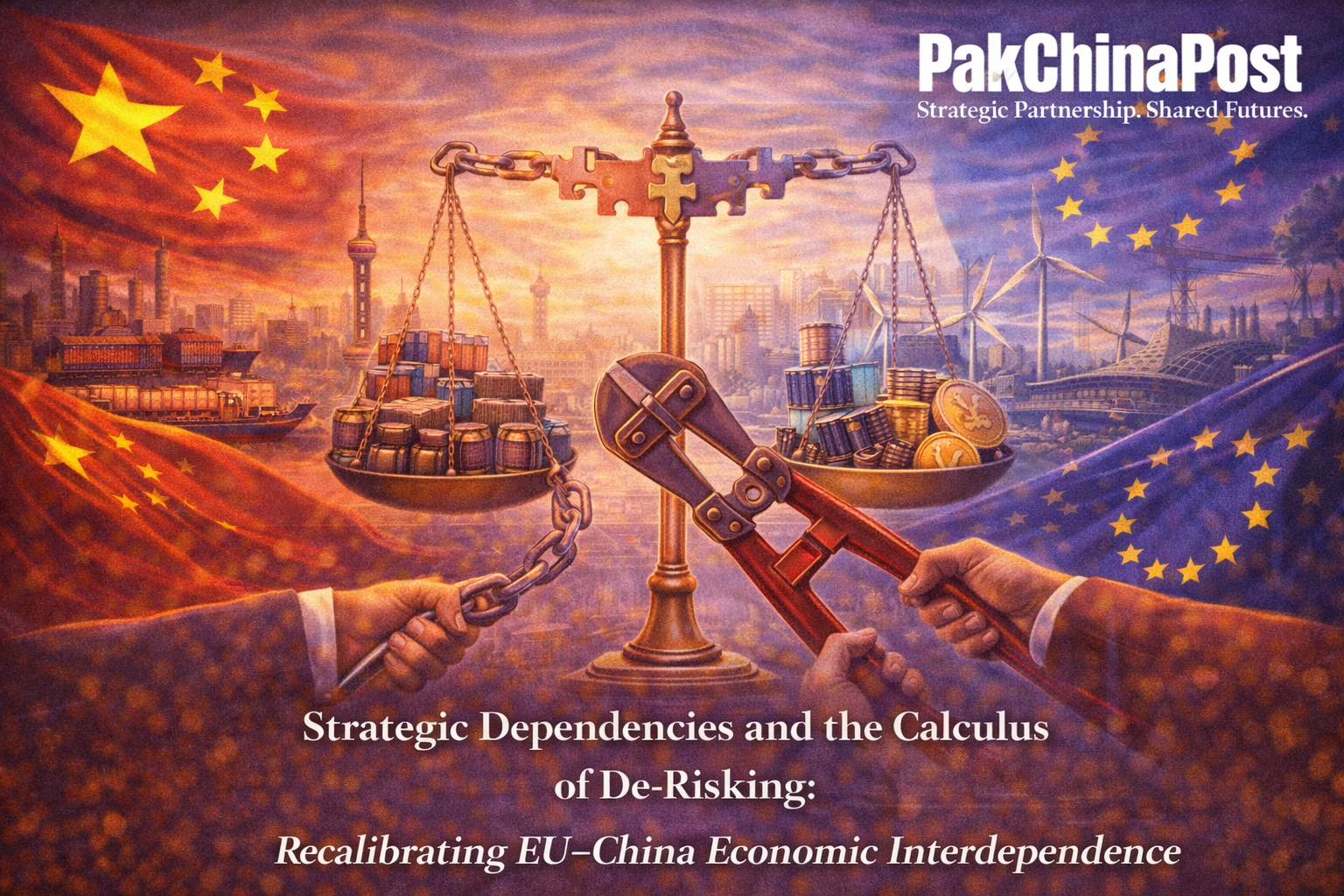
Strategic Dependencies and the Calculus of De-Risking: Recalibrating EU–China Economic Interdependence
The European Union’s evolving approach toward China reflects a profound reassessment of strategic dependencies in an era defined by technological competition, supply chain vulnerabilities, and geopolitical uncertainty. For decades, European engagement with China was predicated on the assumption that economic interdependence would produce

Diplomatic Reciprocity and the Architecture of Trust: Navigating EU–China Relations Amid Institutional Strain

The contemporary landscape of European Union–China relations is increasingly characterized not solely by trade balances or technological competition, but by the subtle architecture of diplomatic legitimacy and institutional trust. In the last decade, structural pressures within both Brussels and Beijing have amplified the
Trade, Technology, and the Geometry of Strategic Interdependence: Reassessing EU–China Friction in an Age of Techno-Economic Realignment
The evolving relationship between the European Union and China is increasingly defined not by overt ideological confrontation, but by calibrated economic instruments that blur the boundaries between trade policy, industrial strategy, and national security. What once appeared as functional interdependence anchored in market